Home Blog Page 136

Baaji (Review): A colorfully brilliant yet dark portrayal of Lollywood’s forgotten cinematic heritage

Movie Name: Baaji 

Release Date: June 28, 2019

Director: Saqib Malik  

Review by: Hassan Hassan 

Just a night before the release of one of the 2019’s most anticipated flicks, I texted the director, Saqib Malik, to share my high expectations and a few apprehensions. Saqib’s response was, “Go watch Baaji with no expectations, it’s like a glass of wine, charrey gi zarur.”

I did as advised and as soon as I came out of the theatre, I felt engulfed by the aura of the film and the world it created in a mere 2 hours.

Baaji is Saqib Malik’s directorial début and employs his thirty years of showbiz experience and an even longer love for the cinema. If you know Pakistani cinema of the 90s and before, it’s a film you should never miss but that, by no means, implies that it’s not for the rest of you.

What Baaji is about

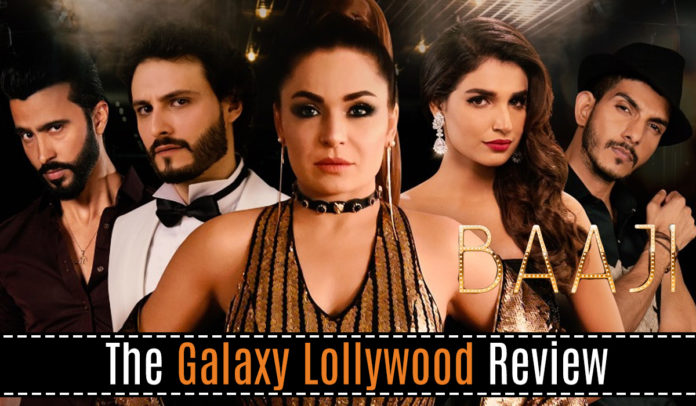
Set against the background of a fading Lollywood and an emerging, new wave of the Pakistani cinema, the story follows a fading star, Shameera (Meera), who’s struggling for a comeback on screen, while facing multiple setbacks at personal and professional fronts. Then comes a young girl Neha (Amna Ilyas) from old Lahore, who has struggles and dreams of her own. Amidst all of this, a Pakistani-American director (Osman Khalid Butt) comes from Hollywood to Lahore to be a part of the revival of the local film industry, choosing Shameera for his film thereby, beginning a story of desire, ambition and betrayal.

The story is filled with glamour, romance, scandal, intrigue and, in the end, some mystery giving you a full cinematic experience, for which the Pakistani viewers have often yearned for, and which has been missing from most of our celluloid offerings lately.

Baaji‘s star cast

The biggest strength of Baaji lies in its star cast and how they have portrayed their layered characters.

Undoubtedly, it’s Meera and Amna Ilyas who own the show. Shameera is a character that’s tailor made for Meera and there is no other possible actor who could have done justice to it. She is the embodiment of the 90s Lollywood such that her mannerisms, language, dialogue delivery, makeup and wardrobe choices very much represent the said era.

The instances where she appears loud or over the top are intelligently justified by the fact that Lollywood actors carried the same persona back in those days. It is very daring of Meera to act in a film that has so many uncanny resemblances to her personal and professional life. From her being fired from a famous item number to her sex tape and wedding controversies, no wonder the film was initially rumored to be a Meera Biopic. The film is Meera’s best performance of all time, beyond a doubt.

Amna Ilyas as a struggler and dreamer with very subtle grey shades to her character, is another star of the show. Nowhere in the film does she seem out of character. Her screen presence, dialogue delivery and apt expressions balance the louder presence of Shameera, not to mention Amna’s onscreen radiant beauty.

Of daring male characters and countless cameos

Amongst the male characters, it’s Nayyar Ijaz who stands out. Playing a gay star-maker who defines the casting couch culture of showbiz, that too with an unapologetic expression of his sexuality in our setup is immensely daunting on both his and the director’s part. Everyone remembers the flake Fawad Khan received when he played a gay character in Kapoor and Sons, despite it being written with so much subtlety. Nayyar’s could be the most obvious and daring LGBT character played by any actor in the mainstream Pakistani cinema till date and he plays it without any inhibitions, which is definitely applause worthy.

Osman Khalid Butt as Rohail Khan is another actor who will surprise many as he portrays a director with vision and intellect who is also sensitive and kind hearted. A twist in the end will surprise the audiences even more when they see that there is more to Rohail khan than his kindness.

Ali Kazmi as Ramy and Shameera’s beau is another character to look out for. He portrays a desperate and short tempered lover who’s honest and concerned deep inside, to a perfect level. He’s the villain you would have a soft corner for; you would feel his helplessness and may even sympathize with him, something we rarely see with villainous characters.

Mohsin Abbas as Ajji although given lesser space, also impresses when and wherever he appears. However, one of the scenes where he sets a course of misunderstanding resulting in an ultimate disaster, is poorly explained and should have been addressed towards the end.

Rest of the supporting cast includes veterans like Nishu and Irfan Khoosat and as everyone knows, the veterans never disappoint. A host of cameos from fashion and film fraternity placed throughout the film not only suits the narrative but adds further freshness to it. Let’s keep their names an onscreen surprise.

The phenomenon that Saqib Malik is

Baaji is truly a Saqib Malik-Meera film. Throughout the film, it is clearly visible that Saqib came up with a well-formed vision and not just a decision to make a film. He has taken a lot of time developing the plot, screenplay and has thoroughly looked at the nitty gritty details of this layered project.

His grip is solid throughout the film and his experience, visible in every frame. His involvement in screenplay and dialogues with Irfan Urfi further cements the already strong narrative. Without giving spoilers, there remain some unexplained answers with regards to Mohsin Abbas and Osman Khalid’s characters, however.

Of nostalgia, music and abrupt endings

Nonetheless, the references to the 90s Lollywood are nostalgic, relatable and intelligently chosen. A talk show scene with Shameera where a song called Suno Suno from the film Chief Sahab begins playing is amongst the many moments that would take you to that era and may even make you fall in love with it.

The music is already a chart buster and the songs such as Khilti Kali, Badlan and Ye Aaj Mujhko are the most conspicuous of all. The jazz number featuring Zeb Bangash is picturized in a way that has never been done before in Pakistan.

Having said that and without giving any spoilers, the film could have had multiple possible endings and the sudden transformation in its mood and genre in the last fifteen minutes could have been done in an alternate and perhaps a more palatable way. The “happy ending” though is a favorite option for our film producers and many of our viewers but it in Baaji’s case, it happened a little too sudden.

Of a few issues here and there

The said ending is another reason why I feel “Test Screening” should come in practice in Pakistan. All I can say at this point in time is watch the film to know what we are talking about. Similarly, the editing and scene transitions could have been done in a relatively smoother way. Moreover, those aerial shots of traffic were rather unnecessary.

However, despite its few shortcomings, Baaji remains a delightful filmy experience.From its choreography to art direction and from its set designs to makeup and wardrobe, everything is on point.

The film pays tribute to the classic social dramas of the 60s and 70s Lollywood, brings in the nostalgia of the 90s, while somehow also finds an inspiration from the golden era of Hollywood; the 40s & 50s.

Verdict

Baaji may just be the best cinematic work that portrays Lollywood’s forgotten cinematic heritage on a colorful yet a dark palette.

Rating: 3.5/5
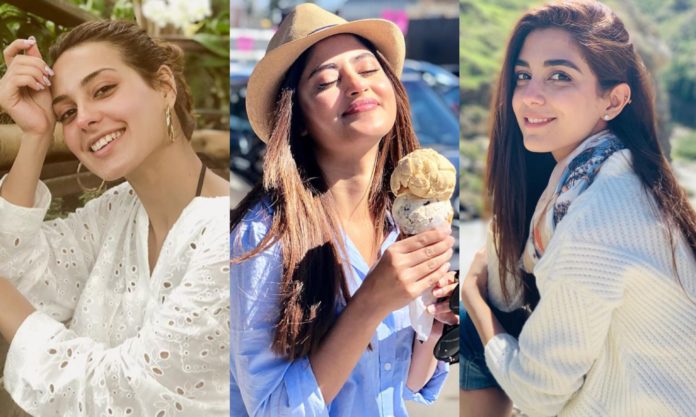
Celebrity travel style file: Here’s how your favorite actresses are vacationing this summer

Summer means holidaying and vacationing, in simpler terms. And honestly, is there a better way to flaunt your summer style and get that perfect Insta worthy picture than to dress up? 

So, here are a few of our favorite outfits adorned by some of our female celebrities that we really want to replicate on our vacations (we like to call it inspiration, just so y’all know). 

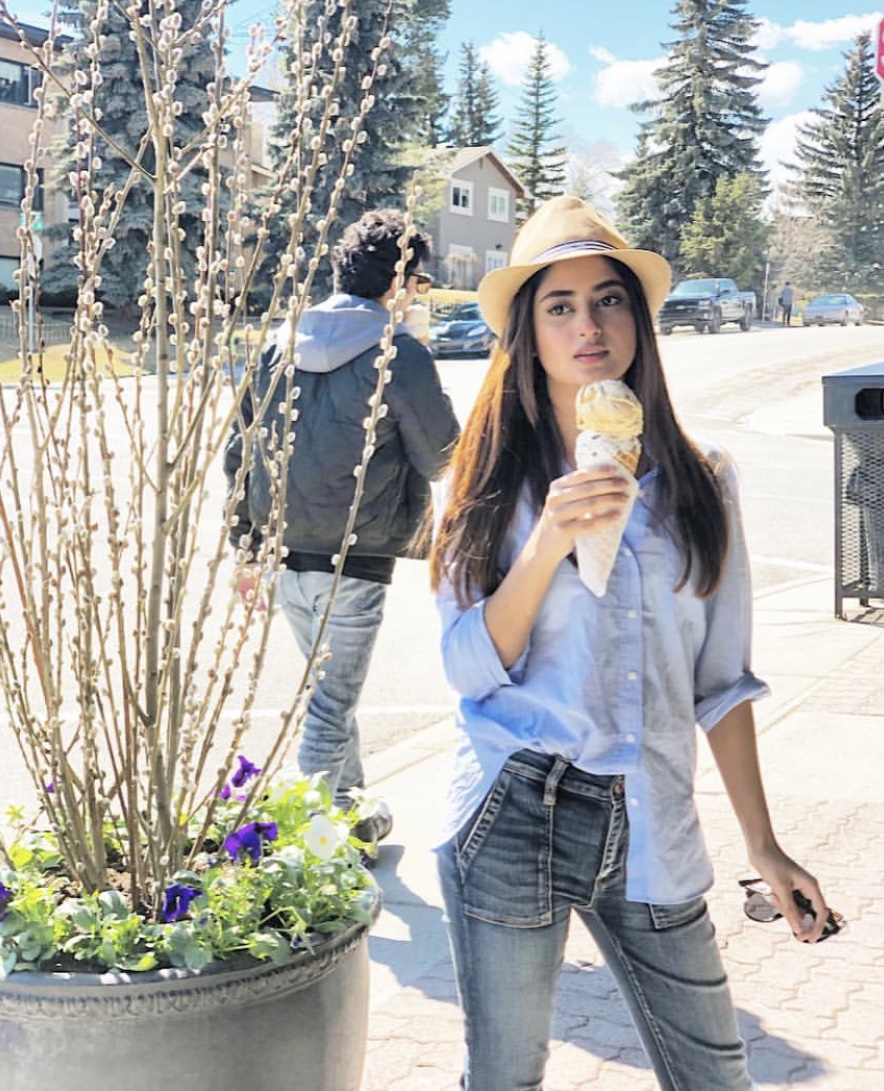
Sajal Aly

A dress shirt isn’t just meant to be worn formally, and Sajal understands that. We love how the actress has given the outfit her own spin by tucking it in from one side (Tan France, anyone?). Pair the shirt with washed out or light blue denim whilst accessorizing it with a hat and don’t forget your sunglasses to beat the heat! 

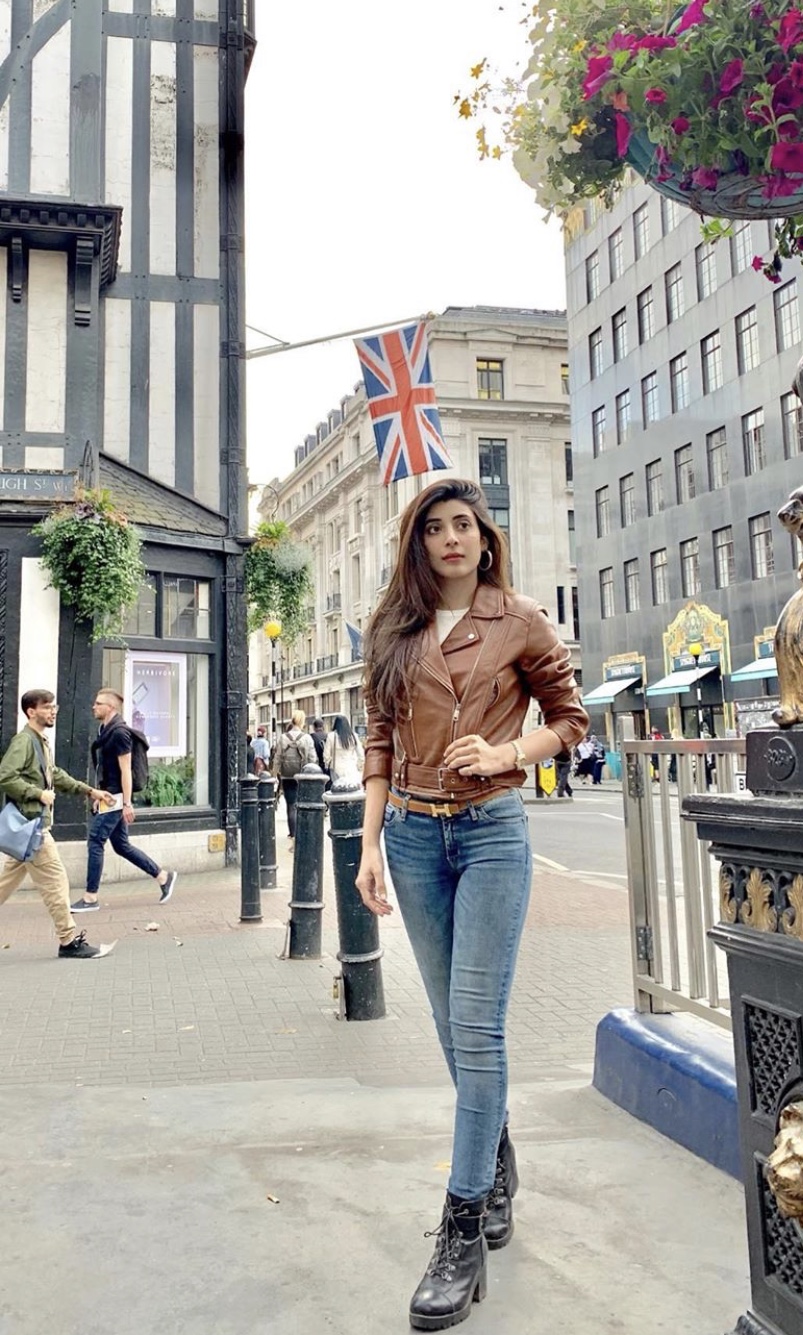
Urwa Hocane

If you’re vacationing in a place like the UK which tends to remain chilly during summers, a jacket and boots are a must!

Any outfit can be automatically improved with a classic leather jacket, and we love how Urwa has chosen the unconventional brown jacket to let her outfit do the talking. Choose minimal makeup and minimal accessories to stand out against the leather-clad crowd and you are good to go.

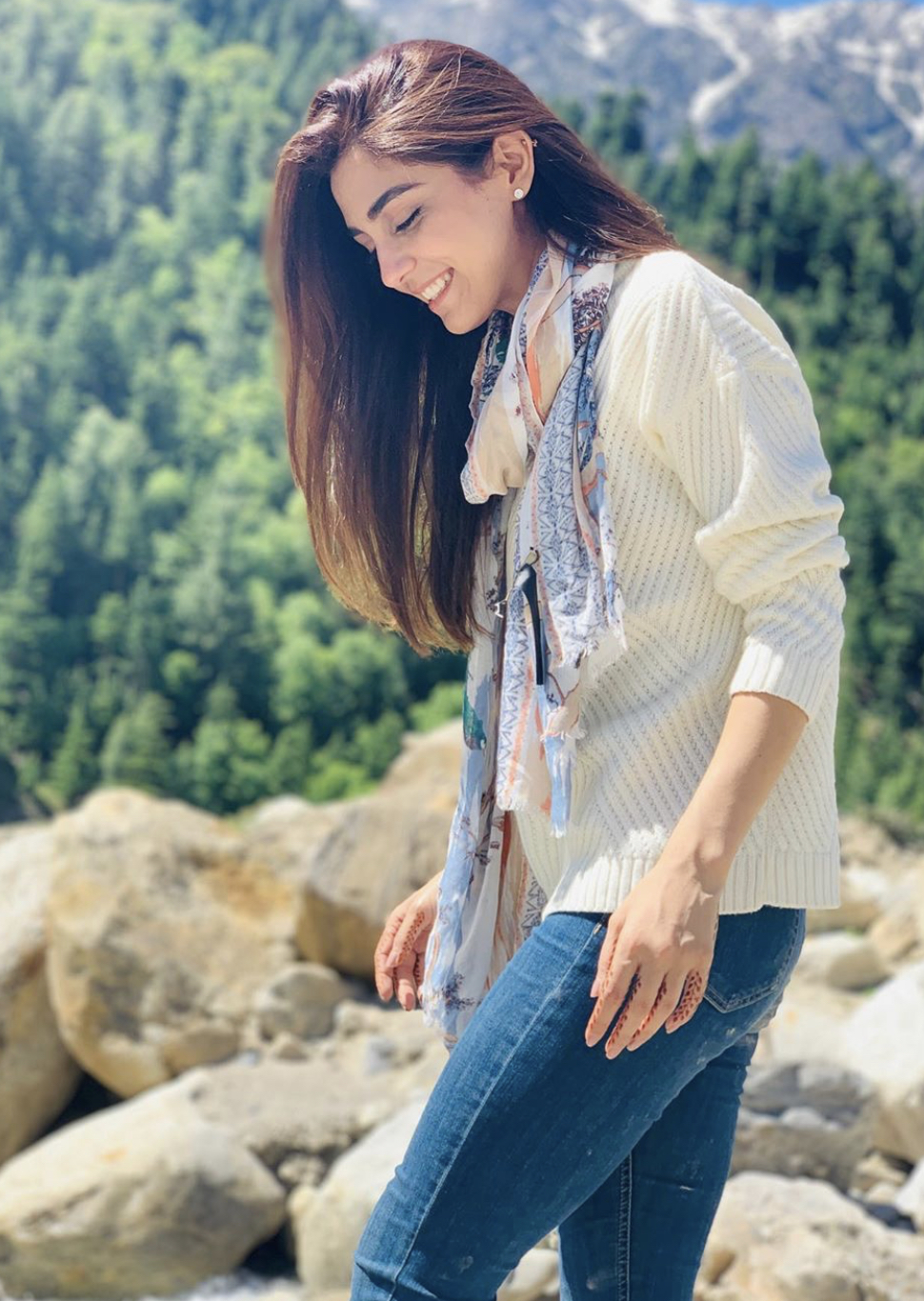
Maya Ali

Vacationing in the mountains also means bearing cold weather even if it is the summer season. While the sun shines bright, the chilly cold can be felt in the air. So one needs a sweater to keep warm. We love how Maya hasn’t kept her summer/winterish look basic and accentuated it with a pretty scarf, breaking the monotony of the outfit. 

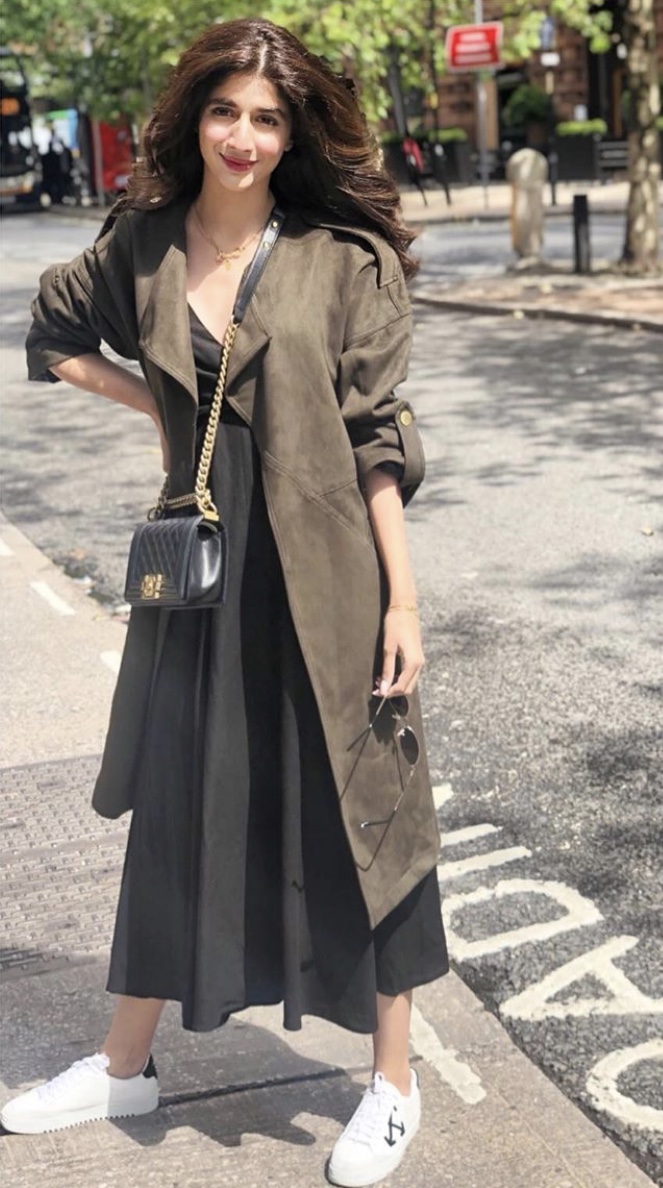
Mawra Hocane

Almost every girl loves to wear a summer dress while on holiday. While some may think a dress needs to be paired with sandals or heels, that’s not the case anymore (also since holidays require lots of walking here and there). Take a cue from Mawra and pair yours with trainers which will immediately give a pretty dress a nonchalant, more edgy look whilst making one appear ‘on trend’. 

Iqra Aziz

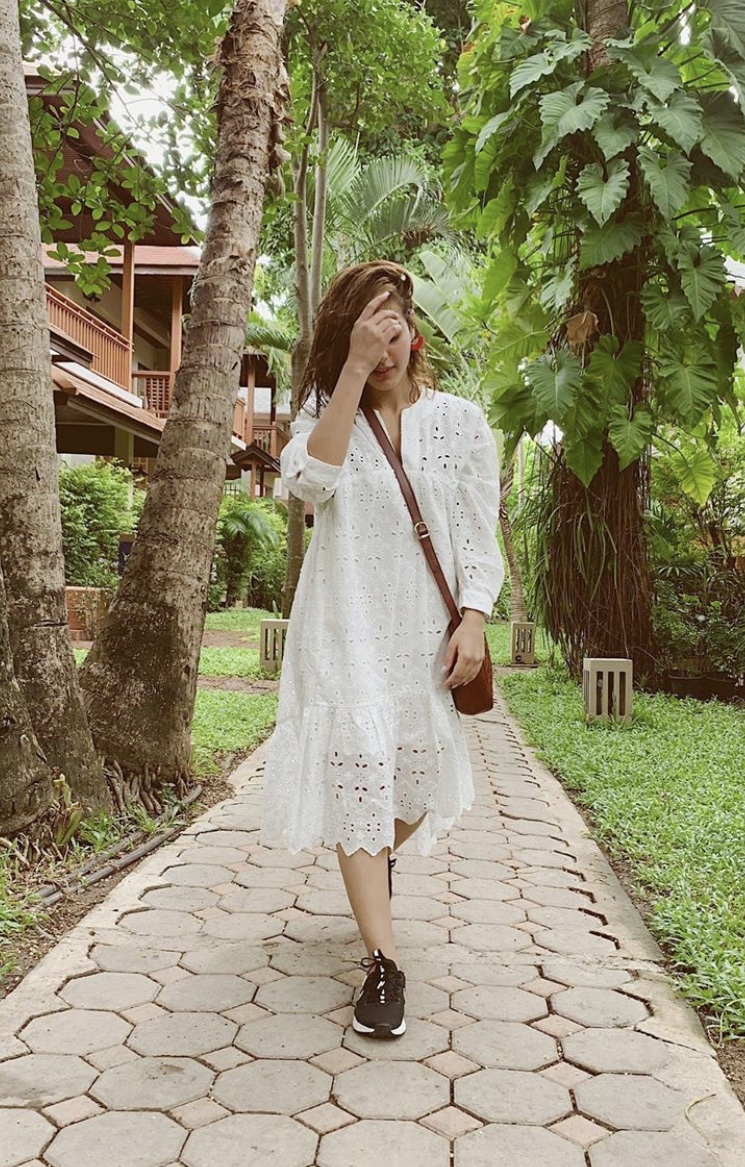
Iqra chose the simplest and breeziest looks from her wardrobe for her getaway to Thailand, and this is one look we instantly fell in love with. A summer dress that she paired with trainers for her trek in the forest while keeping slippers handy while heading out to the beach. Smart, we must say! 

What do you guys think of these looks? Let us know in the comments.

Imran Ashraf just schooled Shahveer Jafry after the latter threw shade at Pakistani dramas

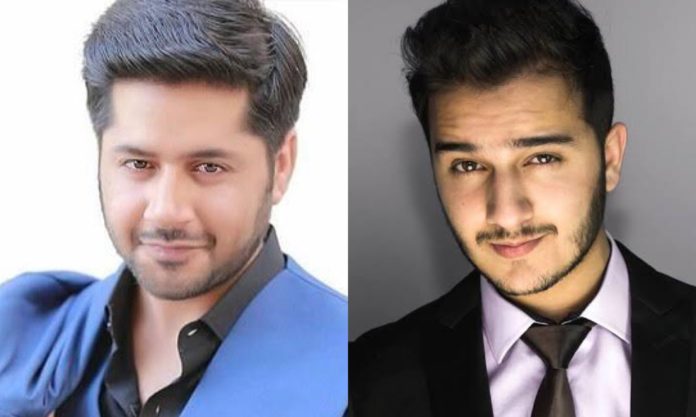
Shahveer Jafry, the YouTuber, is in news every now and then for his association with YouTube phaddas, fake pranks and what not. While we may not pay heed to most of his controversies, we were forced to address his latest one as this time around, he went all out and threw shade at the Pakistani drama industry.

Here is what the YouTuber said:

https://twitter.com/shahveerjaay/status/1143581454829572096

I mean, we get it! We do. Pakistani dramas lately have been banking on domestic phaddas to get viewership but that is just one section of the industry. We have a gigantic number of dramas coming in, that are discussing the lesser talked about social issues. Considering everything, passing such a sweeping statement (that too by somebody who has been accused of stealing content) is just a little too hard to absorb.

Imran Ashraf schools Shahveer Jafry

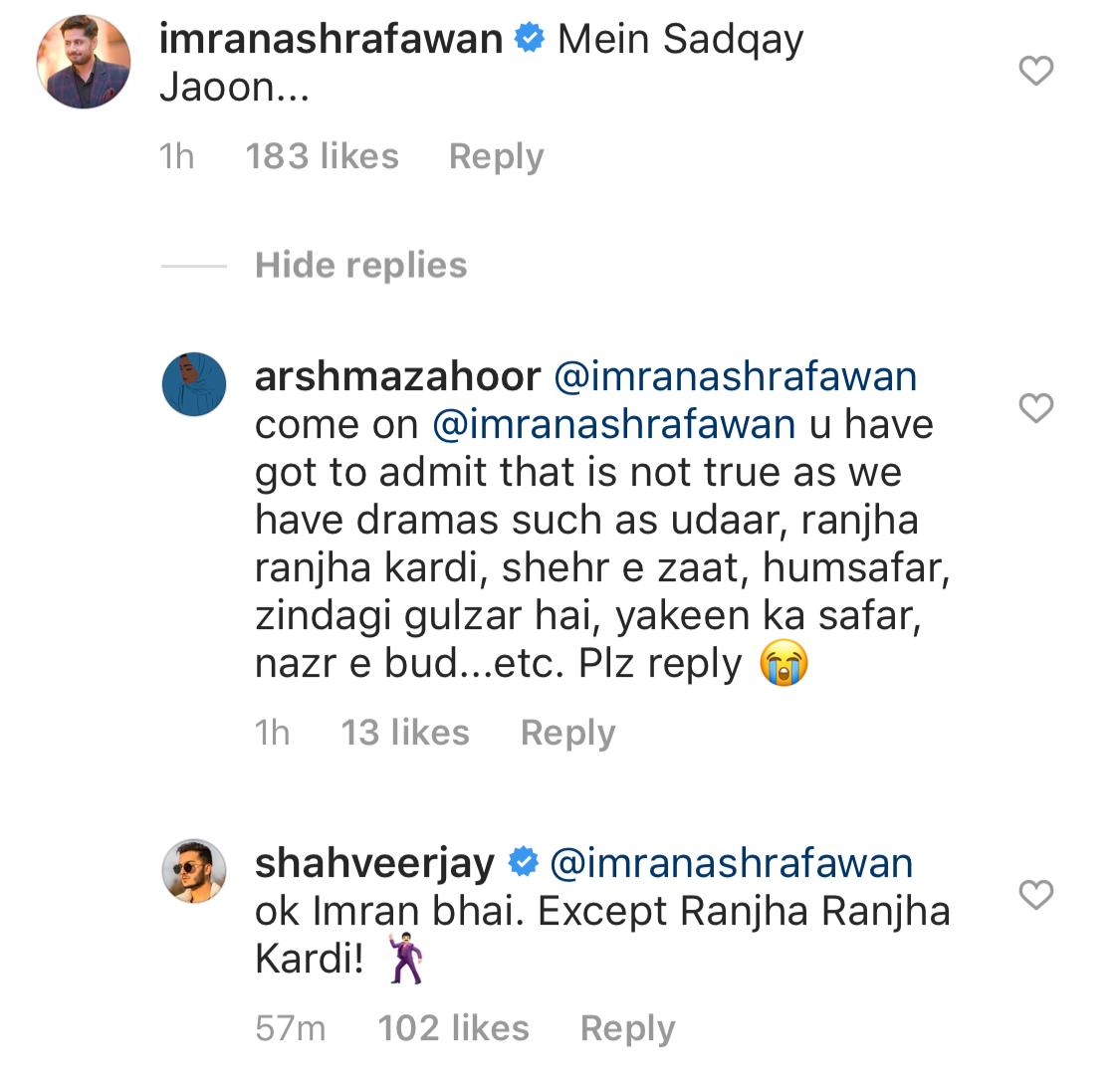
Looks like Imran Ashraf felt that too so he quietly left a short yet crisp response under Shahveer’s post:

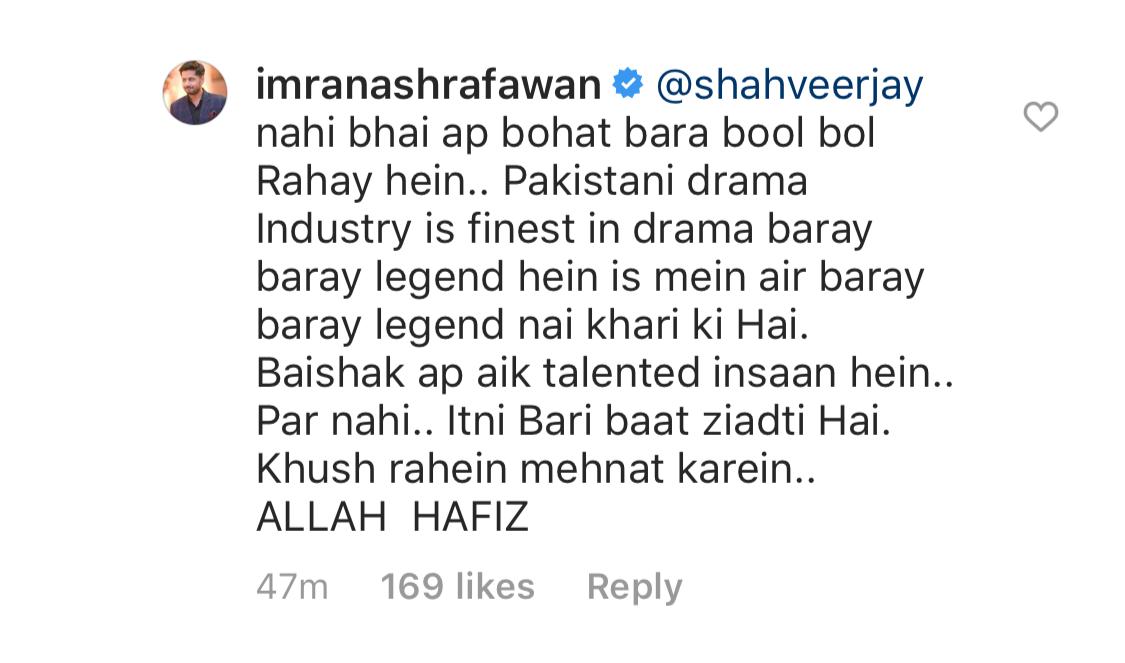
Shahveer also acknowledged Imran’s response and clapped back with what he thought was a nice, funny response. Imran Bhai wasn’t having it either way so he decided to let out whatever he was feeling about Shahveer’s post, in one go.

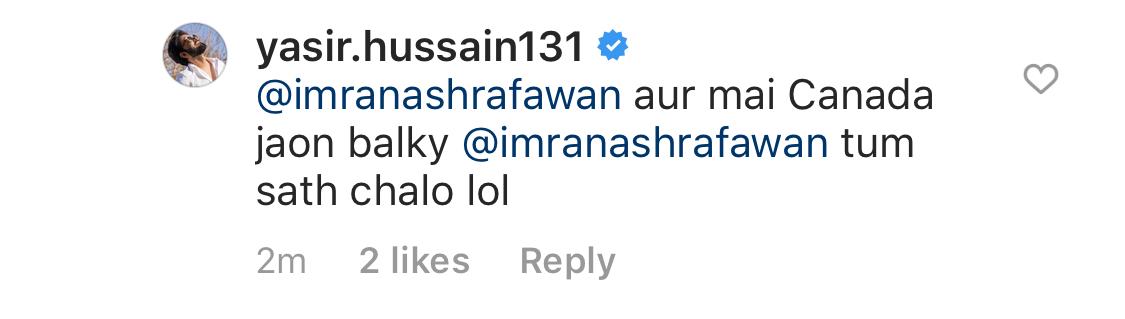
This is where Yasir Hussain jumped into the conversation (no surprises there. Jk, we love Yasir) and left a rather witty response underneath Imran’s first comment:

It’s okay Shahveer, you had a good run.

What do you guys think of the whole situation? Let us know in the comments.


Is the culture of film studios dead in Pakistan?

New replaces the old is the law on which the world functions. Countless old methods of doing things died and were replaced by newer, more efficient ways of achieving better results. The world of filmmaking is not an exception to this law. Cinema has progressed from being silent to having a voice, from black and white to technicolor, from relying on artificial sets to using high-end VFX technology; there might be a new technology in works at this very moment that would once again change how films are made worldwide.

The Pakistani filmmaking scene has had to suffer from a rather slow start in catching up to the rest of the major filmmaking industries around the world. We never had the time to slowly phase out of the old technology and adapt to the new technology. The fact that the past decade of the Pakistani movie industry comes with the caption of “Revival of Pakistani Cinema” means that our movie industry had quite virtually died at one point before it was resurrected.

Is the culture of film studios dead in Pakistan?

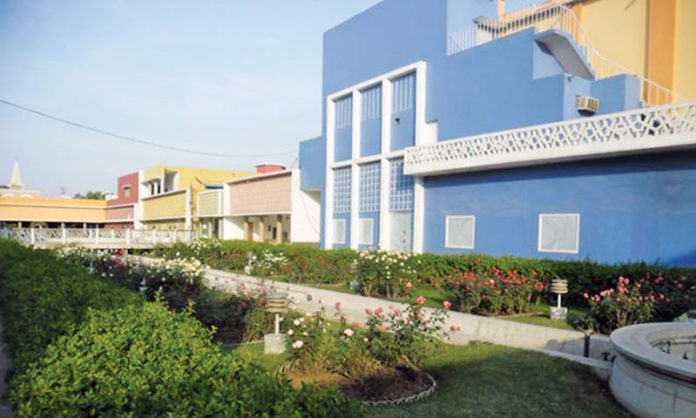
There is not much except memories of the glory days of Pakistani cinema when it used to be a thriving industry of the country. Back in the day, when Lahore used to be the hub of the Pakistani movie scene, there were hustling and bustling film studios where movies were continuously shot day in and day out. All the superstars of the country could be found there with hundreds of fans lining up outside the studio to get one glimpse of their favorites in real life. The livelihood of countless people; from spot boys to professional technicians were attached to these studios (Lahore’s Evernew studios is just one example). 

Unfortunately, that is no longer the case. The once alive world of film studios in Pakistan is now little more than deserted ruins. With producers being offered real locations as sets for their films and the desire of authenticity driving away from the artificiality of the sets created in a film studio, the need for film studios has dwindled drastically in Pakistan.

Evernew Studios, one of Pakistan’s oldest and once glorious film studio, lay mostly abandoned these days owing to a complete lack of work happening there. The only customers that the studios usually get these days are mostly for shooting commercials. The six shooting floors are almost always empty and the once jam-packed studios are now desolate.

Is digitization the end of film studios?

It is not just the film studio culture that has taken a hit. The digitization of the medium of filmmaking means that the old film labs, where all of Pakistan’s classic films were edited for the big screen, are now completely obsolete. Because the necessary new technology was not adopted by the industry on time, the Pakistani filmmakers now have to rely on getting their post-production done elsewhere, oftentimes in other countries, as the required technology is not found locally. The now-closed film labs have become no more than trivia related to the old classics of the Pakistani film industry.

Evolution with time is necessary for survival. Film studios and film labs of Pakistan are not discussed much by the current lot of producers and consumers of Pakistani films because they are no longer the need of the time. At least not the ones that Pakistan used to have back in the golden days of Lollywood. Is the loss of the film studios unfortunate? Yes, when we consider the rich history attached to them. But in this time of digitization, there is no point in reminiscing the old times or trying to revive them. 

A final word

Film studios are still alive and thriving in other industries like Bollywood and Hollywood. Pakistan, too, can have that culture of filmmaking back provided it fulfills the demands of the time. A better-built studio and film labs laced with new technology would only benefit the filmmaking scene in Pakistan as they would provide the producers what they need locally instead of them searching abroad for what they want. 

And if all of that is too hard for the industry to achieve, the least it can do is preserve what is left of the film studios as a part of cultural heritage. After all, it is the preserved history that keeps something alive for a long time instead of having it fade into oblivion. And the Pakistani film industry cannot afford many revivals. 

Here’s how our leading actresses are revamping the beauty standards with their ‘natural’ looks

Women have almost always been subjected to impossible standards of beauty. Our culture ranks girls by their face value. “Itni lambi, itni choti, itni kaali, itni moti” are some of the phrases almost all of us have heard at one point in our lives. If you are a born and bred Pakistani, chances are you’ve heard desi aunties talking about mohallay ki larkiyan like they are some piece of meat. Our industry is no exception.

The trend, however, seems to be changing. But before we delve deeper into how it’s changing, it is imperative to understand that the beauty standards differ with changing landscape around the world but one thing that remains consistent is the fact that everywhere women are told, they are not good enough. If you want to feel bad about yourself, just go shopping. The plethora of products available is marketed in the perfect way to make girls think that everything about them is wrong in some way or the other.

Leading actresses go ‘natural’ 

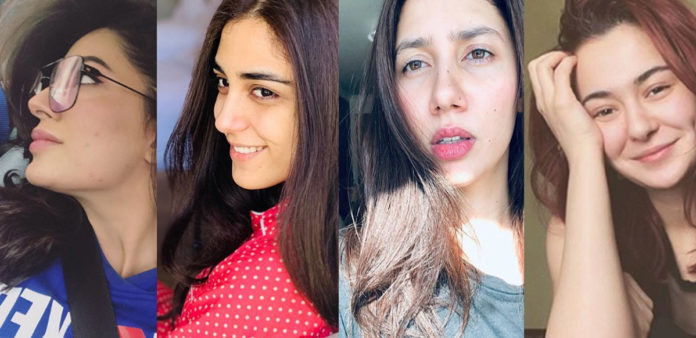
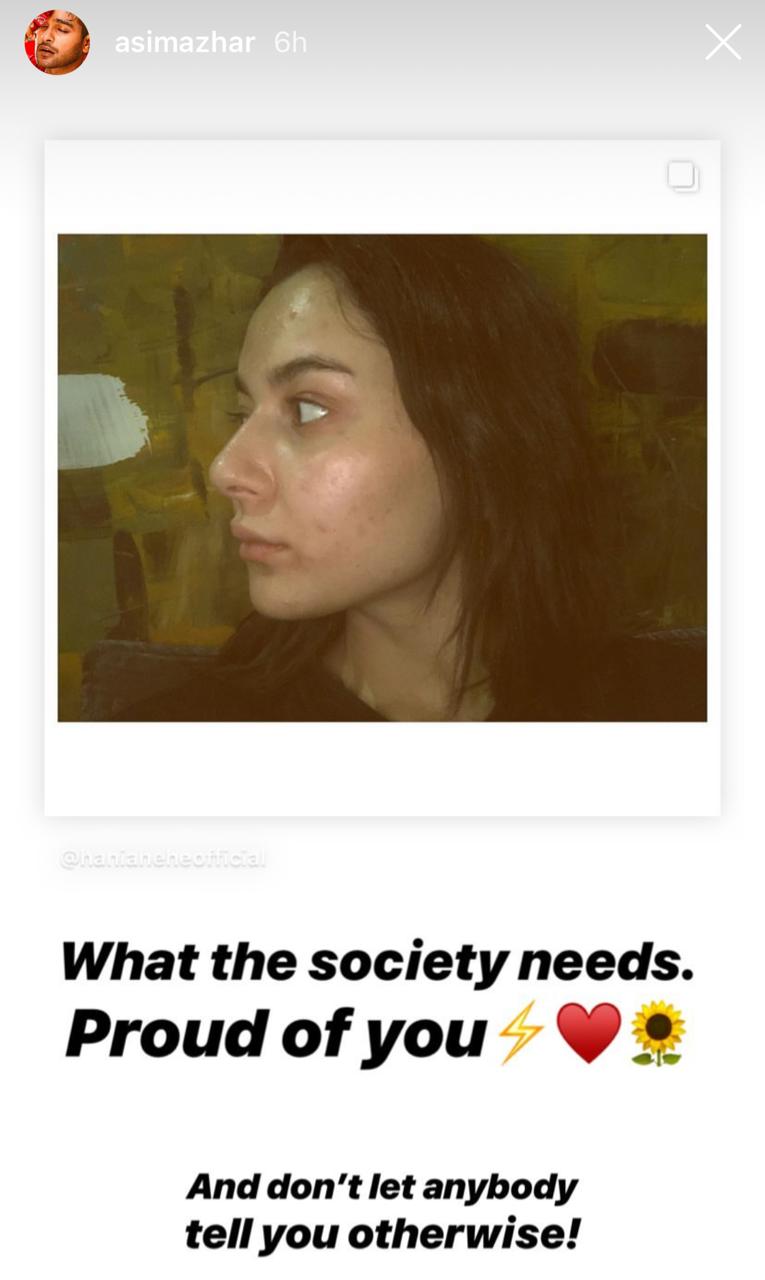
Amidst all of this, the latest occurrence of Pakistani beauty icons cheering for their natural self is a breath of fresh air. Haina Amir, let’s call her a trendsetter, posted a picture of her “not so perfect skin” and man, was that relevant. Hania talked about how her skin had been acting out and her struggle with acne prone skin, which is analogous to every other girl’s skin problems.


Following Hania’s suit, Mehwish Hayat and Ayesha Omar posted pictures of their morning faces. Lately, posting natural pictures has become a trend in its own way. Actresses like Iqra Aziz, Sadaf Kanwal, Mahira Khan, Maya Ali, Syra Shehroz and many others are mostly seen sporting natural looks. Now it is to be noted that these women are ideals of hundreds of young Pakistani girls hence they rallying against society’s definition of beauty and stepping out in all their natural glory is a huge step. Dair ayay Durust ayay.

Such pictures send a very body positive message. They tell younger girls that it is okay to have bad skin or hair days and that it’s okay to have acne or not a perfectly symmetrical face. That it’s okay to own up to your flaws.

Image result for mehwish hayat natural selfie

A girl does not need to lather herself in skin reviving creams every day to look beautiful. Creating awareness among the young generation is extremely important and granted posting a few selfies will not right every wrong but it is a start and a very good one at that. These superstars are telling women to feel good in their own skin and that a little bit of melanin never hurt anybody. That using makeup is a choice; an option and not a compulsion to mold oneself into society’s approved standards of beauty.

Kudos to our talented Pakistani superstars for creating this ripple! We are definitely here for it.

Do Pakistani dramas give away too much of their story in their OSTs?

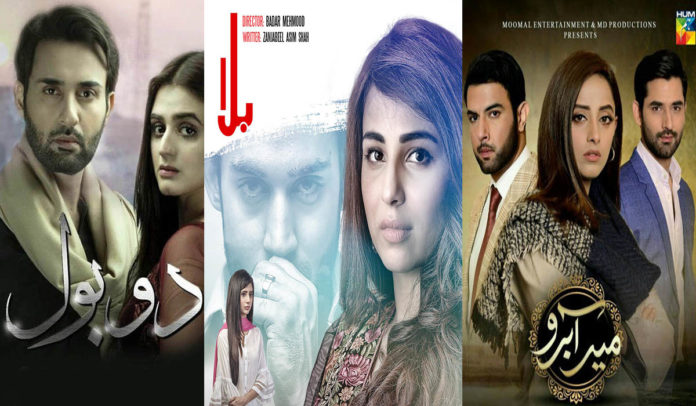
One of the most entertaining things about Pakistani dramas, apart from the dramas themselves, is their Original Sound Tracks (OSTs). Take Do Bol for example. The drama was appreciated for a lot of things including the phenomenal performances by the lead pair and the writing, but what made the drama even more popular was its OST. ‘Ja Tujhe Maaf Kiya’ was on everyone’s lips when it came out. People were either making videos on Tik Tok with the OST in the background or were covering the song in varied ways.

https://www.youtube.com/watch?v=BAWJ_6KdkV0

While there is no denying the fact that the producers have learned the art of producing excellent OSTs for their dramas, one thing they still need to work on are the videos for those OSTs. Most of the times, the said videos are nothing but scenes from the dramas, which, as you can imagine, show major twists from the same. Whether it is the death of a major character or the fact that the female lead of the show gets married to another person, they just casually end up showing all kinds of scenes, without giving due consideration to the consequences. 

A few examples

There was a time when people used to listen to OSTs while watching the videos. But now, as more and more people have become familiar with the word ‘spoilers’, they have stopped watching the videos. They’d rather hear the MP3 version online than have their dramas spoiled for them. 

A few months ago, a drama named Balaa went on air, on ARY Digital. The serial was quite popular due to Bilal Abbas Khan and Ushnah Shah’s pairing and for its twisted storyline. But people who saw the video of the OST were rather disappointed with it for it not only showed how certain characters were going to change their behavior, it also showed the death of one of the side characters. 

https://www.youtube.com/watch?v=EMtZNiufki0

Unfortunately, it looks like this practice isn’t ending anytime soon. Take Meer Abru, airing on HUM TV these days, as an example. The drama has Noor Hassan and Sanam Chaudhry in the lead roles, those watching the drama don’t know what’s going to happen to the latter but guess what the OST has other plans. Sanam Chaudhry gets married to another character in the drama and as of last week, everything was going normal between them. The OST, however, gives away the fact that nothing will remain normal in the coming days. 

Amidst all of this, perhaps the best example of this would be Mata e Jaan. It was a drama that went on air on HUM TV back in 2012. It featured one of the most shocking deaths in the history of Pakistani dramas; something that took the viewers completely by surprise. Those who saw the OST of the drama, however, were in for that surprise because it was already spoiled in the OST.

https://www.youtube.com/watch?v=wS_mPLYIhXA

A final word

Pakistani drama makers need to realize that they don’t need to give away the major twists of their storylines in their OSTs. There have been a few dramas, such as Naulakha and Dil E Bereham, that have shot proper videos for their OSTs which is actually commendable considering they show nothing from the story. It’s actually fun watching those videos while listening to the melodious OSTs. Here’s to hoping that more and more producers start making proper videos for the OSTs of their dramas so they aren’t spoiled for us before they even go on air. 

Veena Malik is in the news again and this time, it’s for political reasons

Pakistan’s political landscape is volatile, to say the least. With political parties blaming one another for everything wrong in the country without actually doing anything practical about it to noise-laced political shows devoid of any meaningful discourse whatsoever, politics in Pakistan is unstable at best. While most of our actors tend to steer clear of this subject, Veena Malik has chosen to take a different route. The actress has lately been all over Twitter and social media for her alleged hate campaign against Maryam Nawaz and PML-N.

Some background on the controversy

Earlier today, Twitter witnessed a trend #WeStandWithVeena doing rounds of the said social media platform. With thousnads of tweets pouring in, in Veena’s support, we decided to investigate the matter. Turns out Veena has been saying things about PML-N and Maryam Nawaz Sharif in particular that are, let’s say, not in a very good taste. So, it looks like PML-N may have threatened the actress with a case.

While we agree with Veena that no one should be silenced for voicing their political opinions, it kills the purpose of the same voice if it is laced with more personal attacks than actual discourse and legit opinions. Here are a few exhibits of what Veena has been saying about Maryam Nawaz and consequently, PML N.

She has also been referring to Maryam Nawaz as a ‘Grandmother’ for her daughter recently had a baby and ‘Bhagoori‘ alleging to her running away with her husband, back in the day.

In addition to that, Veena has been tweeting in favor of the current PM Imran Khan and the Pakistan army.

Veena also supported the PM after his condemnable remarks terming Pakistan People’s Party (PPP) chairman Bilawal Bhutto as ‘sahiba’. She took to Twitter saying “In fact…You have to go down to their level to make some people understand things…!!!”

Twitter trends #WeStandWithVeena

Long story short, in response to PML-N threatening Veena with a case, a number of her and the current PM’s supporters have begun tweeting in the actress’ support, with the hashtag #WeStandWithVeena.

(Yes, the irony in the above-mentioned tweet hasn’t escaped us).

Here’s another exhibit:

Amidst all the chaos, there was also a poll started on Twitter that asked people to choose between Veena and Maryam Nawaz. Veena won the said poll by a huge margin.

To which Veena just responded

While we understand Veena’s apprehensions about a certain political party and its leaders, we would also like to encourage the actress and her supporters to maybe employ less personal attacks and more logic.

What do you guys think of the whole situation? Let us know in the comments.

These Pakistani stars made it to Hollywood and we are not complaining

Art has no boundaries and limitations and it is also somewhat true that every artist aspires to get the biggest platform to showcase their talent (and rightfully so). Pakistan, too, has a lot of talent, we have some of the best and most hardworking artists in the world. Some have worked in Bollywood while still others have had stints in places outside of Pakistan. Similarly, there is an elite list of artists who made inroads to Hollywood.

Hollywood, being the leading cinematic industry in the world, is the hub of fame and international stardom and also where the big money is at. Artists worldwide dream of being a part of the peripheries of Hollywood. Here’s the list of Pakistani stars who made it there:

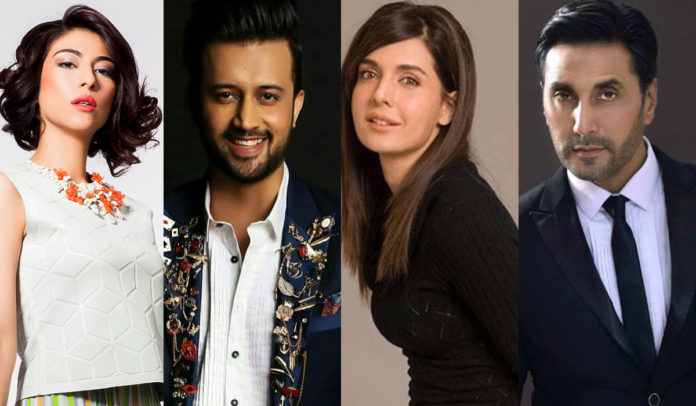
Adnan Siddiqui

Adnan is a household name in Pakistan due to his spectacular performances in Pakistani dramas such as Maat and Ahista Ahista and Indian film Mom opposite the legendary Sri Devi. Adnan has also shared the big screen with one of the biggest female superstars of the world, Angelina Jolie. He played a pivotal character in Irfan Khan starrer A Mighty Heart. Adnan revealed on Tonite With HSY that he enjoyed attending the press meets with the cast and crew at international platforms.

https://www.youtube.com/watch?v=aJ7GayaNEac

Meesha Shafi

Meesha, who was recently in news for her #MeToo controversy and her stint at the Pepsi Battle of the Bands, showcased her talent in the Hollywood film, The Reluctant Fundamentalist. The movie, which is based on the book by Mohsin Hamid, is an ensemble cast film with the likes of Kate Hudson, Liev Schreiber, Shabana Azmi, and Om Puri.

Mahnoor Baloch

The Main Hoon Shahid Afridi star has won hearts of the international audiences with her bonafide performance in the Hollywood film, Torn acting alongside another Pakistani talent, Faran Tahir in this emotional movie. This was Mahnoor’s major breakthrough in the Hollywood celluloid.

Atif Aslam

Atif is a household name in Pakistan and India with his unmatchable track record of hit songs and soulful melodies in the contemporary cinema. Three of Atif’s songs were featured in an Independent Hollywood movie Man Push Cart. Atif also lent his vocals for the Hollywood motion picture, The Reluctant Fundamentalist.

https://www.youtube.com/watch?v=GE1kX4MQq6Q

Sajid Hassan

Sajid is a powerhouse performer, known for his amazing acting prowess in Pakistani dramas. He started off as a theater personality and then moved onto television. Hassan’s work in Pakistan has gained him widespread recognition. He managed to bag a role in the Angelina Jolie and Adnan Siddiqui starrer A Mighty Heart and showcased his talent in a brief yet pivotal role.

Strings

https://www.youtube.com/watch?v=rucMwBt66fM

Strings has successfully carved its own niche in the local music industry but has also made Pakistan proud in Hollywood. Both Faisal Kapadia and Bilal Maqsood got their big Hollywood break when they worked on Spiderman 2’s OST. Najanay Kyun was added to the Spiderman 2 original soundtrack.

 Zia Mohyeddin

This veteran Pakistani host and actor is still remembered for his blockbuster television chat show, Zia Mohyeddin show in the 70s. Zia has struck gold with his parts in Hollywood classics such as Lawrence of Arabia and They Came from Beyond Space. The actor has also featured in innumerable English plays such as Minder and Family Pride.

Asif Raza Mir

Asif has a double whammy of celebration, firstly his elder son Ahad Raza Mir recently got engaged to his lady love; the beautiful Sajal Ali and secondly, Asif has bagged HBO’s Gangs of London. The actor who once ruled Lollywood with films like Daaman and Mere Apne is all set to take Hollywood by storm.

These superlative talents of the country need more encouragement and empowerment to shine bright at international platforms and we are here to give it to them.

Is Punjabi cinema problematic or does it just cater to a different audience?

Most of the Lollywood fans are well aware of the two mainstream Pakistani films; Chhalawa and Wrong Number 2 gracing our cinemas these days. Very few know that the Eid festivities didn’t end there. There were a host of local cinema products that saw a limited release at single screen cinemas of various parts of the country. We wrote an entire piece on one such offering; Shareekay Di Ag. 

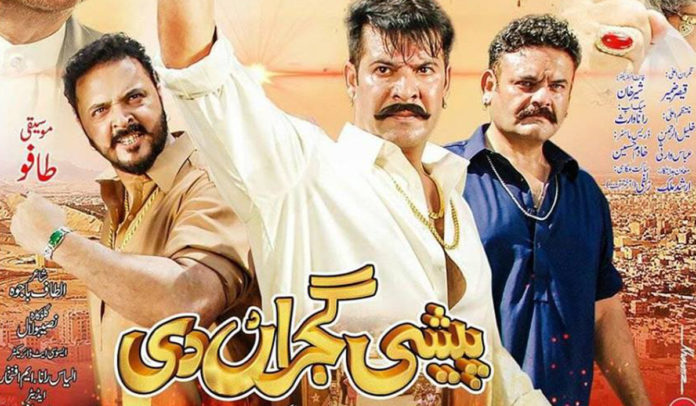
While we are on the topic, it seems like Shareekay Di Ag isn’t the only film by Momi that was supposed to see a limited cinematic release across certain pockets of Punjab, this Eid. There was another film titled Peshi Gujjran Di starring Moammar Rana that was supposed to come out. However, the film couldn’t see the light of the day on Eid because the censor board didn’t pass it as it allegedly contained graphic violence and objectionable scenes, according to our sources. The film may, however, see a release as the makers are trying to remove whatever the board objected to.

Is Punjabi cinema problematic or does it just cater to a different audience?

The film may have yet to see its cinematic release, it is pertinent to state that a lot of GL readers and followers of the new age cinema may find such films objectionable and even loathsome as I have seen them widely blame such film and the makers behind them for Lollywood’s ultimate decline. A few examples include such films containing women dancing and flashing themselves in the hero’s face, in rather skimpy clothes, while the male cast is mostly seen in violent scenes; villains lynching heroes and guns being used as ornaments just fortify their assertion.

The argument may be true in parts but there is another fact that can’t be ignored.

The kind of cinema portrayed in films like Shareekay Di Ag, Peeshi Gujjran Di and many others which don’t get mainstream media coverage still have a considerable audience who adore and relate with a cinema that mainstream celluloid audience and media outlets find loathsome.

https://www.youtube.com/watch?v=cfiMpO4Qdfw

The dynamics of the Punjabi cinema

Despite the prevalent multiplex culture where film viewing has become a rather expensive and hence an elite culture, there still resides a cinema in the peripheries of the main industry which caters to a single screen, working-class audience most of which are male adults. This cinema was largely born following the decline of the Urdu cinema in the late 70s and early 80s when families had started distancing themselves from the violent cinema that contained obscene scenes in abundance.

With the revival of Urdu cinema in the 2010s, this particular brand of cinema has taken a back seat and has resultantly become a separate “local” industry, somewhat comparable to our Pashto film industry, that’s supporting a separate set of technicians, artists and catering to a specific niche audience.

Moreover, the cinemas that screen such films have considerably lower ticket rates suiting the income of their clientele which keeps the business going. These “local films” can’t be seen and judged with the same lenses as films like Punjab Nahi Jaungi, Cake, Jawani Phir Nai Ani and other mainstream films which remain commercial and critical success at large.

Hence, expecting the same level of artistic intellect and depth as well as the production quality from such films is unjustified.

https://www.youtube.com/watch?v=d2fECijVzBA

Cinema, not just an elitist ‘upper-class multiplex culture’

Keeping the very palpable presence of such industry and the considerable number of jobs it is supporting, it won’t be an overstatement to assert that such cinema and its audience do deserve a certain level of respect and appreciation.

The cinema created in such pockets may not be churning out films of which the majority of Pakistanis would feel proud of, but they do achieve their limited goals for which they are made, that is, entertaining a certain section of our society which otherwise don’t have access to other entertainment options available to the higher income groups of the society. More importantly, such cinema has been sustaining countless artists and technicians attached with it, as stated earlier.

Keeping the above in view, it is expected of the mainstream media and film blogs to respect this “Niche Cinema” at least, if they don’t feel like promoting it. After all, the cinema in our part of the world can’t be limited to an elitist ‘upper-class multiplex culture’. As Shaan once in one of his interviews somewhere and I quote, “Aap lower middle-class ke liye bhi films banayen, multiplex culture ne in logo se inka cinema cheen lia ha.”

Needless to say, as a film medium, there should be some bare minimum quality standards that must be followed by these filmmakers or for that matter, any filmmaker but it is important that we acknowledge their presence regardless. 

A YouTuber has called for a boycott of ‘Baaji’ after ‘Gangster Guriya’ and the masses are actually responding!

Saqib Malik’s directorial debut Baaji is all set to hit the cinemas this Friday. Up until now, four songs have been released and one of them is none other than the Mehwish Hayat starrer ‘Gangster Guriya’ that has caused well, some controversy in the country.

Baaji’s ‘Gangster Guriya’ sparks controversy

Recently, the dance number started a debate over whether the song should be considered an empowerment anthem or a tribute to a woman owning and expressing her sexuality as she pleases. A lot was said and done. We presented a balanced picture of the whole scenario too, an excerpt of which is as follows:

“The song features empowering lyrics like ‘mann marzi ka apna maza hai‘ and ‘don’t touch me boy, mein nahi toy’ which seek to establish female control over their own body and actions. The title in itself is a rebellion, ‘Gangster Guriya’ inspires an image of a beautiful woman who won’t be silenced easily by anyone and can fight for herself. The music video also features Mehwish on top, looking tough and in charge of herself. While this seems like a step in the right direction, it evades the seemingly more effective route. Perhaps showing more intellectual, strong female leads with a good backstory would do better for women empowerment than scantily clad gyrating vixens.”

https://www.youtube.com/watch?time_continue=1&v=kkweRSdM0-4

YouTube star calls for a boycott of Baaji

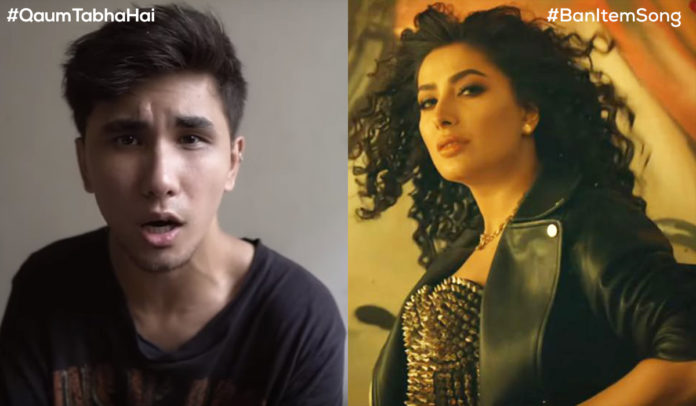
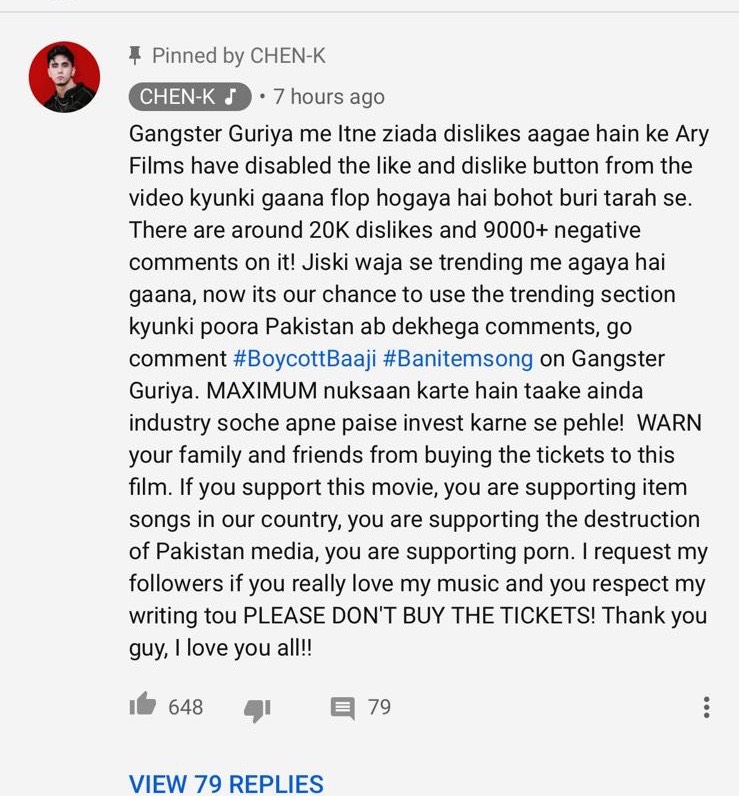
The story, unfortunately, doesn’t end here. A YouTube star Chen-K, recently, took to his YouTube channel and urged the audience to dislike the song and boycott Baaji on the whole. Now, this was some 5 days ago and now it looks like the masses are responding to his call for as per reports and Mr. Chen K himself, ARY has removed the likes/dislikes number from their YouTube since the dislikes exceeded the likes by a huge margin. While we can’t see the dislike/like ratio we do see the negative comments underneath the original video which do paint a clear picture of the Youtubers popularity and response from the masses.

Chen-K in his interminable live videos urges his followers to not abuse Mehwish Hayat (talk about being holier than thou). He asks them to simply dislike the song and boycott the film. He then goes on to explain that whatever he is saying is not coming from a backward mind, rather logic (which is ironical since he, very very logically, explains in excruciating detail how item numbers such as these make the lower class people to watch porn?!?!?!). He further mentioned that he has seen the world and has even done ‘clubbing’ so he knows what he is talking about.

A final word

While everyone has a right to freedom of expression, it is important to keep the consequences of their words in mind, especially for influential social media stars such as Chen-K. Urging people to boycott a movie (that honestly seems to be one of the best we have had in so long) just because it features a woman being in charge of her own sexuality, without having any meaningful discourse with the audience can be a little too fatal for our nascent cinema industry.

What do you guys think of the whole situation? Let us know in the comments.