Home Blog

‘Kaisi Teri Khudgharzi’ Fans Ask Dur-e-Fishan Saleem

Dur-e-Fishan Saleem
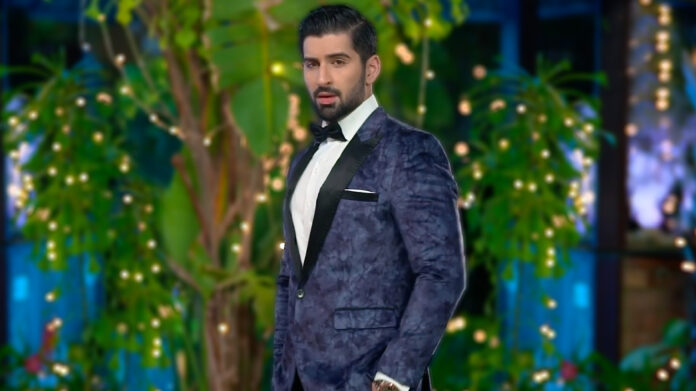
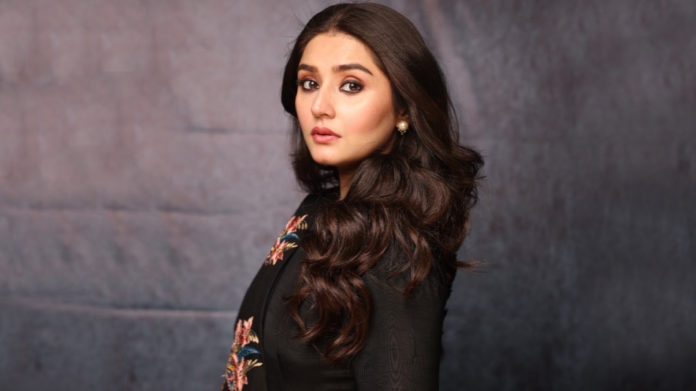
Dur-e-Fishan Saleem posing for a picture

Lowliness is young ambition’s ladder, Whereto the climber-upward turns his face; But when he once attains the upmost round. He then, unto the ladder turns his back, looks in the clouds, scorning the base degrees by which he did ascend.

Exclaimed Brutus in one of Shakespeare’s most critically acclaimed works – Julius Caesar. Julius Caesar once ruled over the heart of every plebeian in Rome, and Brutus, his best friend but growing nemesis, was quick to identify that the great Caesar himself had sown seeds of love in the hearts of all plebeians in Rome, only to look down upon them once he climbed the ladder of success.

Dur-e-Fishan Saleem – one of Pakistan’s most thriving female artists – has done a Julius Caesar in her most recent interview. When asked about Kaisi Teri Khudgharzi, the actress responded she wouldn’t like working in or watching anything similar again. The sheer impudence of the statement is such that Brutus would have died of irony – once more.

Enter Dur-e-Fishan Saleem

It was in August last year that fans saw the first episode of Kaisi Teri Khudgharzi. The relatively unknown Dur-e-Fishan Saleem played Mehak – a bold and beautiful lady from a middle-class background.

Who doesn’t remember that first episode? In fact, there still are TikTok reels of the same. A quick search and you will stumble across reels glorifying a dashing Shamsher (Danish Taimoor) travelling with his protocol. Dur-e-Fishan Saleem happened to be a modern damsel in distress – surrounded by her family but still in distress.

During the commotions, aggression, and male bravado of that first episode, the world of YouTube and pretty much every social media platform in Pakistan saw their first real glimpse of Dur-e-Fishan Saleem.

The Rise of Dur-e-Fishan Saleem

The last episode of Kaisi Teri Khudgharzi aired around mid of December. The drama failed to live up to its hype. In fact, the final episode was fairly irrelevant. However, Dur-e-Fishan Saleem had well and truly landed.

Fans spotted her in a couple of TV advertisements. She got front-row seats to the Lux Style Awards and went on to star in the music video for Asim Azhar’s latest song Dard. Mehak now had the world at her feet.

Dur-e-Fishan’s Shocking Statement

In a recent interview with BBC Asian Network, Dur-e-Fishan mentioned she wouldn’t want to work in or even watch something like Kaisi Teri Khudgharzi again. In her own words, “I would never watch a genre like this or would even like to work in something like this again.

Fans of the serial were left questioning this statement. How does it feel to know the leading actress in your favourite drama wouldn’t waste her time watching a similar storyline again?

In fact, Dur-e-Fishan made it abundantly clear that Kaisi Teri Khudgharzi has opened doors of success for her. She can now choose scripts and, more importantly, reject scripts because she is in a position to do so.

All the commotion makes one question whether this really is the career trajectory Dur-e-Fishan Saleem wants for herself. Does she want to do controversial ‘damsel in distress’ roles to gain traction and the power that comes with it? What’s to say she won’t jump back to a similar role once her popularity falls in the time to come?

In a world where actors influence perceptions, one can at least hope for our stars to stand by their values and not chase clout.

With Dur-e-Fishan having turned her back to the hit drama, fans can indeed ask ‘Yeh Kaisi Teri Khudgharzi?“. And for the rest of us, well, ‘touché, that’s why we didn’t watch it as well.’ 
5 Pakistani TV Shows That Dived Into Psychological Landscapes

Our entertainment landscape is celebrated for its distinctiveness, intertwining cultural values seamlessly into its narratives. Across various genres, we’ve upheld the integrity of our content and core values. Our storytellers have fearlessly explored numerous themes and storylines, pushing boundaries with both courage and finesse.

One particular genre that has resonated deeply with our audiences is psychological thrillers. Featuring artists unafraid to set aside glamour, these dramas focus on raising awareness in a subtle yet impactful manner, delivering performances that resonate.

Here, we delve into some of the most compelling dramas that delicately and convincingly shed light on various psychological disorders, leaving a lasting impact on viewers.

Ranjha Ranjha Kardi

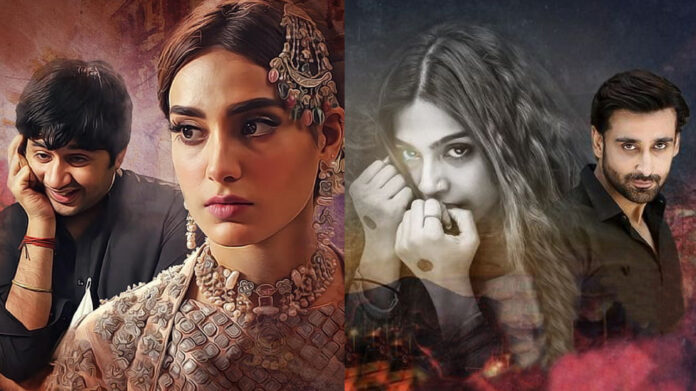
One of the biggest blockbusters, ‘Ranjha Ranjha Kardi’ redefined the term hero by showing the male lead as a mentally disturbed adult played by Imran Ashraf. The project highlights the myths and misconceptions about mental disorders in society and how people are misjudged and ill-treated due to such issues.

The project despite having several other themes managed to create an impact that was necessary for the audience and is still remembered for its subtle yet brave storytelling.

Sabaat

Hum TV’s 2020 drama ‘Sabaat’ talked about narcissism, a very common but not much-highlighted personality disorder. The antagonist Miraal played by Sarah Khan was shown to be suffering from narcissistic personality disorder that made her a less understood individual among her family members. The makers showed her taking professional help which created quite a buzz for its fresh narrative. Miraal later went through a process of healing which helped her move forward in life with a better and more empathetic approach.

Saraab

When a genre is remembered after an artist’s name, you know she is dedicated and aspires to bring a certain topic to attention. Sonya Hussyn despite being the epitome of heroine-ness, chose to work in dramas that highlighted some intricate mental health issues which were never discussed on national television that accurately that too on prime time slots.

Her recent show, ‘Saraab‘, which was released in 2020, had her perform the character of a schizophrenia patient. She received praise from the audience and critics. Though this wasn’t the first time she’s been part of this genre, in 2013, Sonya was in the drama ‘Teesri Manzil’ which showed the journey of her dealing with Post Traumatic Stress Disorder. After which Sonya portrayed a mentally challenged girl in the Urdu 1 drama ‘Nazo’, the project got critical acclaim for its sensitive writing and Sonya Hussyn’s brilliant performance.

In 2019, Sonya played yet another impactful character in ‘Ishq Zahe Naseeb’ which discussed the life of a split personality disorder patient with a different lens altogether.

Dhund

In 2017, TV One produced a unique psychological thriller series written by veteran actor Mohammed Ahmed. The story revolves around Maria, played by Maria Wasti, who while herself dealing with a traumatic past, explores her ability to see and talk to spirits.

The series had a different tragedy of a spirit that was ultimately solved by Maria. The cast includes Mohammed Ahmed and Hassan Ahmed who are a part of Maria’s journey in each episode. However, despite a unique concept and entertaining execution, ‘Dhund’ never got its due appreciation and is one of the most underrated television shows.

Aakhri Station

Sarmad Khoosat’s 7 episodes series that highlighted the struggles of women from different walks of life had one of its most impactful stories that was headlined by Sanam Saeed. A woman who is going through depression post a traumatic childhood and the suicide of her mother. Sanam Saeed played that part to perfection would be an understatement. The drama could manage to justify the depiction of a depressed patient.

Where there is entertainment, there is messaging too. Very few creators understand the responsibility that comes along with the glam and stardom of this industry. Television dramas can create awareness and make changes where it’s needed, what matters is how the narrative is set and the way the story is told. And that power is held by the storytellers and authoritative creators of the territory. The least that these dramas did was to start conversations in living rooms and dining halls about mental health issues, and isn’t it where the change begins?

February 2024 Rewind: Here Is All That Happened In The Drama Universe

February, despite being the shortest month of the year, proved to be anything but slow for Pakistan’s entertainment industry. We saw new projects emerge on various channels, while others reached their conclusion, leaving audiences on an emotional rollercoaster.

From moments of joy to instances of disappointment, the industry showcased its dynamic nature, keeping viewers engaged and eagerly anticipating what’s next. As we looked left, right, and centre, the entertainment landscape unfolded with surprising speed, offering a diverse array of content to captivate audiences across the nation.

Let’s look at what unfolded this month.

Release of new dramas left, right, and centre

Shiddat on Geo Entertainment

Under the direction of Zeeshan Ahmed and penned by Zanjabeel Asim, ‘Shiddat’ has taken the drama scene by storm, becoming the talk of the town. While the plot may not offer groundbreaking innovation, it’s the execution that truly sets this drama apart.

Starring Muneeb Butt and Anmol Baloch in the lead roles, the chemistry between them is undeniably intriguing. Following a familiar narrative of a wealthy man enamoured by a modest girl from a lower class, the twist of his obsessive behaviour adds a new layer to the storyline. Despite its predictable premise, the drama’s popularity speaks volumes, with viewers finding entertainment in its engaging twists and turns, as evident by its viewership statistics.

Fanaa on Green Entertainment

Helmed by director Najaf Bilgrami and scripted by Muhammad Qurban Ali Rao, ‘Fanaa’ unfolds as an enthralling tale of complex characters caught in a fierce battle of pride and intense romantic scenes. With Shehzad Sheikh and Nazish Jahangir portraying the central on-screen couple, the series promises an engaging narrative filled with complexities. Supported by the dynamic performances of Aijaz Aslam and Shaista Lodhi in pivotal roles, alongside a talented ensemble cast, the drama is poised to captivate audiences with its compelling storyline and stellar acting.

Burns Road Kay Romeo Juliet on ARY Digital

Presenting yet another romantic love story, but who’s complaining about a little romance? The audience eagerly awaited the release of ‘Burns Road Kay Romeo Juliet’, starring the rising star Hamza Sohail alongside the versatile Iqra Aziz. Directed by Fajr Raza and penned by Parisa Siddiqui, this drama is a promising addition to the genre. While we’re still in the midst of forming our opinions, there’s a sense of anticipation surrounding this production. With such talented leads and a creative team at the helm, our hopes are high for what ‘Burns Road Kay Romeo Juliet’ has in store.

Pagal Khana on Green Entertainment 

In daring to tackle the delicate topic of mental health, ‘Pagal Khana’ takes a bold leap, and the audience response has been unexpectedly positive. While not breaking records in viewership, its appreciation signals a growing appetite for diverse narratives. With a stellar ensemble cast featuring Saba Qamar, Syed Jibran, Sami Khan, and others, the drama adds a cherry on top. As viewers embrace nuanced storytelling, ‘Pagal Khana’ emerges as a project worth watching closelyTop of Form

Raaz on Green Entertainment

Green Entertainment is back with another spine-chilling compilation of ghastly horror stories, spanning the genres of supernatural, psychological thriller, and suspense. If you’re a fan of all things eerie, don’t miss out on ‘Raaz’. It’s a must-watch for all horror lovers, so dive in if you haven’t already!

Dramas that concluded this month

Mein

Mein has left audiences stunned with its unexpected conclusion, revealing Zaid, portrayed by Wahaj Ali, living alone with both of his wives. Directed by Badar Mehmood and penned by Zanjabeel Asim Shah, the drama garnered significant viewership, but its finale elicited a mixed reaction from viewers. Despite its commercial success, many are relieved that the series has concluded after being drawn out. Congratulations to the team for their achievements, but it’s a relief for some that the story has finally come to an end.

Breaking News

The underdog has pleasantly surprised us with its compelling storytelling, maintaining a steady pace throughout and concluding with a realistic ending. ‘Breaking News‘ is about Mishal and Hussain’s journey, while ending happily, also reflects the harsh reality that justice doesn’t always triumph over evil. Credit goes to writer Aamir Raza and director Kashif Nisar for their skilful execution of the narrative, which has captivated audiences with its depth and authenticity.

Serial Killer

Penned by Umera Ahmed and directed by Fahad Noor, ‘Serial Killer’ kicked off with a strong start, boasting excellent execution. However, the conclusion proved underwhelming, succumbing to predictable storytelling and a lacklustre final episode. Nevertheless, the drama’s brevity offers a silver lining, making it a relatively short and enjoyable watch despite its flaws.

In the news: Abdullah Pur Ka Devdas

Although we’re currently unable to watch ‘Abdullah Pur Ka Devdas’ on Zee5, the anticipation for this intense romantic tale starring Bilal Abbas and Sarah Khan is palpable. The chemistry between the leads sizzles, and the storyline holds great promise. Here’s to hoping we’ll be able to enjoy the web series soon.

In the news…

Khaie continues to impress

With its captivating saga of revenge, centred around the Pashtun tradition of Khaie, this drama has shattered records and earned widespread acclaim. Written by Saqlain Abbas and directed by Wajahat Hussain, despite ‘Khaie’ being surrounded by controversy around the number of episodes, audiences continue to shower it with love and praise.

What’s next for Jaan-e-Jahan and Ishq Murshid?

Jaan-e-Jahan’ and ‘Ishq Murshid’ have garnered considerable praise for their sweet romantic tales, boasting exceptional casts and marvellous production values. However, audiences are eagerly anticipating what lies ahead for these dramas.

In ‘Ishq Murshid’, viewers are eagerly awaiting the resolution of Fazal Baksh’s character, portrayed by Bilal Abbas, who has won hearts with his adorable moments.

In ‘Jaan-e-Jahan’, viewers hope for a balance of interesting scenes without excessive melodrama, culminating in a conclusion that offers something fresh and unexpected beyond the typical twists and confusions.

What are we looking forward to?

It has become a tradition in our industry that every Ramadan, the audience is treated to the release of light-hearted romantic dramas, providing a perfect opportunity for us to unwind and enjoy.

5 Times Indian Media Sparked Controversy With False News On Pakistani Actors

In the wild world of media madness, Indian outlets have mastered the art of concocting spicy rumours about Pakistani celebrities, often prioritising sensation over substance. From fabricated pregnancy claims to absurd allegations of cross-border romances, here are 5 instances where Indian media sparked controversy with false news on Pakistani actors.

Mahira Khan’s Alleged Pregnancy

The latest episode in the soap opera of society’s complete disregard for personal boundaries involved the whirlwind of Mahira Khan’s supposed ‘pregnancy’. Reputable Indian outlets, including the Times of India, Pinkvilla, and News18, jumped on the bandwagon, citing a Reddit user’s baseless claims. But Khan wasn’t having it. She swiftly shut down the rumour mill, stating, “I’m not pregnant” and firmly asserting her commitment to her Netflix series. While the internet moved on, the incident begged the question: when will public figures’ right to privacy be taken seriously?

Feroze Khan’s Alleged Relationship with an Indian Actor

Enter the maestro of candid commentary, KRK aka Kamal R Khan, who decided to stir the pot with allegations of Feroze Khan’s cross-border romance. In a dramatic YouTube expose, KRK painted a vivid picture of an Indian actor Geethika Tiwari swept off her feet by a Pakistani heartthrob. The saga unfolded with the subtlety of a Bollywood blockbuster, complete with love, betrayal, and an unexpected twist: allegations of religious conversion. The drama left viewers on the edge of their seats, wondering where fantasy ends and reality begins.

Mehwish Hayat’s Rumoured Link to Dawood Ibrahim

The world of gossip reached new heights of absurdity when whispers of Mehwish Hayat’s association with underworld don Dawood Ibrahim began to circulate. Headlines screamed scandal, with no evidence to support the sensational claims. Hayat’s silence spoke volumes, leaving audiences to ponder the line between fact and fiction in the age of misinformation.

Mawra Hocane’s Alleged Affair with Harshvardhan Rane

The Bollywood marketing machine kicked into high gear when rumours of Mawra Hocane’s romance with co-star Harshvardhan Rane surfaced. Despite repeated denials, Indian media persisted in weaving a tangled web of speculation around the duo, proving the industry’s inclination towards salacious gossip.

Fawad Khan’s Alleged Involvement in Black Money Transactions

In a plot twist worthy of a Bollywood blockbuster, Fawad Khan and his compatriots found themselves embroiled in allegations of black money transactions in India. The accusations aired on News18 India, painted a picture of clandestine dealings and financial intrigue. Yet, amidst the chaos, one question lingered: where does truth end and tabloid fiction begin? Fawad Khan and other Pakistani artists were accused of engaging in black money transactions in India. The sensational claims lacked substantiation and were met with silence from the accused parties.

These instances highlight the irresponsible reporting and ethical lapses prevalent in Indian media, where sensationalism often takes precedence over factual accuracy. The propagation of baseless rumours not only tarnishes the reputation of Pakistani artists but also perpetuates harmful stereotypes and misinformation. It’s imperative for media outlets to prioritise journalistic integrity and adhere to ethical standards in reporting, rather than succumbing to the allure of sensational headlines.

Cultural Fusion Or Cultural Confusion? The Debate On Cross-Cultural Collaborations

With artistic exchange between Pakistan and India, the landscape is evolving beyond traditional mediums of dramas and films. The dawn of a new era witnesses a vibrant cross-border collaboration extending to web series. Recent days have seen a surge in fashion collaborations between the two countries, sparking intriguing conversations and diverse opinions among the masses. As people express their viewpoints, it’s evident that these collaborations are not just about style, but also serve as a bridge connecting cultures. But how do people feel about these collaborations?

First let’s dive into the recent collaborations that we came across.

Palak Tiwari models for Faiza Saqlain

Faiza Saqlain’s latest Lawn collection, ’24’, dubbed ‘Crafted Liliana – Unstitched’, made headlines by featuring Indian actress Palak Tiwari as its model. The collaboration, teased and hinted at before its release, garnered mixed reactions from both sides of the border. While some praised the partnership, others voiced their discontent.

In Pakistan, there were calls to feature a local model, while in India, criticism was directed at Palak for endorsing a Pakistani brand. This controversy has sparked a lively debate, highlighting the complexities of cross-border collaborations in the fashion industry.

Mushq campaigns features Sonam Bajwa

The latest buzz revolves around the unexpected collaboration between Indian Punjabi actress Sonam Bajwa and Pakistani heartthrob Ahsan Khan for the Mushq brand. The unveiling of their recent photoshoot has sent shockwaves through the industry, capturing the attention of people from both sides of the border.

Mahira Khan features in a campaign for an Indian designer

Our beloved Mahira Khan has once again graced the spotlight, this time in a dazzling campaign for Indian designer Sawan Gandhi. Set against the glamorous backdrop of Dubai, Mahira mesmerizes as she showcases Gandhi’s exquisite creations. Radiating elegance and charm, Mahira captures our hearts with her flawless grace and style.

HSY shares his two cents about cross-border collaboration

In a podcast with Adnan Faisal, HSY urged the media to redirect its focus from Bollywood celebrities to nurturing local talent. Emphasizing the importance of celebrating indigenous artists, HSY advocated for a cultural shift towards supporting homegrown talent and letting individuals pursue their passions freely. He said, “Praise your own people. We need to focus on ourselves. Our celebrities will be happy and then media will start bashing saying ‘look they got married’…Tell your own children that opportunities are also available here, so they feel included. We need to bring people together. I have no issue with people from neighboring countries. It’s just that they aren’t celebrating us or featuring us in their own campaigns, so why should we? Pakistan needs us right now. “

Our celebrities’ admiration for Bollywood

Indeed, it’s important to recognize that the media’s fascination with Bollywood isn’t solely to blame. Many of our own actors have openly expressed their eagerness to work across the border and have actively pursued projects in India to showcase their talent. While it’s natural to appreciate and welcome collaborations, there’s a fine line that shouldn’t be crossed.

There have been instances where our celebrities have seemingly placed Indian actors on pedestals, such as the gathering with Javed Akhtar, can raise eyebrows and prompt reflection. While it’s perfectly fine to admire talent and show respect, it’s crucial to maintain a sense of dignity and self-respect.

Strong culture bond between Pakistan and India

It’s essential to acknowledge the strong cultural ties that bind Pakistan and India, akin to inseparable twins with shared histories and traditions. The connection runs deep, making it challenging to disregard the intertwined nature of these two nations.

Pakistani society holds a significant fondness for Bollywood, having been raised on its captivating tales and iconic characters. Conversely, Indian audiences exhibit a genuine appreciation for Pakistani storytelling, often lauding the depth and authenticity portrayed in Pakistani dramas.

This reciprocal admiration underlines the enduring bond between the two countries, emphasizing that cultural exchange is not constrained by borders but flourishes despite them.

It’s time to address the proverbial elephant in the room – the undeniable truth that many of our A-list celebrities often find themselves working with lesser-known brands or settling for less prestigious roles. While this isn’t a blanket statement applicable to all, it’s a concerning trend that warrants attention. On the flip side, we don’t always see the same level of reciprocity, with A-listers from across the border not necessarily gravitating towards our projects.

Cross-cultural collaborations undoubtedly bring value through the exchange of creativity and expertise. By working at such high levels of collaboration, our artists gain invaluable insights into new techniques and production methods, enriching our own industry in the process.

However, amidst this exchange, it’s essential to uphold our national identity and pride. While celebrating our artists’ achievements, we must ensure they aren’t compromising their integrity or diluting our cultural essence on the international stage. Striking a delicate balance between appreciation and maintaining our integrity is key as we navigate the ever-evolving landscape of cross-cultural collaboration.

Exploring The Heartfelt Bond Between Father-Son Duo In ‘Burns Road Ke Romeo Juliet’

ARY Digital’s latest offering, ‘Burns Road Ke Romeo Juliet’, has been making waves. Directed by Fajar Raza and written by Parisa Siddiqui, the drama has captured the attention of audiences not just for its romantic plotline, but for the rich tapestry of relationships it portrays.

With six episodes already aired, viewers have been drawn into the lives of the characters, particularly the complex dynamic between Farhad — played by Hamza Sohail — and his father Karim Bakhsh, brought to life by Shabbir Jan. Despite their frequent disagreements, it’s the moments of heartfelt connection between father and son that truly resonate with audiences.

Humour amid crisis: Farhad’s accident and Karim’s reaction

In the debut episode, we got a glimpse of Karim Bakhsh’s, softer side beneath his tough father aura. The moment when he heard about Farhad’s accident, Karim didn’t hesitate to drop everything and rush to his son’s side, showing just how much he cares about Farhad shone through in a lighthearted exchange with his nephew at the hospital. With a touch of humour, Karim’s affectionate inquiry, Hadiyan Wadiyan Sab Salamat Haina Iski? brought both laughter and warmth to the scene, endearing him to viewers in an unexpected way.

A rickshaw ride to remember: Farhad rests on Karim’s shoulder

Viewers were in for a surprise in Episode 3 when they witnessed a heartwarming exchange between the father-son duo, Karim and Farhad. Despite their ideological differences, the episode showcased a rare display of affection as Farhad, exhausted from catering services, drifted off to sleep on his father’s shoulder during a rickshaw ride. The tender gaze of Karim on Farhad’s face – while he was sleeping, conveyed a depth of emotion that reminded us of the enduring bond between parent and child, transcending any disagreements.

Karim Bakhsh as guardian angel: a send-off for Farhad

In Episode 4, there’s this scene where Karim checks in on Farhad, casually asking him where he’s off to. As Farhad heads out, Karim sends him off with a typical desi parent move, reciting a prayer for his safety, and entrusting him to Allah’s protection, it was an adorable gesture and we all agreed with that.

As the drama unfolds, we’ve witnessed Karim and Farhad’s clashes and disagreements, but the real question remains: will they put aside their differences and stand by each other when it matters most? Especially, will Karim who has been portrayed as a strict father, support Farhad in matters of the heart? Only time will tell if their bond can withstand the tests ahead.

How To Make A Drama Successful 101: Add A Rich, Toxic Male Character Into The Mix

With a swagger that screams “I own the world” our male heroes strut along, exuding an air of nonchalance, clad in a tailored three-piece suit that could make a tailor weep tears of joy. A swift slap here and there, and they become the perfect heroes. They toss objects from one corner of the room to the other with a finesse that leaves us swooning, all because, well, they just look so darn good doing it.

And who doesn’t adore a damsel in distress? As she enters the scene, her hair flawlessly blow-dried, every strand falling into place as if by divine intervention. Ah, the moment when our male protagonist and the distressed damsel cross paths – it’s as predictable as it is irresistible. I mean, really, why would any sensible girl turn down the advances of a male chauvinist? Especially one who’s rich, powerful, and utterly obsessed with you? What more could a girl possibly desire, right?

Hey, no judgment zone here, folks! We’re just here to highlight the pulse of the masses, those millions of eager eyes glued to their screens week after week, soaking in the melodrama with plotlines as familiar as an old friend’s face. Let’s face it, when it comes to viewership, numbers don’t lie, Chico.

And speaking of the latest buzz in town, let’s talk about ‘Shiddat‘.

The drama stars the dashing Muneeb Butt portraying Sultan, a walking red carpet. He’s a self-made man, independent, unstoppable, and doesn’t take no for an answer. The drama follows Sultan as he finds himself head over heels for Isra, played by Anmol Baloch, and suddenly, stalking and scheming become his new favourite pastimes.

And you guessed it, the drama’s skyrocketing to the top of the charts, raking in millions of views and leaving fans on the edge of their seats. Ah, the sweet, sweet allure of obsession – who can resist?

This tried-and-true formula of featuring toxic male characters continues to reign supreme. Producers opt for this storyline knowing it’s a surefire way to attract viewers and drive up ratings, resulting in commercial triumphs. From ‘Kaisi Teri Khudgarzi’ to ‘Muqaddar’ and countless others, audiences are drawn to the drama and tension these characters bring, making them perennial favourites despite their predictability.

Of course, the star power of actors like Danish Taimoor adds an extra layer of allure to these projects. With his striking looks and charismatic presence, Taimoor effortlessly embodies the role of the perfect hero, winning over audiences’ hearts in the process. And let’s not forget about Faysal Quraishi’s captivating performance in ‘Muqaddar’ as Saif – his portrayal added depth and intrigue to the storyline, contributing to the drama’s exceptional success. As viewers revel in the entertainment these talented actors provide, producers earn great profits, making it a win-win situation for all involved.

While we’re all drawn to the magnetic appeal of a male-toxic hero in drama, let’s not forget the importance of not glorifying such characters. Sure, creative freedom knows no bounds, but it’s crucial to emphasize that these figures are products of fiction, not models for emulation. An ending that refrains from glorification is imperative, serving as a reminder of the distinction between fantasy and reality. Let’s keep the drama gripping without romanticizing harmful traits, ensuring our entertainment remains both captivating and conscientious.

Setting Boundaries: Why TV Hosts Should Stick To The Script

In the realm of television hosting, where wit and banter are often part of the package, there’s a fine line between humour and disrespect, especially when it comes to interacting with female guests. Recent incidents involving TV hosts crossing this line have sparked conversations about the need for boundaries and respect in the industry.

One such incident unfolded on the chat show ‘Public Demand‘, hosted by Mohsin Abbas Haider, where singer Shazia Manzoor found herself at the receiving end of inappropriate remarks from co-host Sherry Nanha. Manzoor’s reaction was swift and unequivocal, as she rightfully called out Nanha for talking about her honeymoon. The incident not only highlighted the importance of maintaining decorum but also shed light on the prevalence of such behaviour in the industry.

Netizens were quick to weigh in, expressing dismay at Nanha’s remarks and questioning the intent behind such exchanges. While some viewed it as a publicity stunt orchestrated by the show’s producers, others emphasized the need for accountability and professionalism in hosting. During the interview, it was eventually disclosed that it was a prank and everyone was in on it. However, we believe that there should be certain boundaries observed, especially when certain guests are involved. The need to attract viewers through such pranks seems rather peculiar. This incident has sparked a discussion about whether there should be limits on scripts.

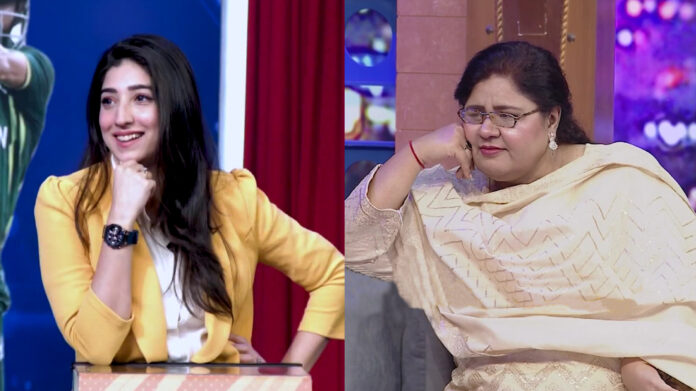
Similarly, another incident involving Mariyam Nafees on Tabish Hashmi’s show ‘Hasna Mana Hai’ underscored the need for hosts to exercise restraint and sensitivity. A light-hearted discussion about cricket teams took an uncomfortable turn when Hashmi made a suggestive remark about Nafees’s husband, crossing the boundaries of professionalism and respect.

During the show, Hashmi asked Nafees which cricket teams she supports in the Pakistan Super League (PSL). She said Islamabad and Lahore because of her family. Tabish then jokingly asked her why she didn’t support Karachi, her husband’s city. Mariyam explained that she doesn’t support Karachi Kings because they don’t play well. However, Tabish went too far and made a comment on TV that made people uncomfortable. He hinted that Mariyam’s husband, being from Karachi, couldn’t “perform” well, suggestively using the term.

While humour is an integral part of entertainment, it should never come at the expense of someone’s dignity or comfort. The incidents involving Manzoor and Nafees serve as stark reminders of the importance of establishing clear boundaries and fostering a culture of mutual respect in television hosting.

Physical violence, as witnessed in Manzoor’s reaction, is never acceptable, regardless of the circumstances. However, it’s equally crucial for hosts to recognise their responsibility in creating a safe and respectful environment for their guests.

In a world where television personalities wield significant influence, it’s imperative that they use their platforms responsibly and refrain from perpetuating harmful stereotypes or engaging in inappropriate behaviour. By adhering to professional standards and exercising empathy and understanding, hosts can ensure that their shows remain entertaining without compromising on integrity or respect.

Netizens’ Double Standards: Why Are Female Actors Always Critised For Dancing?

In the world of social media, where every move is under the microscope and every video is subject to scrutiny, the latest trend seems to be dissecting the dance moves of female actors. It’s a bizarre spectacle, to say the least, where women are judged more harshly for their dance performances compared to their male counterparts.

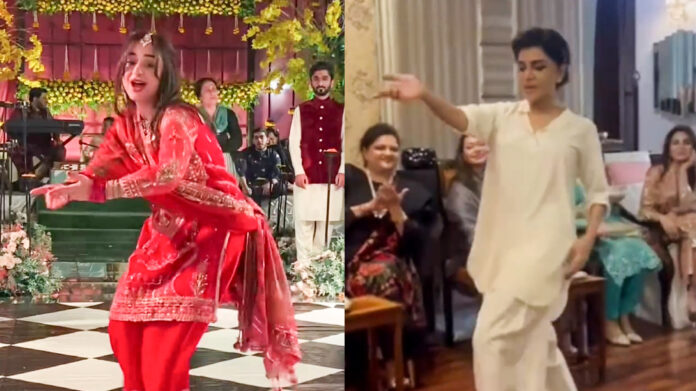
Recently, the dance videos of actresses Yumna Zaidi, Iffat Umar and Fiza Ali went viral, sparking a flurry of opinions from netizens. While some admired their talent and applauded their spirit, others couldn’t resist the temptation to criticize, focusing not on the artistry of the performance but on the age or perceived appropriateness of the dances. The comments section was full of deteriorated comments, such as “Mujra Queen” and “Pagal lag rahe ho”.

Iffat Umar clapped back at the trolls saying “Meri age, meri marzi. so plzzz go live your life and stop schooling me how should I act according to my age.”

Female actors, regardless of their attire or the context of their dance, often find themselves at the receiving end of an unwarranted backlash. From Dananeer Mobeen to Hania Aamir, Mahira Khan to Mehar Bano, the list is endless. It’s as if society has a collective outrage meter calibrated specifically for women dancing in public spaces.

What’s truly perplexing is the glaring double standard at play. While female actors face censure and derogatory remarks, their male counterparts enjoy adulation and praise for similar performances. Search for “actor dancing” and you’ll encounter a stark contrast in the narratives. Male actors like Zaviyaar Ejaz, Wahaj Ali and Bilal Abbas are celebrated for their moves, hailed as dancing sensations, while women are subjected to ridicule and shaming.

The hypocrisy is palpable. Why is it acceptable for men to dance freely without judgment, while women are held to impossible standards of decorum? The answer lies in deep-rooted gender biases and societal expectations that continue to perpetuate inequality.

It’s high time we challenge these archaic norms and embrace a more inclusive and equitable mindset. Let’s celebrate talent regardless of gender and appreciate artistry without prejudice. After all, dance knows no gender, and talent knows no bounds.

5 Previous Ramadan Plays To Watch Before This Ramadan

With Ramadan approaching, let’s reminisce about the unforgettable dramas that captivated us year after year. As we anticipate this year’s lineup, let’s revisit our favourites and tune in if you haven’t already. From heartwarming family sagas to captivating romantic tales, these dramas hold a special place in our hearts.

Suno Chanda

‘Suno Chanda’, the OG drama that revolutionized Ramzan entertainment, introduced a whole new genre for Pakistani dramas. Penned by Saima Akram Chaudhary and directed by Ahsan Talish, it showcased the delightful chemistry between Farhan Saeed and Iqra Aziz as Arsal and Jiya, respectively, who are cousins entrapped in a forced marriage. The central plot revolves around their efforts to do anything possible to break their marriage, and how their schemes result in anarchy and chaos.

The drama earns a special spot in every viewer’s heart with daily spats, alongside DJ’s money-making schemes, Shahana’s Punjabi quirks, and Jalal Khan’s Pashto charm. From Kinza and Sherry’s clever manoeuvres to Bi Jaan and Shah Jahan’s earnest attempts to maintain harmony, every episode brims with laughter and heartwarming moments, making it a perfect watch to unwind after a hectic day.

Chaudhry & Sons

Geo Entertainment debuted a romantic-comedy Ramzan drama titled ‘Chaudhry and Sons’, another creation by the renowned writer Saima Akram Chaudhry and directed by Syed Wajahat Hussain. This show, ‘Chaudhry And Sons’, unfolds within a Punjabi household infused.

At its heart lies Chaudhry Dildaar, the patriarch of the Chaudhry family, renowned for his unwavering adherence to family traditions. However, a fracture in these values arises with his daughter Sabahat, who defied conventions by marrying outside the caste, leading to her being separated from the family. Tragically, Sabahat and her husband met with a fatal accident, leaving behind their daughter Parisa (portrayed by Ayeza Khan) in the care of her grandmother Malka Begum (played by Irsa Ghazal). Unknown to the Chaudhry household, Parisa and Malka Begum arrive, setting the stage for a series of unforeseen events.

As Billu Chaudhry (played by Imran Ashraf) falls for Parisa, the drama grips the audience with a romantic tale combined with situational comedy, centred around the Chaudhry family.

Ishq Jalebi

‘Ishq Jalebi’, the underdog among Ramzan dramas, emerged as a refreshing departure from mainstream trends, carving a niche for itself with its nuanced storytelling and quality content. Penned by the prolific Saima Akram Chaudhry and guided by the visionary direction of Syed Wajahat Hussain, ‘Ishq Jalebi’ unfolds a tale of romance, family bonds, and light-hearted banter.

Centred around Basim, a young man harbouring dreams of settling abroad, and Bela, a responsible and mature girl finding solace in her grandfather’s care after losing her parents, the drama explores the dynamic between two cousins with contrasting personalities. While Bela embodies diligence and optimism, Basim often finds himself mired in complaints and inconveniences.

Despite its unconventional approach, ‘Ishq Jalebi’ captivated audiences with its soft and mature narrative, portraying the gradual blossoming of romance into a beautiful relationship. Eschewing the exaggerated humour and over-the-top characters typical of Ramzan dramas, it stood out for its subtlety and realistic portrayal of human emotions.

Fairy Tale

HUM TV’s ‘Fairy Tale’, helmed by director Ali Hassan and penned by Sarah Majeed, presents a fresh narrative centred around the struggles of youth, particularly highlighting the pervasive influence of money and greed. The story follows Umeed, a young girl from a middle-class background, whose aspirations of living a fairy-tale life lead her on a quest for quick wealth. However, as she embarks on her journey, Umeed discovers that reality is far from fantastical, and every dream comes with a price. Through encounters with eccentric characters and life lessons, she learns the true essence of happiness and the importance of inner strength.

The drama offers a unique perspective on parenting, family dynamics, and the significance of financial independence for women. Furthermore, the chemistry between Sehar Khan and Hamza Sohail adds an extra layer of charm, enhancing the portrayal of the love story between two contrasting personalities.

Chupke Chupke

Directed by Danish Nawaz and written by Saima Akram Chaudhry, ‘Chupke Chupke’ revolves around the Nawab Family, led by Nawab Sahab, who has two wives – Naik Parwar and Naik Bakht. Despite having two households, Nawab Sahab treats both wives equally.

The storyline delves into the lives of their children and grandchildren, presenting an influx of humorous situations and intriguing characters. Each character adds a unique flavour to the drama with their eccentricities and quirks.

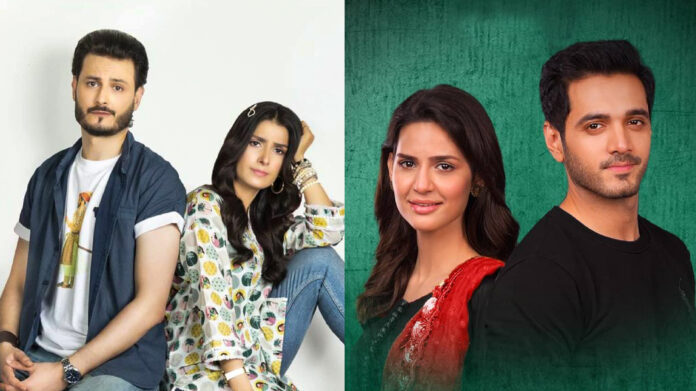
At the heart of the narrative are Faazi (played by Osman Khalid Butt) and Meenu (portrayed by Ayeza Khan), two individuals with contrasting personalities. While Faazi is mature and sophisticated, Meenu is loud and carefree. Their marriage sets the stage for an entertaining journey as the audience witnesses their unlikely romance unfold.

Which one will be on top of your watch list?

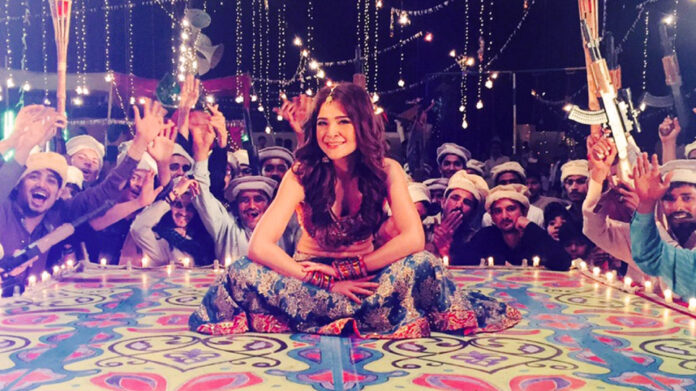
Bold Moves And Broken Toes: Ayesha Omar’s Trutti Frutti Experience

Ayesha Omar recently shared insights into filming the item number Trutti Frutti for ‘Karachi Se Lahore’ helmed by director Wajahat Rauf In in an interview with Geo Digital. When asked about her fondest project memory, she indulged in a trip down memory lane.

“Many are unaware that I shot that item number with a broken toe” Omar began the story with a revelation.

“Initially, it wasn’t even part of the film’s plan, but Wajahat altered it. As I sang the song, I mustered the courage to dance along. Clad in the traditional dance attire of Lehnga and Chouli, I donned a jacket over it. However, upon arriving on set, facing over three hundred men made me uneasy. Upon shedding my jacket, their stares felt overwhelming and unsettling. It was a challenging and somewhat traumatic experience. I confided in Wajahat, expressing my inability to proceed with the dance number. His response was like: “You’ll have to do it, we only have two nights to shoot this.” And of course, I did.”

Omar continued by sharing a pivotal moment: “To truly immerse myself in the atmosphere, I approached the men and made a heartfelt request.”

“I approached them, conveying my discomfort about performing an item number in front of a large audience of men. Despite my apprehension, I acknowledged the professional obligation and committed to the task. With humility, I appealed to them: ‘I kindly request that there be no whistling, hooting, or making videos while I dance and even in the breaks.”

They all reassured me, saying, ‘Theek Hai Jee’ to put me at ease, Ayesha elaborated.

“What initially felt like a daunting memory transformed into a surprising delight. Despite the initial discomfort, the song became a hit, and I ultimately executed it with finesse, Ayesha reflected, turning a challenging experience into a good memory.”

In her latest cinematic endeavour, ‘Taxali Gate‘, – directed by Abu Aleeha, Omar mesmerizes audiences with her portrayal of a prostitute, marking not only a captivating performance but also her debut as a producer. As we eagerly anticipate the unfolding of this new chapter in her career, we are drawn deeper into the intrigue of her multifaceted talents.