Home Blog Page 144

Are we getting another Asim Abbasi film soon?

Last year, Cake was released. Despite many apprehensions that a lot of us had about this comedy-drama film (the most prominent being that it was probably not commercial enough for our nascent cinema), the film was able to rise to critical acclaim, on account of its brilliant content and of course, remarkable direction. The man behind this brilliance was Asim Abbasi and Cake was a result of his directorial skills. The film recently made its way to Netflix and the director was happy that our neighbors from across the border would now finally be able to see this marvel.

Asim Abbasi begins shooting for his next film

Recently, Asim Abbasi took to his Facebook and revelead that he is all set to shoot his next film.

While recalling last year’s Cake’s London shootings, the director said, “Last time I was on set was May 2017 for Cake’s London spell. Two years and one film later, I will be on set from tomorrow for a long, long stretch.”

“Beyond the butterflies in my tummy and the sick in my mouth, I am not sure what I feel right now. But I sure am grateful to be reunited with my old film family – Mo Azmi, Aarij, Faiz, Zoobia, Samiya, Zarmeen, Nadeem, Zeeshan, Syed Mehdi and some top-class new additions Saqib, Shahrukh, Sana, Owais, and Nabil. Thank you for making the last four months of prep possible!” Asim Abbasi further added.

“Here’s to hoping that we manage to tell this story as unabashedly, shamelessly, and provocatively as it deserves to be told,” he ended.

We, at Galaxy Lollywood, have our fingers crossed and we cannot wait to see what Asim Abbasi has in store for us Cake enthusiasts.

What is with our TV channels having contrasting before and after ‘Iftar’ shows?

The major TV networks having their own special Ramzan transmissions has become the norm now. During this entire month of Ramzan, the channels offer hours long transmissions with different celebrities hosting them. The usual programming schedule is rescheduled for the sake of these transmissions. On a cursory glance, it looks good but then when we see these Ramzan special programs carefully, and the jarring reality of the dichotomy between these Ramzan exclusive content becomes apparent.

The dichotomy between the before and after Iftar content

Take the television remote and flip through the general entertainment channels at any time during the day before Iftar. Chances are there would be more shows with modestly dressed celebrities sitting alongside various religious scholars appearing on screen than the re-runs of any drama. The mood of the shows would be sober with one channel asking for donations for one noble cause or another while on some other channel there would be a naat recitation competition going on.

The scholars belonging to different schools of thoughts would be discussing religious issues. The host would be questioning them on how to best utilize the holy month and all its blessings. There would be celebrities sitting as guests, talking about their experiences with Ramzan and sharing anecdotes related to it. In short, the programs would be informative and most importantly conducted in a serious manner.

Post iftar the whole mood changes. As the celebrity hosts bid farewell with the breaking of the fast, the channels go back to their regular programming schedule. Some channels continue with their pre-Ramzan schedule while some air Ramzan special programs like a mini-series or a game show. It is during these programs that you see a drastic change in the whole atmosphere.

The case of Ramzan special dramas and game-shows

The Ramzan special dramas, which mostly have humor as their main genre, don’t have a complex plot. They aim to be for light viewing with more focus on making the audience laugh than involving them in any mind-boggling conspiracies. They do so by introducing many eccentric characters and having them do even more eccentric things, which often leads to showing problematic scenarios and presenting them as humor. Since the aim is to make the audience laugh, any concern about the underlying problems of the humor is always brushed aside as irrelevant.

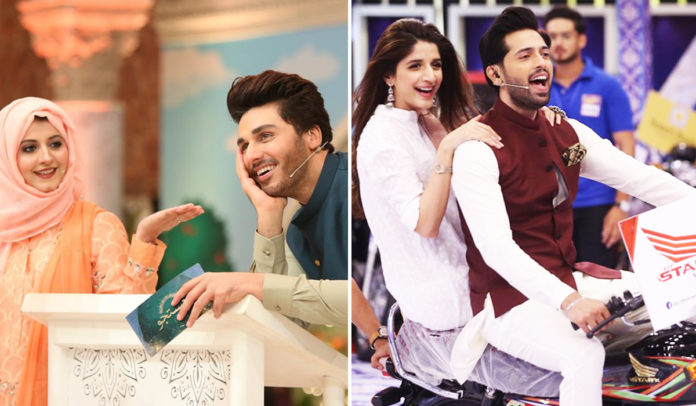
A lot has been written and said about the game-shows already. The antics of the host and what the audience is made to do in order to win gifts like a TV or a bike is something every Pakistani has gotten used to now. The point here is that just a couple of hours after Iftar, all the soberness that this holy month entails is completely forsaken in the name of entertainment.

This very obvious contradiction in the day and night schedule of entertainment channels is baffling. The two very different kinds of Ramzan special programs completely cancel out the effects of each other once they are juxtaposed. Why preach about the dignity of Ramzan when post iftar all dignity is thrown out of the window to dance on the top of a car? Likewise, why show dramas whose entire humor relies on a wife being suspicious of her husband’s actions every day, or using stereotypical characters just to keep the gags running, when around sehr time the channel would once again talk about using this month to collect blessings and changing your behavior for the better.

A final word

While there can be defense about both the kind of programming as having their own set of benefits and target audience, the fact remains that, overall, it just sends a very confusing message. Television has a lot of influence and for a long time, it has been relegated to just a money-making industry.

I am not saying that there should be a complete overhaul in the programming style of all the channels during Ramzan but the said channels should definitely put in some effort in having a consistent image throughout. There are ways of incorporating entertainment into education; they are not as mutually exclusive as our channels would have you believe. Doing so would only work in favor of the channel while not confusing the audience about how to really consume television content without compromising on the benefits of the month.

Is our entertainment industry overdoing with its over the top ‘Punjabiness’?

If there is one thing that our dramas do best, it’s stereotyping. These stereotypes are mostly offensive and more often than not, entirely baseless fabrications; from the representation of relationships to classism and more.

Most recently (or should I say for a few years), one such portrayal that has disturbed me is that of showcasing Punjabis, a certain way. We have seen this in dramas and even films, such as the Kis Ki Ayegi Baraat series, Suno Chanda, Punjab Nahi Jaungi, etc. Punjabis have always been shown in the same light, either as feudal lords hailing from some village which they own or living in small cities (such as Chichawatni, Gujrat, etc). Why can’t they be shown from Lahore or even Islamabad? Do the big cities not have any Punjabis or is it below these cities to have the supposed ‘Paindus’?

Over the top Punjabiness: A repetitive pattern

Earlier on, when the Baraat series came out on TV, we were introduced with Saima Chaudhry, a fashion designer hailing from Faisalabad. Saima was always shown wearing bright, rang barange outfits with a paranda in her hair. She would not miss any opportunity to showcase her English speaking skills.

With Saima Chaudhry, many other characters of the same league have been inspired. Most recently, having only seen Zara Noor Abbas’s character from Chhalawa, through its trailer,  we feel her acting style and representation gives the same vibes as of Saima Chaudhry.

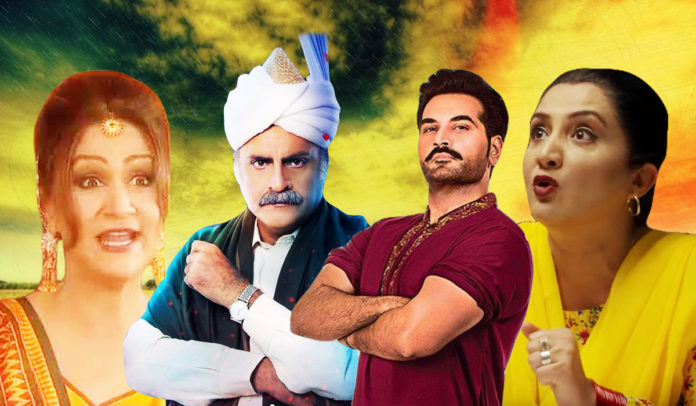
Even in Punjab Nahi Jaungi, the stereotypical portrayal of certain characters was no less than awkwardly mired in the formula stereotypes. What really irritates me is that Punjabis (on screen) need to constantly mention that they are from Punjab and have a complex of speaking full-on Punjabi, interspersed with broken English. They are mostly shown as being under-qualified, with low IQ and just wandering aimlessly. Humayun’s character as Fawad Khagga was the perfect example of this. Even the elders have a certain portrayal which is wearing pagris and smoking hookah and are addressed to as Bebe or Bauji (very Indian inspired).

Of Suno Chanda, Barfi Laddu and more

Moving on, another element which is highlighted ever so often is that Punjabis being overdressed all the time. Like, who wears such blingy, colorful outfits all the time, that too at their own homes? For instance, let’s take everyone’s favorite, Shahana Jamshaid from Suno Chanda (don’t get me wrong, she is my favorite too but it is what is). 

Shahana and Punjab clan are always seen in the brightest of outfits 24/7. There is never a moment when Shahana is seen in a more sober outfit sans churian or a lighter lipcolor. But her Chachi Nageena tops everything with the loudest dressing (and who wears sunglasses in the house?). Another item synonymous in these comedy shows is hair accessories, be it parandas or one too many clips making the hair look like a fashion disaster. Upcoming shows, Barfi Laddu, and Shahrukh Ki Saheliyan are also shown taking the same route.

A final word

Talking about the men, they are mostly seen in shalwar kameez, with kajal in their eyes, oily hair, and obviously, that long curled mustache has to be there because much nae te kuch nae. Also, yes we love our parathas and desi ghee but that is not what we eat all the time (except in our Sehris maybe).

From the clothes to the language to the food, these stereotypes need to take a backseat and Punjabis, as a community, need to be shown as more progressive as is what happens in the real world.

I was a die hard ‘Suno Chanda’ fan but season 2 is just not what the show was!

There is no doubt that the first season of the romantic comedy serial, Suno Chanda, was a bona fide success. Aired last year in Ramazan, the Farhan Saeed and Iqra Aziz starrer was an instant hit with the audience and left people craving for more.

What made Suno Chanda season 1 stand out

A treat to watch, the show aired every day during Ramazan last year, leaving fans wishing for more when it ended. The romantic comedy gave us a fresh pairing of Farhan Saeed and Iqra Aziz. The banter between the two cousins, trapped in a marriage without consent; and willing to do anything possible to break apart, set the mood of the whole drama.

From Arsal and Jiya’s every day fights to DJ’s cunning ways of extracting money, from Shahana’s Punjabi to Jalal Khan’s Pashto, and from Kinza and Sherry ki chalakian to Bi Jaan and Shah Jahan’s efforts to keep the household together, and from Nazakat ki nazakat aur baat baat pe bemaar hona and Billo ka teeliyan lagana, the drama had everything possible to make it an exciting watch.

The last episode of Suno Chanda season 1 had 7 million plus views and the audience even watched re-runs on YouTube.

The case of season 2 and a missed opportunity

With the second season being hyped on social media with BTS shots of the cast, viewers could not wait for the new show to begin.

The second season of Suno Chanda began on 1st Ramazan this year and picked up right where it ended. Although the first episode managed to gather 4 million-plus views on YouTube, it came down to lesser and lesser views with each passing day.

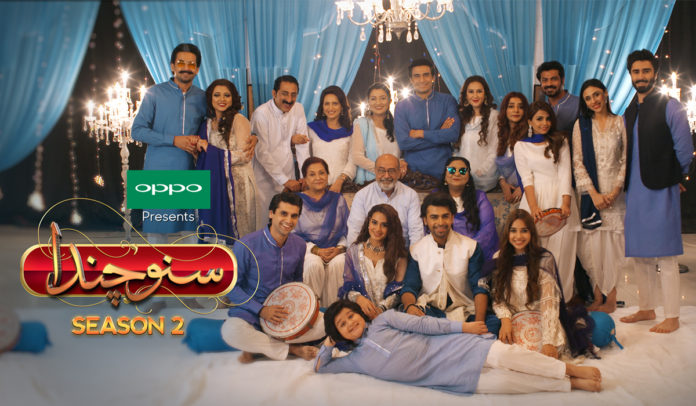
Suno Chanda season 2

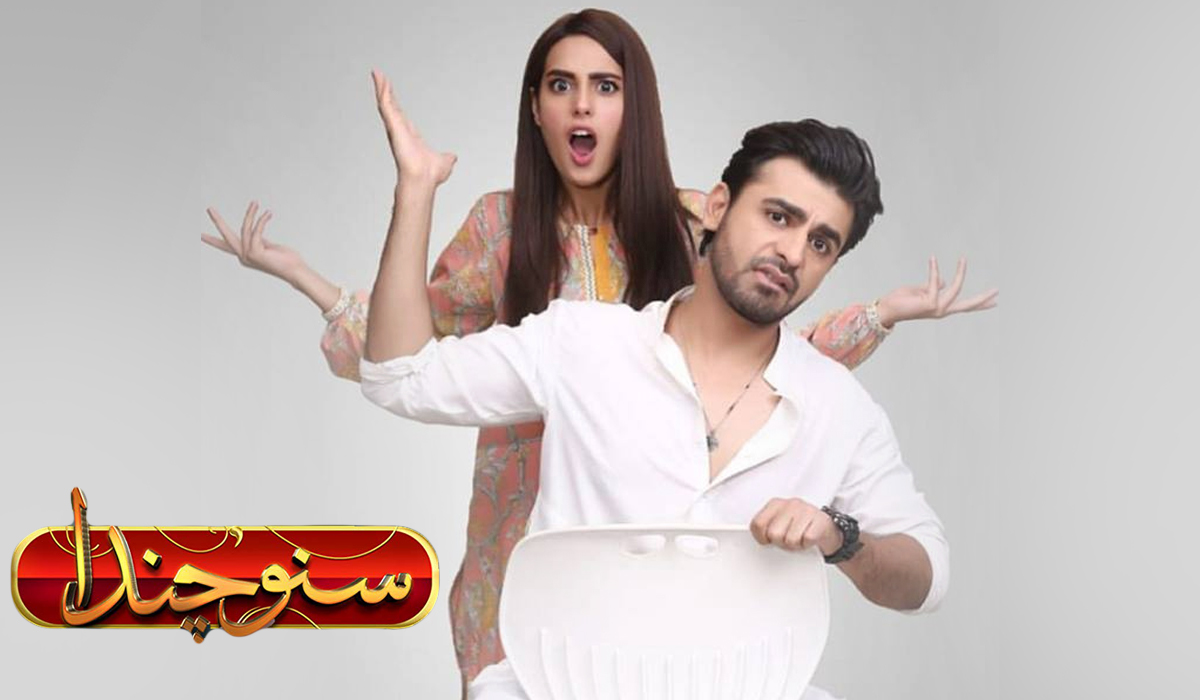
I, as a viewer of both Season 1 and now 2, can safely say that  I am no longer a fan of the main leads the way I was before. The reason being Iqra’s overacting in comparison to her co-star Farhan (who also, by the way, has scenes where he is supposed to show displeasure) but really seems to have control over the portrayal of his character’s expressions and tone of voice.

The bickering between the two seems nonsensical and honestly, interminable this season. It has gotten exhausting and that’s that. From pouring Arsal a cup of tea to being told to dress up, Jiya’s anger seems to arise at the smallest of things.

Not all hope is lost

Now you all will ask why I am even watching this show if I am not a fan of ‘Arjiya’. Well, to be honest, the star of the show has to be Shahana Jamshed Ali (aka Arsal’s mother and Jiya’s saas). With her on point Punjabi chutkule, Nadia Afgan takes the prize for winning Suno Chanda season 2! She is the reason I am still hooked to the drama.

Where we mostly see saas-bahu dramas with an evil saas and a crying bahu, it is a breath of fresh air to watch the portrayal of Shahana’s character as a supportive and loving mother in law.   Also, her and Arsal’s chemistry comes off as natural as it can get between a mother and son.

Apart from Shahana, the new characters introduced in the show are most certainly the gems keeping the play intact. Arjumand Rahim as Pari makes you fall in love with her as soon as she comes on screen. She taunts the members of the household in Punjabi without a care in the world and surely knows how to get her way around things.

Then there is Raza Talish as the naive Mithu – another character who is adored due to his helpful nature and innocent remarks. Acting as the know it all, Mithu believes he has the answer to every question but that’s just him answering everything without getting to the point.

Lastly, the new entrant Sabeena Farooq as Maina has to be the perfect choice for a Pakhtun. Speaking in one flow while mixing Urdu with Pashto has to be a job well done. Only two episodes in and the dimpled actress has won hearts.

Most of it is lost though

While the first season primarily focused on Arsal and Jiya’s relationship, the new show is an amalgamation of sorts with various storylines in one. From Jiya’s dreams to pursue her higher studies and Kinza and Sherry’s marriage, to Joji and Billo’s marriage and now Mithu and Maina’s love story.

Spanning 30 episodes in total over the course of the month, surely it can get hard putting content out there every day but some mistakes in the show are being overlooked (blatantly). For one, a big mistake noticed by many is Arsal and Jiya’s wedding photograph in their room just after a few hours of their wedding.

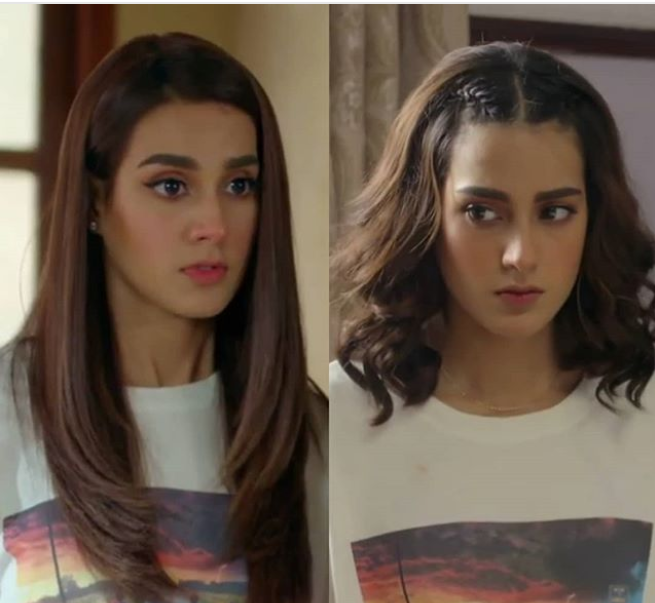
Moving on, four episodes in, Bi Jaan tells Arsal and Jiya not to hang out as their walima is that very day but in the next scene everyone is shown to be asleep (scratching my head). Also, another blunder which is a recurring one is the curious case of Jiya’s hair. Can someone please explain this to us??? This is what we are talking about (these two pictures are from the same episode).

All in all, if one wants to enjoy Suno Chanda season 2, they have to not think too much like me. Let’s just hope there are better things in store for us. 

Ghana Ali speaks the truth about her cosmetic surgery and weight loss but is it okay to bash her?

Celebrities having their opinions and the people having opinions about those opinions is just the way social media functions. In the past few days, there have been a couple of incidents where the folks over on multiple platforms of social media got busy either supporting or bashing celebrities for something they said. The latest celebrity to join this list is Ghana Ali.

There is a video going viral where the actress Ghana Ali has talked about her physical transformation. The video, which is a short clip from Ghana’s appearance on a Ramzan transmission program, shows her talking about having gone through cosmetic surgery as well as using the controversial diet pills for weight loss. Naturally, this started a hue and cry on the social media and Ghana started getting bashed for talking about these issues on national television and spreading a negative message to the audience.

What all went down?

Ghana was asked by the host of the program, Amir Liaquat, about why she chose to have cosmetic surgery. To which Ghana unabashedly replied that she didn’t like the way her nose looked on her face so she got it altered. The conversation then went to the topic of Ghana’s dramatic transformation due to her weight loss and Ghana confessed to having resorted to strict dieting as well as using weight loss pills to achieve the look. You can watch the clip here. 

“I took a lot of weight loss pills. Some suited me, some didn’t. The ones which suited me made me lose weight. I am still alive despite using those pills, let’s see what happens in the future.” Ghana is shown saying cheekily.

The case of social media backlash

The reaction to Ghana’s confession has been negative as was suspected. It did not go down well with people that Ghana was talking about these things so openly when the norm is to always be hush-hush about these kinds of topics. She got bashed for putting up a wrong example for the people because she endorsed highly controversial topics like cosmetic surgery and weight loss pills unapologetically. Ghana, however, remains unphased.

“To be honest I don’t care,” Ghana told Galaxy Lollywood in an exclusive quote. “80% of the reaction to this has been positive and the remaining people are just using this to get attention for themselves. But it doesn’t affect me. My confidence and self-worth can’t be shaken by these negative comments.”

Ghana defended her cosmetic surgery by saying if it was such a bad thing then why do these surgeons even exist in the country in the first place? Going under the knife is a common thing around the world. She talked about getting positive messages from her fans from all over, praising her for her straightforwardness. Ghana also said she has no qualms in sharing information about her surgery and weight loss pills to those who are curious about her methods because she feels it can help people.

“If someone doesn’t like something about their body and they have an option to get it changed, why shouldn’t they? People have to face different kind of problems and rejections due to how they look; if a good surgery can help them avoid those problems then what’s the harm in that? I completely stand by my decisions.”

Ghana Ali speaks the truth – is it okay to bash her?

In a society where looks matter so much that they can dictate a person’s ultimate failure and success, Ghana says she is giving confidence to the people who are unhappy with how they look. “I am sure there must be many people who would be sending me positive prayers for talking about these things. By talking about my own experience, I am just giving the people the confidence to do what they wish to do but are too scared to pursue.”

The entertainment industry is obsessed with good looks; it is a fact. Celebrities are known to going under the knife to change the way they look, even if they don’t talk about it. Many “Before and After” pictures of various celebrities can be found on the internet which serve as proof of their reliance on cosmetic surgery to attain the “perfect good looks” that make them so desirable for the common people. So, why is there such outrage for Ghana Ali for speaking about this topic that we all know is the truth?

Thankfully, the recent wave of awareness being spread by celebrities to reject this false image of perfection and promoting body positivity is a step in the right direction. However, we cannot deny the fact that for many of the people the pressure of looking a certain way is just too much. A society that is quick to pass comments on someone’s appearance especially their weight and physical features does not get to be enraged that someone chose to alter their appearance via controversial methods. That is just hypocrisy. And for any real, long-lasting change to happen regarding how people perceive beauty, this hypocrisy has to be eradicated.

Sadly, that will take a long time to happen. Till then, more power to Ghana Ali for not acting like a hypocrite and saying it like it is. If more celebrities in the industry spoke honestly about these issues and their experiences, it would only help in erasing the impossible to attain beauty standards that the industry have spent decades in conditioning the common people into perceiving as perfection.

From the ‘Fishshu’ girl to ‘Alif Allah Aur Insaan’: Here is a glimpse into the many lives of Sana Fakhar

It is easy to get typecast in the film industry and it’s even easier in a small one like ours. That, combined with the fact that actors (particularly actresses) have a limited shelf life, makes it even more difficult for them to stay afloat. Combine this, yet again, with the hesitancy of filmmakers and TV directors to be open to experimenting with actors and their talent and you’ll get why our actors have to face the dusk of their careers sooner than they should.

Amidst all of this, there have been some actors, who have tried to break this pattern by doing roles that are diametrically opposite to what they usually do and hence, they have got a new lease on their careers simply because they were brave enough to accept different roles. In other words, these people manage to catch lightning in a bottle twice. Even so, it is very occasionally, that an actor reinvents him/herself and begin a new phase of their career that may be as successful as before they hit the rock-bottom.

The Sana Fakhar/Babra Sharif phenomenon

Sana is just one of those actors.

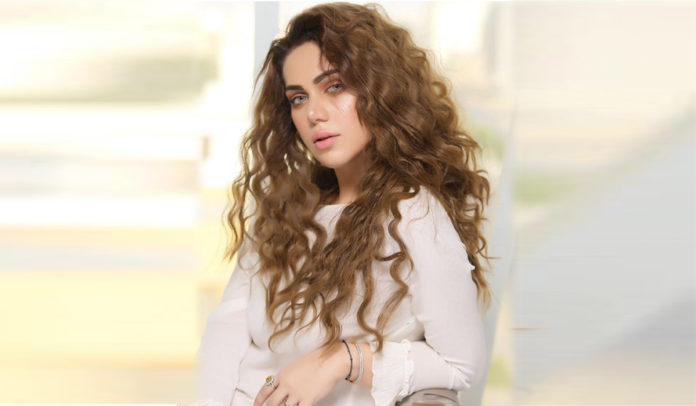
Sana Fakhar, formerly known as Sana Nawaz and credited in the 90s as just “Sana”, started her career as a model from Lahore. Her first stint was in a Cough Syrup Ad, where she said, “Aur Khaansi Fishshu…Khaansi Bhag Gayi.” It was these two lines and specifically the word “Fishshu” that earned Sana her initial recognition. This led her to be called the “Fishshu Girl” in the industry circles and soon enough, she grabbed the attention of many bigwigs.

It was the second time in Pakistani cinema’s history that a girl would become famous after just one Ad and would later become the leading face of the Pakistani cinema. The first time it happened was in case of the legendary, Babra Shareef. She starred in a detergent Ad and was tagged as “The Jet Girl”, later earning her many film assignments. While Sana may not have ruled cinema screens and the hearts of the audiences the way Babra did, she has proved herself as someone who would mold herself to fit the changing dynamics of the entertainment business; a territory where she may have even outshined Babra.

Although Babra appeared in Anwar Maqsood’s hit comedy series Nadaan Nadia after her film career was nearly finished, she rarely recreated herself as an actor after that and was only seen in forgettable flicks, one of which was a Sangeeta directorial, opposite Shan Shahid. Understandably, the film didn’t work and Babra was never seen again on screens.

The many lives of Sana Fakhar

As for Sana Fakhar, she remains a well-known and a frequently hired name in the world of entertainment even today. Perhaps the only female face from the 90s who still has substantial work to her credit.

Ever since her debut in Syed Noor’s late 90s hit Sangam (1997), she has been cast in numerous supporting and leading roles. She then joined the Javed Sheikh camp where a supporting role in Meera starrer Mujhe Jeeney Do earned her many accolades.

However, it was her stint in 2002’s blockbuster Ye Dil Apka Hua as Sitara which proved as a game changer for the lady. The film, directed by Javed Sheikh, was Pakistan’s first DTS film and was lauded for its breathtaking locations (the first Pakistani film to be shot in Spain and Switzerland), beautiful cinematography and music. In those times, Ye Dil Apka Hua was arguably the only film that Pakistanis could take abroad and showcase to the outsiders.

Back in the day, there came a time where India and Pakistan were getting closer on the political front that ultimately translated into better cultural and talent exchange than ever. Sana was one such actor who benefited from this exchange. When Bollywood directors saw her work in YDAH, the tall beauty was quickly approached for a film opposite Sunny Deol – Qaafla. The film didn’t work well on the Box Office, as has been the case with many Pakistani actors’ appearances in Bollywood. She, however, kept receiving offers from the Indian Punjabi Cinema.

The reinvention of the ‘Sana’ phenomenon

With the decline of the film industry, Sana, like many actors, was left jobless. However, unlike many, she reinvented herself this time and reverted to TV. Sana was cast in multiple TV shows that kept her in the limelight. Her stint in Ahsan Talish’s Alif Allah Aur Insaan as Nigaar, however, was the one that not only earned her various awards but also recognition by the new crop of directors, producers, and the viewers.

Amidst all of this, Sana kept appearing on the big screen albeit in forgettable dance numbers in various films. However, a supporting role in Jackpot was something that, once again, established her presence as a serious choice for the films.

Most interestingly, she has recently done a Harley Davidson shoot and is now pretty much the “In” actor in almost all the showbiz and fashion circles. Sana will be next seen in Yasir Nawaz’s Wrong Number 2 as a seductive maid and from the trailer of the film, her work seems nothing short of noticeable.

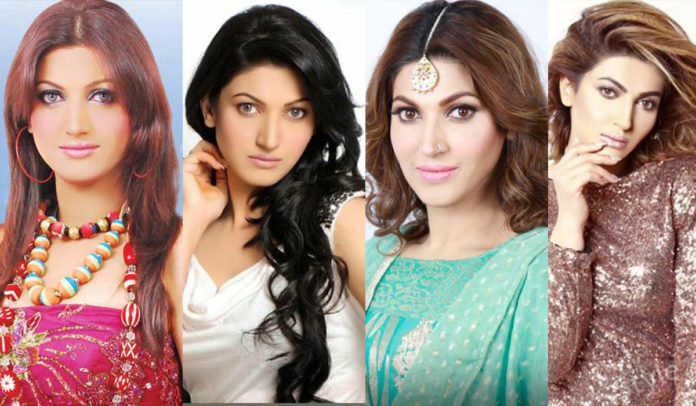
Sana could serve as a case study for actors from the 90s who have often struggled to find acting jobs in the newly shaped entertainment industry of Pakistan. She has moved from one medium to another smoothly and has attained considerable success along her way. In all of this, the way she has groomed and reinvented herself over the years is definitely something worth having a discussion on (you’re welcome).

The template that Sana has followed, may not be an easy one to follow but is definitely something that ensures success when stuck to, religiously.


Here is how ‘Khaas’ brilliantly portrays the lesser discussed psychological abuse in marriages

A reflection of Pakistani society’s obsessions can be clearly seen in our dramas. So many of our dramas, from classic hits like Humsafar to recent successes like Do Bol, are centered around the topic of marriage and more specifically, revolve around the relationship between a husband and a wife. The audience clearly loves such stories considering how there is no dearth of such dramas. Since it doesn’t look possible for this situation to change anytime soon, the challenge now is to write the realities of marriage from an unexplored perspective.

What Khaas is all about

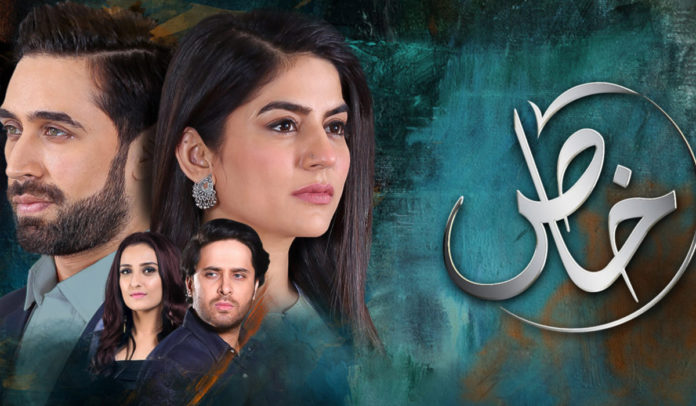
The Sanam Baloch-Ali Rehman Khan starrer Khaas, which airs on Hum TV on Wednesdays, sheds light on one such reality of some marriages. Written by Sarwat Nazeer, the writer who penned the recent phenomenon Do Bol, and directed by Danish Nawaz, Khaas tells the story of Saba who is married to the self-obsessed and narcissist Ammar. The drama’s main theme can be summarized easily as ‘all that glitters is not gold’ as it shows the hidden reality of a seemingly perfect marriage.

A quick recap for those who haven’t been following the show – Ammar is a charming man blessed with good looks, smart brain, and a wealthy background to complete the package. Saba is also a beautiful woman, blessed with a smart brain, and a well-off background. Ammar sees Saba, he falls for her at first sight, and within the next few days, the two are married. This all looks like a perfect happy ending for both Ammar and Saba’s family. Ammar is handsome, has a way of charming everyone around him, and has his entire family dotting on him blindly. Saba is the sughad woman who knows how to win the hearts of those around her with her obedience and good nature. It is like a match made in heaven.

Ammar’s emotional abuse – A conversation starter

Except it is not. Khaas goes deeper into the issue of what happens when the husband and wife do not share the same sensibilities. A lifetime of being admired has made Ammar into a self-obsessed man who doesn’t think twice before hurting people with his comments. He flirts with a waitress in front of his wife and then brushes it off as just friendly banter. He says hurtful comments about his wife’s appearance in front of his friends and doesn’t realize how he is basically insulting his wife. At the end of it all, he doesn’t have the sense to even comprehend, let alone accept, that what he calls his humor is actually akin to bullying.

Saba was emotionally blackmailed into saying yes to the marriage, as is the case with so many of the girls in real life. On the surface, there is nothing wrong with Ammar. Even when Saba had an inkling that Ammar’s self-obsession isn’t all that harmless, she had to ignore those feelings because everyone around her was saying just how perfect the man is. But when Ammar started his hurtful behavior of insulting Saba right from the beginning of their wedding night, Saba had to face the truth of her suspicions.

What makes Khaas really special is the way it does not exaggerate the situation. Ammar is not a villain because we have seen people like him around us. As Saba’s sister says in one episode, “There are people who have no impressive quality to them and yet they act like they are royals.” He simply lacks the empathy which could allow him to think about what his words could mean to the other person. It is a flaw in personality, further accentuated by how nearly everyone around him is too intimidated by him to call him out on his behavior. Even his best friends, who have been witness to his horrible behavior, are too scared of him to tell him to mend his ways.

Saba is trying her best to make this marriage work. She is an obedient wife who is ready to change herself to fit the mold her husband wants to see her in. However, despite all her efforts, she ends up coming short of something that gives Ammar the opportunity to insult her. Furthermore, Saba’s efforts are not even being acknowledged because Ammar is too used to having things his way that when Saba even merely mentions exercising her right to dress as per her own taste, it feels like disobedience to Ammar.

Ammar does not physically hurt Saba. He doesn’t even raise his voice at her. Yet, Saba gets wounded horribly by his personality. The tragedy for Saba is that she cannot even show those wounds to anyone. For everyone else, Ammar is the charming prince; a façade that Ammar has perfected over the years. Whereas his ugliness shines in his remarks about those he deems lesser than himself, which means almost everyone that is not him. For a sensitive soul like Saba, this is nothing less of psychological abuse.

Khaas on society’s obsession with materialistic perfection

The title of the drama Khaas, which means special, is quite ironic if we see the drama. Ammar is constantly called Khaas by his family, his friends, his in-laws, but the reality is very different. Just because someone looks beautiful, dresses rich, sounds charming does not mean they are special. It is what is on the inside that actually counts, as cliched as it may sound. And Khaas is really pointing out this basic fact to the audience via the story of Ammar and Saba.

As for the acting, both Sanam Baloch and Ali Rehman Khan are brilliant in their respective roles. Ali Rehman has the looks and the grace to effortlessly pull off Ammar. It is Ali’s natural charm that makes Ammar come across as this perfect specimen of a man that has the world wrapped around his finger. He delivers Ammar’s ugly remarks with an ease that is enjoyable to watch. Sanam Baloch is a true blessing to watch on-screen and it is a delight to see her get a script that does justice to her acting prowess. Sanam does not need words to express herself, a quality that was most needed for a character like Saba who feels everything but isn’t allowed to express her feelings in words. She looks absolutely beautiful, portraying Saba with a dignified grace that is her specialty. It just feels good for old-time Sanam Baloch fans to experience her magic like this.

It is very easy to show the ugliness of some marriages with the portrayal of the obvious, physical domestic abuse. There is so much of that on-screens that the other forms of abuse barely even get a conversation. Khaas is a wonderful conversation starter which shows the quieter form of abuse in a marriage that wounds on a psychological level that ends up deeply affecting the spouse on whom the abuse is inflicted. The situation like the one Saba is in, leads to mental illnesses for many people. With five episodes into the drama, it has so-far very brilliantly showed this reality of our society. Fingers crossed that it will continue like this and end up showing what it really means to be Khaas.

Hania Amir calls social media trolls out for calling Yasir Hussain ‘dark-skinned’

A few days ago, Hania Amir, the acclaimed Pakistani actress who rose to fame after her movie Janaan, opened up about her struggle with acne. She posted a picture of herself with a realistic and a thought-provoking post in which she talked about the inhumane beauty standards that celebrities are required to follow and that it’s okay to not being able to mould into a perfect, flawless image.

Hania talked about her struggle to look and be perfect 24/7. She also went on to talk about her self confidence being shattered due to being body shamed.

“So I have always struggled with mild acne. Always had these bumps on my forehead that JUST WOULD NOT BUDGE! I had gotten used to them. But the journey I have been on for a couple of months has been quite a painful one”, stated Hania. This post was appreciated by so a lot of people who appreciated Hania for talking about body positivity in a brave manner.

https://www.instagram.com/p/BxYWyRFDuw8/?utm_source=ig_share_sheet&igshid=3npxai6rqs55


Some background on the Hania-Yasir controversy

While Hania was being lauded for talking about body positivity, actor and Hania’s friend, Yasir Hussain made a joke about Hania’s post. In his Q/A session on Instagram, someone asked “One word for Hania” to which he casually replied “Danedaar”, which was obviously a pun directed at Hania’s post about acne.

This did not go down well with Hania who shared the post on her Instagram stories whilst asking her fans and followers to forgive Yasir as he has a habit of making inappropriate jokes. Later, she also shared another story in which she said that exploiting people’s insecurities for humor is downright degrading and disrespectful.

Yasir then responded to Hania where he said, “I did not mean to hurt her in any way. We are really good friends and I just joked with her as we do with our friends. I am dark, I make fun of my complexion all the time, I didn’t mean to target any of her insecurities.”

While Hania was lauded by the public, celebrities also came forward to appreciate Hania. These included Mahira Khan, Mehwish Hayat, Saba Qamar, Syra Shahroz, Meesha Shafi, Asim Azhar, Zara Noor, and the likes.

Hania calls out social media trolls for calling Yasir dark-skinned

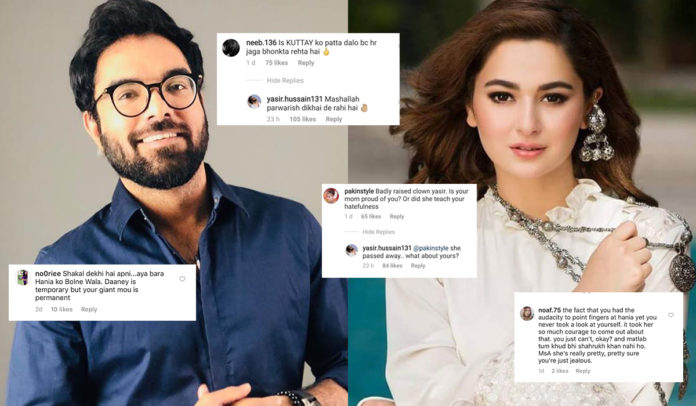
Although the public lauded Hania, they also made their way to Yasir’s Instagram to show their displeasure over his joke directed towards Hania’s acne post. As ruthless as the Instagram ‘trolls’ can be, they named and shamed Yasir by calling him dark skinned and what not.

While Yasir did respond to a few of the comments, he did not pay heed to most of them. Subsequently, Hania took to her Instagram stories and shared how trolling and bullying is just not right.

She said “If you are going to bash someone based on their looks, color or physical features on my behalf, that’s something I am not going to appreciate because we should practice what we preach. Anybody who stands for me should not be using bad words or resort to insults or swearing. If I don’t stop my fans from using such language on the others’ comments section, then I will be termed hypocritical. Respect and you will be respected in return.”

What do you think of the whole situation? Let us know in the comments.

Grab your popcorn because ‘Cake’ and ‘7 Din Mohabbat In’ have finally made their way to Netflix

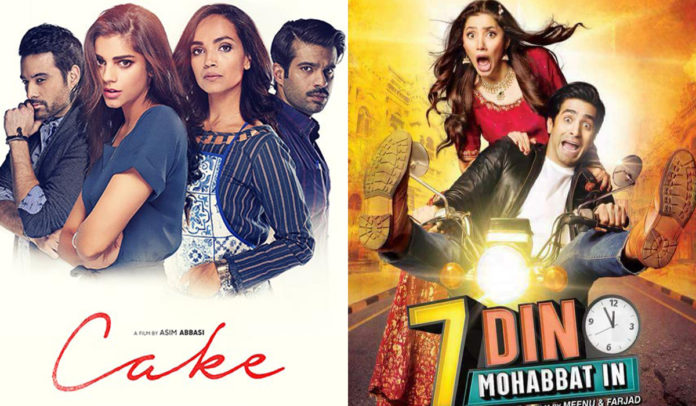
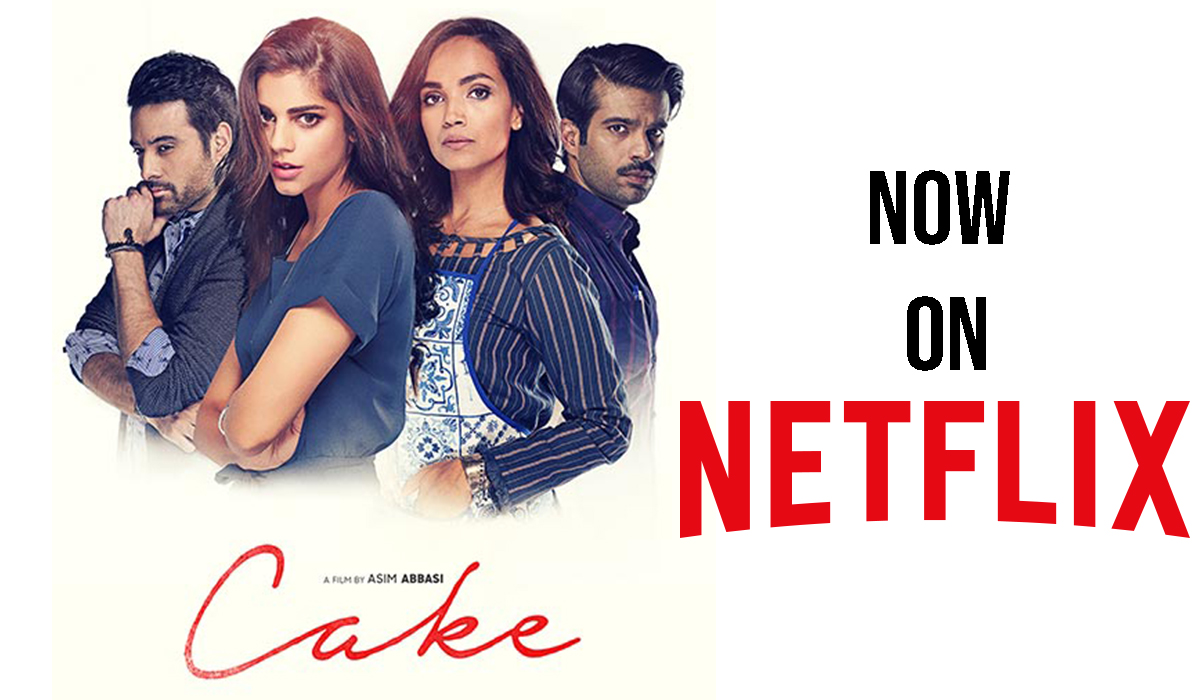
This past month, we reported that Cake was finally coming to Netflix, and true to its word, IT’S HERE! The wait is finally over, and interestingly, not one but two Pakistani films have made their way to Netflix this month, for all of you to watch.

Cake – The Film

Cake is the story of a dysfunctional family where we have Zareen (Aamina Sheikh) solely taking on the responsibility of caring for her sick, whimsical parents (Mohammad Ahmed and Beo Raana Zafar) while siblings Zara (Sanam Saed) and Zain (Faris Khalid) have moved abroad. A serious trip to the hospital brings back the entire family together in Karachi, but things are far from hunky dory as accusations are hurled, secrets from the past brought out into the open, which is followed by a whole lot of drama.

 A story about love, loss, life, and death; Cake was something that everybody could relate to. A breakthrough for Pakistani cinema, this out-of-the-ordinary film was highly praised by the audiences and did a business of around 12 crores worldwide. It is now available on Netflix for all of you to watch and unwind after a long day. 

7 Din Mohabbat In

The other movie that can now be seen on Netflix is 7 Din Mohabbat In; a romantic fairytale comedy with Sheheryar Munawwar (Tipu) and Mahira Khan (Neeli) as its leads.

Neeli is a playful girl who fantasizes for love with stars in her eyes. While Tipu is on a quest to find his true love in a Karachi neighborhood, in the most unusual manner, for which he has to overcome obstacles, both spiritual and emotional. Though the chemistry between Mahira and Sheheryar was much anticipated after Ho Mann Jahaan, the film got mixed reviews and did a business of 13 crores worldwide. What actually got the movie going was the brilliant performance by the main cast of the film.  

A final word

Both the films making their appearance on a platform such as Netflix will will be highly beneficial for the Pakistani cinema, not only will this increase our films’ viewership, but will also give us much more recognition around the world, something that our cinema is in dire need of. Nevertheless, we would like to congratulate both the films on being added to such a wide platform and if you haven’t already watched them, now is the time! 

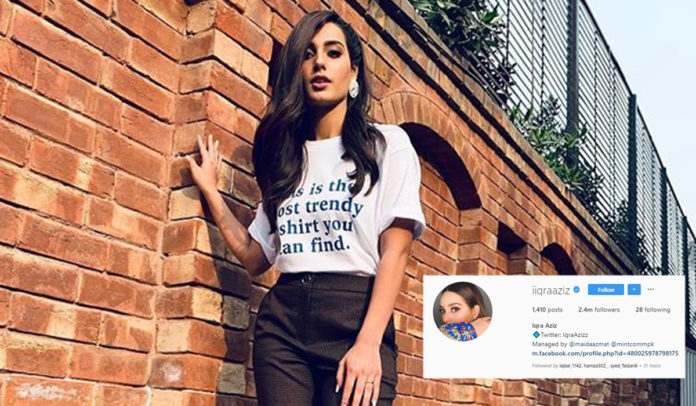
Exclusive: “Unfollowing people on social media doesn’t remove them from real life,” says Iqra Aziz

Iqra Aziz, the industry’s sweetheart, has been in news for quite some time now, on account of her brilliant acting in Suno Chanda and Ranjha Ranjha Kardi. Yesterday, she was all over our social media platforms yet again. This time, however, it was for reasons that have no relevance to her acting career. A number of influencer accounts pointed out that Iqra had unfollowed a number of her co-stars/ contemporaries including Imran Ashraf, Hania Aamir and a number of publications as well. Yasir is probably the only actor left she is still following.

Amidst all of this, a lot of was speculated. Some were of the opinion that Iqra’s unfollowing spree was the result of the whole Yasir-Hania controversy. Some others had other things to say. Instead of speculating, we thought the best course was to reach out to Iqra herself and see what she has to say about all of this:

What Iqra Aziz herself has to say

We reached out to Iqra to talk about the issue.

“First of all, it has absolutely nothing to do with the controversy, and honestly I don’t even want to talk about it. Besides, I don’t think unfollowing people on social media removes them from real life. I have all of my fellow stars’ numbers and not having them on Instagram will have no impact on the nature of our relationship/friendship,” revealed Iqra Aziz.

“Moreover, I don’t get why everything has to be online, we should use social media, not vice versa,” she continued.

Iqra then further talked about how when she meets Ranja Ranjha Kardi fans, they praise her, yes but they praise Imran Ashraf even more and she wholeheartedly agrees with them because nobody could have done the role better than him. Unfollowing him on Instagram has no link to their real-life friendship, says Iqra.

She then went on to talk about how the industry should come together as one big unit, support each other and should be united against every issue that arises and if they can’t do that then that’s just disappointing.

What do you think of the whole situation? Let us know in the comments.