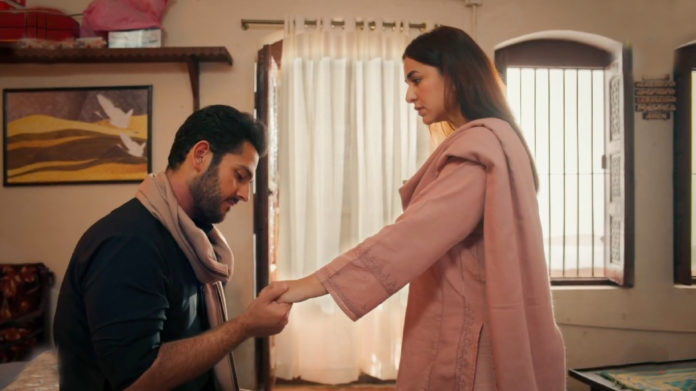
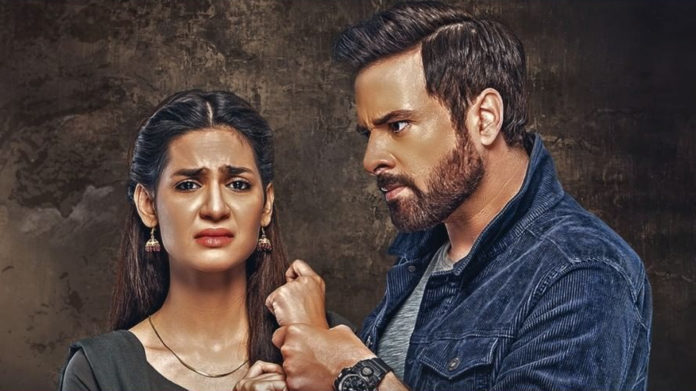
Sarmad Khoosat’s Saba Qamar-Hamza Khawaja starrer Kamli released on June 3rd, and has been touted by many to be one of the best, if not the best, Pakistani films to have graced the big screen. With a plethora of soulful music, and some stellar performances, this is where the box office collection of Kamli stands in just 24 hours.
Box Office Collection: Kamli (Day One)
According to numbers shared by trade analyst, Ali Zain, Kamli, despite its niche content, has amassed 32 lacs on day one, after its release on June 3rd. The solid number can be extrapolated further, hinting at even greater growth on day two, and perhaps, days to follow.
Brief Analysis
Given that this is just the first day collection, all eyes are on Kamli, that has not only performed well for a film that was not as mainstream as the Eid releases, but has also garnered massive positive buzz, with gleaming reviews and immense word-of-mouth activity which can result in audiences flocking to theatres for a watch.
In this day and age of inflation, money matters, but so does exceptional content. Perhaps Kamli is about to set a benchmark that proves this theory – a telling, and intriguing study for filmmakers and audiences alike.
Have you seen the film? What are your thoughts on Kamli? Let us know in the comments.
Last night marked the end of Ishq-e-Laa. To grab the primetime viewership, HUM TV used the tried and tested formula by picking good actors, simple romance, breathtaking locales, colorful apparel of the cast, and, of course, lots of drama. In achieving all of the above, the team missed out on one of the core ingredients – the script. Despite the big drag and constant shifts in the narrative, Ishq-e-Laa managed to keep the viewers invested till the end.
Ishq-e-Laa: The Final Episodes
The last two episodes brought Ishq-e-Laa back on track. Azlan (Azaan Sami Khan) lets go of his ego and develops feelings for Azka (Yumna Zaidi). He reads her diary and gets to know about the honesty and dedication of his wife. He repents for his bad behavior and seeks forgiveness. Azka’s family wants Azlan to divorce her, so that she can marry her classmate Zain (Ahmad Taha Ghani). To fasten the proceedings, Kanwal (Uzma Hassan) creates havoc at Azlan’s place that eventually brings to Sitwat’s (Ghazala Kaifee) knowledge the truth about her kidney donor. In a highly dramatic finale, Azlan confesses her love for Azka and they live happily ever after.
The Highs
Ishq-e-Laa began on a promising note. It was like watching a feature film, with a wonderful first half, dominated by Sajal Aly’s flawless performance. Sajal took the majority of the responsibility on her shoulders and delivered a nuanced performance. She wasn’t a bechari that we usually see on-screen. Shanaya had an empowering personality; she was courageous and lived life on her terms. This aspect of her character was interesting to watch. Also, her chemistry with Azaan was effortless. Viewers could witness the way Azlaan was enchanted by her personality.
Speaking of strong characters, Yumna Zaidi adds another class act to her strong resume. Debutant Azaan Sami Khan took a shaky start but with each passing episode, his performance got better. Kudos to the director, Amin Iqbal, for extracting the best from his actors and setting up the premise without sacrificing the nuances.
The Lows
Sometimes, a project gets unnecessarily dragged to the extent that viewers stop watching it mid-way. The same has been the case with Ishq-e-Laa. The moment Sajal’s track ends (the first half), the show begins to crash. The crux of the story was positive, but it should have been limited to 20 episodes instead of 31. As a result, a powerhouse performer like Yumna Zaidi was bowed down with a dragged narrative and, at times, poor direction. Much of the time was wasted in figuring out the murderers of Shanaya and Sultan (Sohail Sameer).
On the contrary, important issues like Azka donating her kidney and agreeing to a contract marriage happened in the wink of an eye, and that too without informing her family. Why? The track of Abid (Adnan Samad Khan) ended quite abruptly. There was a leap of five years in the timeline after which the looks of the characters didn’t change at all. Strange!
Summing Up Ishq-e-Laa As A Whole
Had all of this been taken care of, Ishq-e-Laa would be a clean hit. Despite the lack of finesse and flaws, Ishq-e-Laa managed to engage viewers. The writer, Qasira Hayat, upped their game in the last few episodes. Moments of pleasure were aplenty, but minus the huge drag of 12 episodes, Ishq-e-Laa would surely be a triumph.
Another day, another reason to be mad. This time around, people are pissed off at a fictional character for his blatant disloyalty. Yep – get a stand and put Mahir from Dobara on trial, because the court of public opinion is heavily against him.
What Happened
Episode 31 of Dobara revealed that Mahir is, for a fact, interested in his ex, Narmeen – you know, despite being married to Mehru. It took this revelation for fans to become absolutely livid for a plethora of reasons. Let’s dissect them, because y’all had a lot of opinions.
Mahir And Mehru
First things first, let’s ignore everything else and focus on the fact that Mahir is married to Mehru. Many people felt that the character disrespected the sanctity of marriage in an irredeemable manner, by not only falling for Narmeen, but actively pursuing her with the intention of marriage, behind Mehru’s back.
The fact that he commented on Mehru’s physical appearance, where he claims to be irked by her aging self, did not sit well with the audience as well.
In Mehru’s Defense
Fans were quick to point out that while Mehru was away for a mere two days, it took a ridiculously short amount of time for Mahir to relapse and run to Narmeen. Many even pointed out that while Mehru is opening a hospital in Mahir’s father’s name, he’s sneaking around behind her back, being disloyal with an immeasurable amount of audacity.
Tired Of The Message
The whole second-marriage narrative being normalized is one that many people are offended by, given that the issue of second marriages is not only taken out of context, but used by disloyal partners to justify their extramarital affairs. People were quick to point out that they’re tired of this line of messaging, going as far as to state that the storyline of the drama has been tainted with this new development.
Some fans even pointed out that when boiled down, the messaging came down to men marrying rich, elder women for their wealth, while chasing women they still have a soft corner for.
The Problem With Mahir
Here’s the thing – Dobara had the makings of an excellent show. Perhaps, it still does. However, this new “conflict” has turned many people against Mahir, simply because we all know a Mahir in real life. We’re tired of watching men cheat on women who clearly deserve better. We’re tired of being told second marriages are completely normal. We’re tired of settling for the bare minimum in men – if that – shoving issues like disloyalty under the carpet. Something has to change.
What’s your take on the development? Let us know in the comments below.
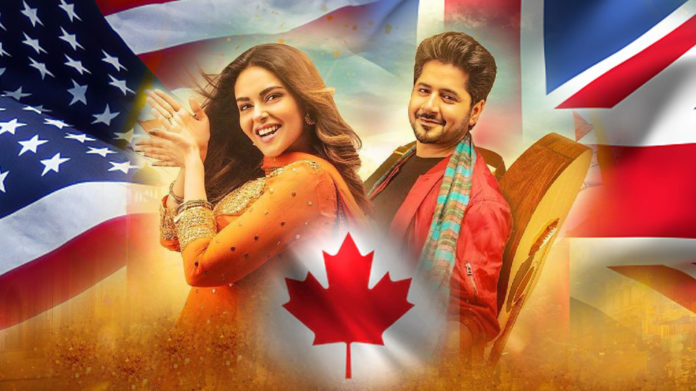
Dum Mastam, the Imran Ashraf-Amar Khan starrer, and the maiden production project of renowned actor Adnan Siddiqui, has taken to international waters, with phenomenal promotional activities in full swing. While we witnessed the same back home prior to the release of the film, the lead actor and writer of the film opens up about promotions, the response back home, and what the team is expecting from the overseas audience.
Dum Mastam Promotions: Are They Vital?
The film created an unmatched level of buzz amongst all releases, with mall activations, live dance performances (given that it is a musical) and much more within Pakistan, all during the month of Ramadan, which is a testament to how dedicated the team truly was. With Dum Mastam being the second-highest box office collector, it is quite evident that promotions do, in fact, matter, and finding innovative ways to promote one’s film is becoming more and more vital.
Amar Khan On Dum Mastam Promotions In Pakistan
“Dum Mastam has set a precedent for how films shall be promoted,” states Amar Khan, when opening up about the viral and engaging promotional activities that preceded the release of the film. “Some very heavy duty, two-month-long promotional activities were being planned.”
“Since it was a musical and had a lot of songs, we came up with the concept of the Dum Mastam Tour, where we were dancing, singing, and performing alongside the audience.”
Amar Khan On Dum Mastam Promotions Abroad
Talking about overseas promotions, Amar Khan pointed out how the activity has, over the past years, remained limited, especially when it comes to Pakistani films, despite there being a diverse audience of those who consume that content, made up of not only Pakistanis, but many others of the South Asian descent.
However, the Dum Mastam team has gone fully prepared, with integral media portals lined up, and meet-and-greets being planned, as part of the Dum Mastam Tour. Cinema visits and live performances will also take place.
Post-Pandemic Audiences And Aggressive Promotions
Amar Khan also shared how we’re in a post-pandemic world, where bringing audiences back to cinemas itself has posed as a challenge, given that even films that released while the world was edging towards the end of COVID, did not fare well.
“Excessive promotions are vital,” states Amar. “The faith in, and reversion to cinema is very important – not just as a writer or actor – but I feel anywhere in the world. Even if Amitabh Bachchan has a film releasing, he will go to every city, every mall, every press junket, to aggressively promote the film. In today’s world, where digital content is flourishing, it’s important to sell tickets that way.”
Response By Overseas Audience To Dum Mastam
Amar Khan terms the response “mazedaar,” speculating that the audience seems to be missing their own stars and stories, likening the experience to attending award ceremonies abroad, where the overseas audience pours in an overwhelming amount of love and appreciation.
On Numbers
Amar Khan wished to point out one aspect of being involved in the filmmaking and promotions process, specifically where numbers are concerned.
“Actors are not supposed to talk about the numbers, or the box office. This sounds very low – when an actor talks about exaggerated figures. This is for the distributors and producers to discuss. All the numbers you’re seeing (for Dum Mastam) are only of domestic collections. We still havent shared the Dubai, UK, or US/Canada box office numbers, and Alhamdullillah, we’re having a very successful run.”
With all that said, given that the team is out and about overseas, giving it their all, we wish the cast and crew of Dum Mastam the absolute best, and hope they make Pakistan proud abroad, as they are bound to.
If you’re a Mikaal Zulfiqar fan, this one’s for you. The actor is currently on two major dramas on two big channels, and while his role is currently limited in ARY Digital’s Fraud, Chauraha on Geo Entertainment seems to be revolving around him.
Written by Edison Idrees Masih and directed by the maestro Aehsun Talish, Chauraha has begun on a promising note.
Chauraha: The Story
Chauraha revolves around the story of Zoya, a vivacious girl who is rather conscious of her low status. Although Zoya’s mother, Shireen (Saba Hameed) tries her best to make ends meet and send Zoya to a reputable college, Zoya is not happy with her circumstances. We have a neighbor (Asad Siddiqui) who secretly fancies Zoya, and Zoya’s aunt (Bushra Ansari) who has stayed unmarried after Zoya’s father passed away, spending her life with her niece and sister-in-law.
In a parallel universe we have Junaid and his family. While Junaid’s father, played by Behroz Sabzwari, is a respectable factory owner and his sister (Arisha Razi Khan) a rather innocent and sweet teenager, Junaid himself has a very shady character. What little we saw of him showed us a strained relationship with his father and some suspicious antics from where he is earning an ample amount of money.
Zoya’s mother works for Junaid’s father in his factory and he holds a soft corner for Shireen, considering how hardworking she is and has strained financial conditions. For now, we just see that Zoya is unhappy with her financial conditions and maintains a pretense in front of friends. Zoya loves social media and it is one of the main source of respite from her daily life.
The Performances
We love Madiha Imam and her decisive nature of not sticking to one role at all. She might appear petite and naive but Madiha Imam is one hell of an actress who never hesitates to try on different roles. Drama, mystery, comedy – this actress has tried and nailed all her characters.
In Chauraha, Madiha Imam stands out with her effortless naivete and the emotions she brings on the screen. Mikaal Zulfiqar is also playing a very different character in this one with shades of grey and this is how we love to see him – portraying a bit of good and evil at the same time.
The Execution
For now, we’re happy with the crisp storyline that Chauraha brings forth. The direction by Aehsun Talish is on point and there wasn’t a single dragged scene in the entire episode. The storyline is fast paced and set in urban Karachi.
Chauraha: Verdict So Far
Chauraha has brought forth a fresh respite from the daily stories we have been seeing on screen, and bundles within its folds a whole lot of promise.
The trailer for the upcoming revenge-thriller film, Carma has been released, and here is a complete breakdown of what it’s about.
The Story
The plot doesn’t seem to be a run-of-the mill saga with conventional drama, comedy, and romance. Carma promises a thriving tale of revenge filled with suspense, that will keep you on the edge of your seat throughout. The plot revolves around a cunning gang leader played by Zhalay Sarhadi, who takes on the task to destroy a businessman’s life who cheated on two women at a time. This fiery woman, who seems to be a victim of betrayal herself, becomes determined to take revenge.
The Stellar Cast
The film stars an ensemble cast that includes Zhalay Sarhadi, Umer Aalam, Osama Tahir, Naveen Waqar, along with veterans Paras Masroor, Arjumand Rahim, and Adnan Siddiqui. The performances look powerful and truly hook one to the film.
The Makers
The film is produced and directed by Kashan Admani and written by Fawad Hai. ‘Carma’, as the title suggests, is derived from the word ‘karma’ but quite interestingly, the makers decided to use this wordplay as it has mostly been shot in and around cars.
Verdict So Far
The promising trailer for Carma has been released that talks about several social issues including child abuse, adultery, pedophilia, whilst engaging viewers with a gritty first look.
Dananeer Mobeen has become a target for people on the internet who are appalled and bewildered by a decision taken by SZABIST in Karachi to invite her as a speaker on a panel.
What Happened
As a part of the annual media festival held by Shaheed Zulfiqar Ali Bhutto Institute of Science and Technology (SZABIST) in Karachi, the ZAB Media Festival held a three-day event that invited numerous personalities to attend and speak to students about the rebirth of media.
With Zahid Ahmed as a keynote speaker, and numerous huge names in attendance, such as Sanam Saeed, Farhan Saeed, Ali Rehman Khan, Nabeel Qureshi, Fifi Haroon, and many more, the event came to a close last Saturday.
One panel that seemed to have irked many is the one that revolved around digital personalities, with the bone of contention being that Dananeer Mobeen was invited.
Making Dananeer Mobeen Viral
There are multiple things that must be highlighted here. First and foremost, we must remember that Dananeer Mobeen did not become an overnight sensation in a vacuum. As consumers, we watched that short clip that spread like wildfire – we shared it, rewatched it, made memes out of it, and shared Yashraj Mukhate’s version of the same.
If virality is something we take issue with, let us begin to turn those fingers pointed at Dananeer, and conduct some much-needed self-reflection.
Is Pawri Horahi Hai Offensive?
The clip that went viral was not an offensive clip. It’s a video anyone of us could have made that could have gone viral – but we didn’t. Chiding Dananeer for simply being lucky, based on content that was never offensive or irksome, to begin with? Come on.
The propulsion of that clip to a meme was a beautiful moment within the digital landscape with Lollywood and Bollywood celebrities partaking in the trend. It was a rare moment of unity in trying times, and it cannot be dismissed.
The Panel In Question
If the rebirth of media and its digital representation were the topics at hand, how does it not make sense to invite Dananeer Mobeen? Can we deny the fact that she went viral overnight? Is her contribution to the digital landscape of Pakistan any lesser due to the instantaneous nature of her virality?
Moreover, why snatch the frame away from those who were also present on the panel, all of whom have contributed to the digital landscape in varying capacities? Why was this snapshot not put into context, and misrepresented completely, only to demean a young woman because she is, owing to the nature of her being and positionality in society, a soft and easy target? Selective criticism is as lazy as it is easy.
Dananeer And Privilege
One can make the privilege argument – sure. Dananeer is conventionally beautiful, well spoken, and ticks of numerous boxes in terms of her social positionality. However, it is this nuance that seems to be lost on those criticizing her, who will also levy criticism against less privileged content creators, whilst gatekeeping, and writing off their content as “cringe.”
Summing Up
Before resorting to attacks and creating narratives that do not exist around people who have done no harm, as consumers, we must be more patient, withstanding, and less vicious. Context is always pertinent, and to choose to ignore it and pass on misinformation, a grave disservice. Let us collectively take a deep breath and cut our digital content creators some slack, and gently step off our high horses. Empathy and understanding are the need of the hour – anyone can tear other people down.
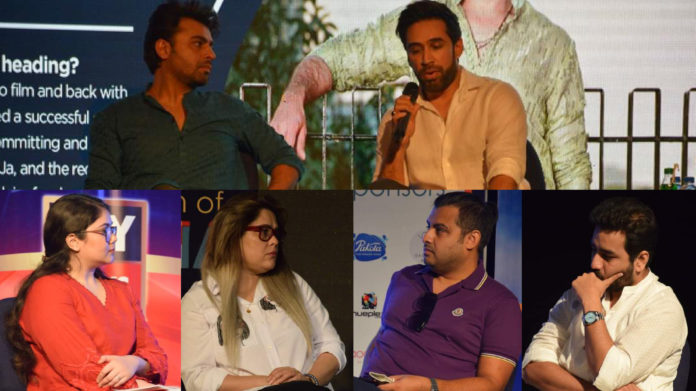
Entering the premises of SZABIST, I felt a wave of nostalgia hit me. An alumnus myself, I took in the preparations that greeted me as I walked in as the moderator of one of the most intimidating panels organized for the annual ZAB Media Festival, titled, “The Renaissance of Cinema.” I was set to question the likes of Yasir Hussain, Farhan Saeed, Ali Rehman Khan, Nabeel Qureshi, Rafay Rashdi, and Fizza Ali Meerza, and as I inched closer to the green room to wait, the nervousness balled itself up and made a home in my stomach.
The Green Room
As I waited for guests to arrive, I made small talk with the students, seven of whom surrounded me as if I was, well, important. Alas, my imposter syndrome could not allow that, and I joked about how I had just graduated in February.
Rafay Rashdi was the first to arrive, and after a pleasant greeting and the arrival of Shahjehan Saleem, the lead teacher heading the whole affair, the conversation flowed easily.
One after another, the guests began pouring in, with Ali Rehman Khan, Nabeel Qureshi, and Fizza Ali Meerza following Rafay Rashdi. Farhan Saeed was worth the wait, as he entered in a desi shalwar kameez with the swagger of a hero who knows what he’s about. Yasir Hussain, unfortunately, could not make it, as he had fallen ill.
Taking To The Stage
At times like these, while I may not entirely be able to push down my anxiousness, I am cognizant of where I am and what all I represent at that moment. I was at the festival as an ex-member of another digital organization, but also as the current editor at Galaxy Lollywood.
There was a lot riding on the questions I asked and the discussion that ensued. We all left the green room with a cloud of anticipation hanging over our heads, and were met with a deafening applause by the students, especially as our names and profiles were read out.
Addressing The Recent Fiasco
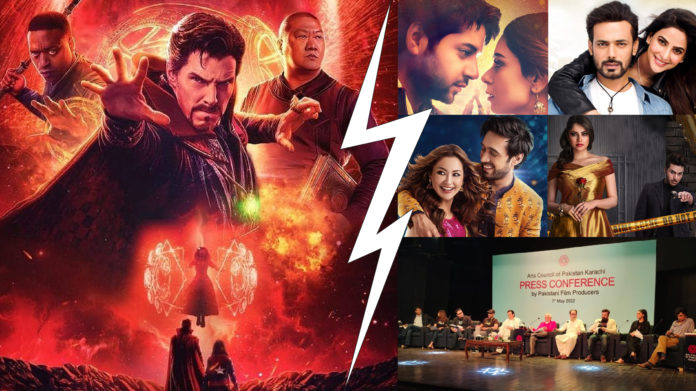
The Marvel elephant in the room had to be addressed. Ali Rehman Khan, Nabeel Qureshi, and Fizza Ali Meerza gave answers to the query about the absolute fiasco that Eid films faced with the release of Doctor Strange, and while some answers followed a line of thought we have heard publicly, others were refreshingly different.
Ali Rehman Khan On The Issue
As someone who had Parde Mein Rehne Do release and become a part of the larger conversation, Ali Rehman Khan had some choice thoughts on the prevalent discourse.
First and foremost, Ali shed light on the fact that the films released on Eid have gone through a rigorous process of being for the past two years, with the pandemic impacting production processes as well, highlighting how his film was 18 days into the shoot when things had to be shut down. He drew a contrast between the world then, when people were showing interest in local cinema, and the post-pandemic world, where people have to be reacquainted with that previous vigor.
He shed light on how this was a huge deal for investors and producers, who had put in the resources, but also for actors, who had put in their time and work. He further details the painstaking process and actor goes through to become the character projected on-screen.
He took the opportunity to raise his voice on the matter, stating that it was only him and Amar Khan who did so in the first place, stating that belief in local content is pertinent. He took issue with people criticizing local cinema without consuming the content, explaining how the criticism then becomes unfair.
Ali also stated that comparing a local film to a Marvel, DC, or Hollywood giant is a baseless comparison, to begin with. Moreover, he asked for local films to be given a fair chance in the face of such comparisons arising, given that the ordeal is a business, at the end of the day, with money riding on the films. This may not necessarily be attained by a ban, but an extended period of consumption for local films.
Nabeel Qureshi And Fizza Ali Meerza On The Issue
Fizza took to speaking first, and opened with the irony of placing bans on all imported products, except films. She put forth a question, asking if the government does not consider the film business an industry at all, to begin with.
Nabeel spoke next, talking about the anxieties surrounding the upcoming release of Quaid-e-Azam Zindabad, given that an edition of Thor and episodic screening of Ms Marvel will be taking place. He began by stating that thoroughly enjoys competition, given that Bollywood films were the norm back in the day when his films would release. He placed his belief in the product and the audience, stating that Thor and his film would be the same price, but spending money on his film would be “paisa vasool.”
Nabeel was refreshingly honest about the need to improve the quality of local films. He talked about the hyperawareness of a post-pandemic audience that has consumed good quality OTT content, thereby raising expectations overall, and nullifying the need for the emotional war-cry of “supporting Pakistani cinema,” stating that the fraternity is not doing social work – it is, at the end of the day, a business.
Rafay Rashdi On Five Local Cinema Releases On Eid
Perhaps the most difficult question was posed to Rafay Rashdi, who took to answering the same in a straightforward manner.
He began by sharing that he has massive respect for the filmmakers who chose to release all these films together in a post-pandemic era, creating an avenue for future filmmakers, from which they can pick lessons as well.
However, he was clear about the fact that releasing all the films together is a dialogue between filmmakers – a union and association decision – whereby a unified decision can be reached, given that the filmmakers had prior knowledge of all releases, including that of Doctor Strange.
Rafay also emphasized on how an entire association, and not just five filmmakers, should address the press when dealing with such issues, reiterating on the importance of a unified front.
Farhan Saeed On Audience Agency
When asked about whether talks of bans or delaying foreign film releases takes away a certain degree of agency from the audience, actor and singer Farhan Saeed (who also blew away the audience with a song at the end of the talk) shared his insights without holding back.
He began by stating that on a creative level, Pakistan can match upto anyone in the world. He then went on to differentiate between the content one wishes to watch on television or OTT platforms, and that which one wishes to watch on the big screen, placing talkies, social dramas, and the like within the first category. He mentioned how people want to see things “larger than life” on the cinema screen. He then highlighted that in many ways, Bollywood, too, is failing, with South films ruling the markets, giving way to the belief that the medium has changed.
Farhan emphasized on the need for those high expectations and the limited resources of filmmakers to be met halfway, doubling down on the idea of giving local cinema a fair chance by waiting for a week before releasing foreign films.
He then shared his grievances with the five filmmakers as well, hilariously joking about how prior to the release of films, there was no unified discussion, but in the aftermath, all have joined hands while addressing the press and audiences.
However, he showed support for upcoming films, stating that despite the release of foreign cinema, he would much rather watch Quaid-e-Azam Zindabad or London Nahi Jaunga. He summarized his thoughts by saying, “Ya toh Marvel ki film 1500 ki kardein, ya toh humari films 500 ki kardein.”
Censorship As A Hurdle For Cinema
No discussion around rekindling the essence of cinema is complete without addressing the beast that is censorship. While the question was originally meant to be posed to Yasir Hussain, who, despite winning Best Actor at the UK Asian Film Festival, faced the banning of Javed Iqbal back home, it was opened up to the entire panel, all of whom treaded carefully.
The entire panel took issue with the bewildering set up of the censor boards and their certifications, while also hinting at other forces involved in the process. While jokes were made regarding the same and suggestions like placing scripts before censor boards were made in jest, the panel addressed the random banning of films in varying capacities, and how it is an impediment to growth.
How Can We Support Local Cinema?
As a final message, the panel was asked to share with audiences how they can support local cinema, to which both Rafay and Fizza stated that the words “support” and “revival” must be retired entirely. Nabeel mentioned how audiences must, first and foremost, go watch the films before passing a judgement – an opinion that Rafay and Ali also seconded. Farhan also resounded with the same sentiments and thoughts.
It’s A Wrap
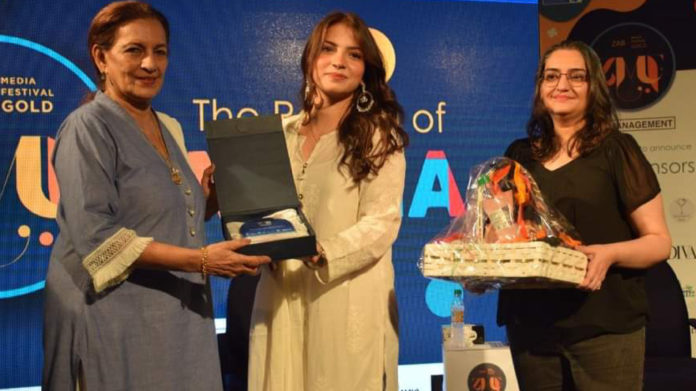
The session came to a close with a quick Q&A with the audience over the content of local cinema, the reliance on English as a spoken medium, and the possible integration of a rating system for audiences. Farhan closed everything off with a quick song, and the panel ended with the guests being bestowed with gifts by SZABIST.
All in all, the conversation was engaging and riveting, with numerous notable points made that must become a part of the larger discourse. As time goes on and we ease into a post-pandemic routine, and with more films on the horizon, let us all kick back and bear witness to this rebirth and Renaissance of cinema in the time to come.
After an exhausting back and forth on social media between Hadiqa Kiani and people clarifying whether or not she had sold rights to her song, Boohay Barian, another song seems to have been featured without consent, and it’s a Pakistani classic that belongs to singer and politician, Abrar Ul Haq.
What Happened
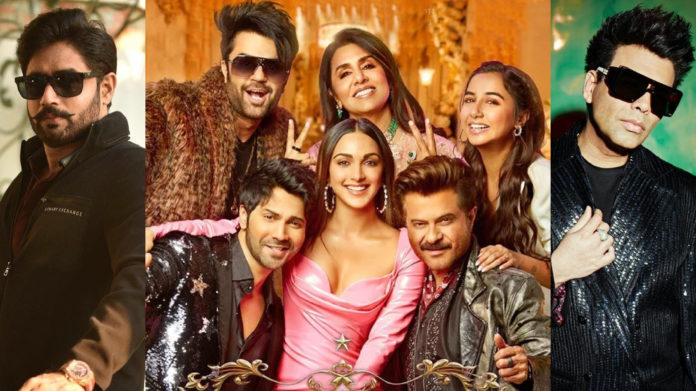
Entertainment journalist Sadiq Saleem took to Twitter to highlight how a trailer for Karan Johar’s Jug Jug Jeeyo featured a Pakistani hit, Nach Punjaban.
For those who have not heard the song (can’t be too many people, the song is basically a rite of passage at this point), Nach Punjaban is a mega hit wedding classic that has been blasting through ceremonies and streets alike for the longest time. The journalist likened the case to Hadiqa Kiani’s song being…uh, “borrowed” without credits and royalties by Kanika Kapoor.
Abrar Ul Haq Responds
The singer himself took to social media to clarify that he has not sold his song to any Indian movie, and further stated that he reserves the rights to “go to court and claim damages.”
Abrar ul Haq chided Karan Johar as well, advising him to do better than to use copied songs for his movies. Furthermore, he mentioned that this is the sixth instance of the same kind, and he cannot allow this to go on any longer.
Previous Case
April of this year witnessed the alleged theft on Boohey Barian, where Hadiqa Kiani took to her stories to address Kanika Kapoor’s rendition that was posted on Saregama Music’s YouTube channel, crediting Gourov Dasgupta and Shruti Rane as composers, with lyrics being credited to Kunwar Juneja. Hadiqa Kiani had not been mentioned anywhere.
Responses Issued
A statement on Twitter by MOVIEBOX, which controls multiple labels, reveals that the accusations may not be true, leaving people thoroughly confused as to why Abrar Ul Haq was kept in the dark regarding the same. The post reads:
“Nach Panjaban has been officially licensed for it to be included in the Film “Jug Jugg Jeeyo” by @TSeries. @karanjohar & @DharmaMovies have the legal rights to use this song in their film and the tweet by @AbrarUlHaqPK earlier today is defamatory and completely unacceptable.”
Moreover, Somen Mishra, a Dharma employee, tweeted the following:
“I have no idea how people do film journalism without having basics in place, these are like basics of business, thoda padh likh lo, check karo, how these things work, see the music label. Ata na pata, daag do tweet, script ho ya music. Problem is every moron got a twitter account.”
Abrar Ul Haq Fights Back
Just a while ago, the singer took to social media to state that the song “has not been licensed to [anyone]. If someone is claiming it, then produce the agreement. I will be taking legal action.”
It’s interesting to note how this bizarre back and forth is taking place now, with most of us in the dark about what’s really going on. Recent examples of Pakistani music being featured in Indian productions also include Ali Sethi’s music in Modern Love. Was due action is taken in terms of legality? We will have to wait and find out.
T-Series Responds
In another absurd twist, T-Series has responded with the following post
“We have legally acquired the rights to adapt the song #NachPunjaban released on iTunes on 1st January, 2002 & available on Lollywood Classics’ YouTube channel, owned by @1Moviebox, for #JugJuggJeeyo produced by @DharmaMovies.”
After the fiasco that local films faced with regards to their screening times being allotted to Doctor Strange in the Multiverse of Madness, there has been a major development in the situation as reported by Dawn Images (by Mohammad Kamran Jawaid) in favor of the filmmakers involved in local releases.
Sindh High Court Order
The Sindh High Court has ordered that local films get 85% of playing time at Pakistani cinemas, with foreign cinemas being allowed 15% of the exhibition space.
According to the high court order, foreign releases must comply by rules of the Motion Picture Ordinance, 1979, which states that internationally produced films screening in Pakistan can be allowed 15% screen space of locally created films are screening as well.
The order states that the defendants must follow the rules of the Motion Picture Ordinance “strictly in letter and spirit” and to provide 85% exhibition time to Pakistani films till the next date of hearing on June 2.
Plaintiffs In The Case
The Sindh High Court suits numbering 754, 754 and 755 have Cereal Entertainment (Adnan Siddiqui and Akhter Hasnain), Wajahat Rauf and Shazia Wajahat, and Farid Nawaz Productions (Yasir Nawaz and Nida Yasir) as plaintiffs, for their films Dum Mastam, Parde Mein Rehne Do and Chakkar respectively.
Defendants In The Case
The defendants in the suits are as follows: the Ministry of Information and Broadcasting, Central Board of Film Censors, Punjab Film Censor Board, Sindh Board of Film Censors, Competition Commission of Pakistan, J.B. Films, Nueplex Cinemas, Cinepax Cinemas, Cinegold Cinemas, HKC Entertainment and the Karachi District South deputy commissioner.
Filmmakers Call For Compensation
Filmmakers called for compensation in the face of damages the films and makers faced with the distribution of screen time, of which the relevant teams have been vocal about on social media.
What Happens Next?
While chaos has already ensued for local films in the wake of the release of Doctor Strange, this ruling may prove beneficial (if gone unchallenged) for upcoming local releases such as Quaid-e-Azam Zindabad and London Nahi Jaunga. Moreover, while the Marvel film has amassed big figures at the box office, upcoming foreign releases such as The Unbearable Weight of Massive Talent, Memory, and Top Gun: Maverick stand to potentially be impacted by this decision.
Whats your take on this? Let us know in the comments.