Home Blog Page 70

Mein Hari Piya: A Love Triangle With Problematic Narrative

Main Hari Piya

The first episode of ARY Digital’s drama ‘Mein Hari Piya’ aired on Monday. This play is written by Qaisra Hayat, directed by Badar Mehmood and produced by Fahad Mustafa and Dr Ali Kamzi.

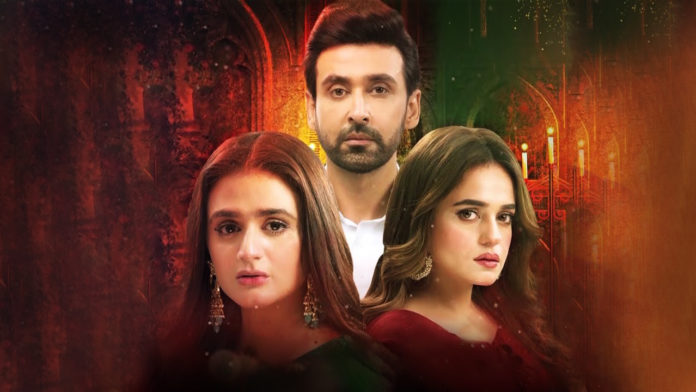
Sami Khan, Hira Salman and Sumbul Iqbal are performing the lead roles, whereas the supporting cast includes Marina Khan, Maira Khan Hamza Sohail, Ayaz Samoo, Hassan Naizi and Shaista Jabeen.

Story

‘Mein Hari Piya’ follows the life of a happily married couple Sara and Fawad, played by Hira Salman and Sami Khan. Fawad is an extremely loving husband and Sara is an ideal wife and daughter-in-law. Sara is immensely loved by her mother in law, played by Marina Khan, while her sister in law, Mariya, performed by Maira khan is a toxic character who is absolutely against Sara.

Farwa, played by Sumbul Iqbal, is Sara’s best friend. She belongs to a poor family. Farwa adores Sara’s life and wants the same for herself. Although Sara’s life appears ideal, her infertility engulfs the tranquillity and happiness of her life.

Mariya conspires against Sara and makes her mother believe that Sara can never be a mother. On the other hand, Mariya’s in-laws compel her to arrange the marriage of Mariya’s divorced brother Sauood and her psych sister-in-law, Hina. Mariya pleads with her mother for Hina and Fawad’s marriage as Sauood, who resides in Dubai, will never agree to marry Hina.

Problematic Content

‘Mein Hari Piya’ accentuates the infertility issue in the most insensitive manner. Additionally, the drama is not based on the struggles of an infertile woman or creates any awareness pertaining to this societal issue. Sara is shown infertile only to justify the second marriage of Fawad. As predictable by teasers, Sara will make Fawad and Farwa marry each other and from there the typical love triangle will take over the entire story, leaving behind the issue of infertility.

Every dialogue between Mariya and Sara, and Sara and her mother in law is only related to infertility. Despite having a loving and understanding husband, despite being educated and from a well-off family, Sara will not take a staunch stand for herself. This character projects as if infertility is a woman’s fault hence she must suffer. 

In the 21st century, the world is inclined towards creating content that creates awareness and breaks stereotypes, however, this play depicts a woman who will make her own living hell only because she is unable to conceive.

Predictable Story

‘Mein Hari Piya’ has a predictable storyline. Sara, who is unbelievably goodwill arrange her own husband’s marriage, Farwa who adores Sara’s life will happily marry Fawad. Fawad will love Sara more even after his second marriage, this will create envy in Farwa so she will plot against Sara.

Mariya will continue spreading toxicity, she will try her level best for Hina and Fawad’s marriage. In the end, either the three protagonists will live happily ever after or one of the two female protagonists will die leaving a child behind.

Performances

All the characters have mono-shaded personalities, therefore the actors do not have an extended margin of performance. Hira Salman convincingly performed the role of a miserable woman. Sami Khan has a limited screen appearance in the first episode. His role is nothing more than a loving husband who will ultimately marry against his will.

It appears that Sumbul Iqbal’s character is the only unpredictable protagonist of the story. Her character may be coloured in jealousy and manipulation in coming episodes. In the first episode, her performance as Farwa is up to the mark.

Direction

There is nothing worth highlighting in ‘Mein Hari Piya’s’ direction. The play bears a typical storyline, almost all the scenes are filmed in the same house. Consequently, the director has not many expanses for camera angle and frames. Dialogues project the story more than actual screen execution. For instance, Farwa’s self-talk reveals her struggles, her five years of relation with a boy and her adoration for Sara. This could have been projected on the screen. 

Conclusion

Our audience is so much inclined towards the content entailing a Roti Dhoti Aurat that almost all the dramas having such characters perform really well in terms of rating and views. Likewise, this story of a Mazloom Aurat may attract the sympathies of many, giving the drama considerable viewership.
#BoycottMorningWithJuggunKazim Trends On Twitter After Backlash For Cringe-Worthy Content

Morning Juggun Kazim

There was a time when morning transmissions were a wholesome source of providing quality entertainment. Especially, women started their day with innovative, informative and fun segments. All of this became history when suddenly a rat race started to fetch the highest TRP’s. From jumping onto the wedding bandwagon to the obsession of fair complexion and doing every insensitive trick to achieve ratings, morning shows have lost their novelty. 

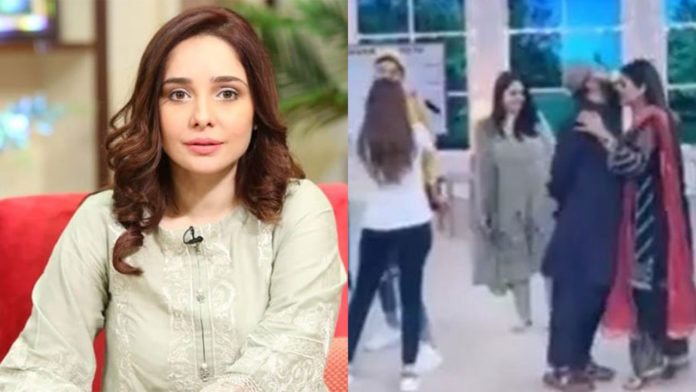
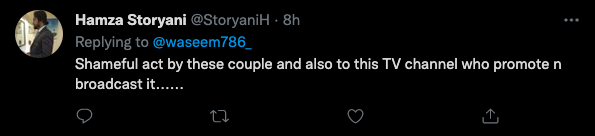
Another such case was of people calling out ‘Morning with Juggan Kazim’ for displaying inappropriate content. The show aired recently and immediately drew criticism on social media and was top trending on Twitter in Pakistan with hashtag #BoycottMorningWithJuggunKazim.

The Problematic Content

Juggan invited social media sensations ‘Tik Tokers’ to the show. The contestants were divided into teams and were made to play some innovative games like musical chairs, arm wrestling and eating competitions. The weirdest thing that came across was this apple-eating segment where the male contestants had to eat an apple placed at the forehead of the female partner.

This caused an uproar on social media with people calling the creators and channel out.

Final Word

This isn’t the first time that we see such cheap gimmicks displayed on national TV. There have been several other shows that have displayed obscene content for the sake of entertainment. It’s important that channels and media houses should make efforts to produce progressive content that help citizens to grow on a daily basis.

Nabeel Qureshi Predicts How 2022 Could Be Beneficial For The Film Industry

Nabeel Qureshi

Ever since the pandemic began, the film industry has suffered a lot among several other businesses and industries. The implementation of lockdown again and again and the rise of the cases in the country caused theatres to be closed for the public for almost two years now.

Right when our film industry was about to enter its revival era, this pandemic has proved to be such a bad time for the whole fraternity. Still, our filmmakers continued to produce their stories, hoping to see them get released in cinemas soon.

NCOC has now made the decision of reopening cinemas in 8 cities across the country including Islamabad and Rawalpindi. The news comes after Chaudhry Fawad Hussain tweeted the permission by NCOC. The situation in the cities of Lahore and Karachi will be assessed in the coming ten days and NCOC will take the decision based on the increased vaccination drive in these cities.

After the decision was announced, the filmmaker Nabeel Qureshi appeared on a talk show and discussed how 2022 could be beneficial for the industry if the films are distributed thoughtfully.

Nabeel Qureshi Suggests Strategy For Filmmakers

Ace filmmaker Nabeel Qureshi, while discussing the reopening of cinemas suggested that if the films get distributed in the right manner for the whole year, the filmmakers can get a good advantage and the year 2022 can actually turn out to be a beneficial year for the film industry. He presented his idea that instead of releasing all the films together, there should be a proper plan to get the films released one after another so that they can get good viewership and cause great benefit for the industry.

A Lot Of Good Films To Get Released Soon

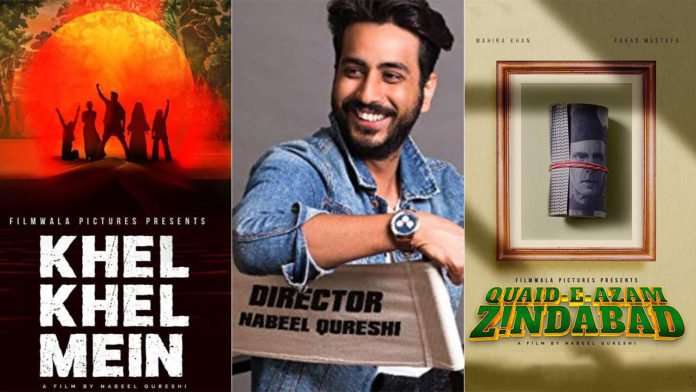
Director Nabeel Qureshi with his two star-studded pieces; ‘Quaid-e-Azam Zindabad’, starring Fahad Mustafa and Mahira Khan, and ‘Khel Khel Mein’ featuring Bilal Abbas, Sajal Aly and others, is ready to showcase his craft among a number of filmmakers. There are more than twenty films in the pipeline which include Yasir Nawaz’s ‘Chakkar’, Saba Qamar’s ‘Ghabrana Nahin Hai’, Muhib Mirza’s ‘Ishrat Made In China’ among several others.

Conclusion

Pakistan Film Industry surely has a lot of potential to raise the bars for upcoming content creators in the future. As the profession is now taken more seriously and Lollywood is now reviving with quality content and watchable stories. We hope that our filmmakers manage to create more content and cope up with the crisis that the pandemic has caused.

Sheheryar, Sanam, Ahsan, Sarwat & Osman To Star In Zee5 Web Series

Shereyar, Sanam, Ahsan, Sarwat, Osman

During the pandemic, the world has witnessed a surge in digital content. It’s now easier than ever for viewers to enjoy films and shows from even the other side of the world, be it the global hysteria around the Spanish show ‘Money Heist’ or getting to know more about British history and culture through ‘The Crown’

Pakistani Content On ZEE5

This has also allowed Pakistani content to be viewed across countries. Last year, the OTT platform ZEE5 had announced five original web series created by Pakistani artists, including the ones that have been released; ‘Churails’, ‘Dhoop Ki Deewar’ and ‘Ek Jhooti Love Story’, and the upcoming ‘Mann Jogi’ and ‘Abdullahpur Ka Devdas’. Fans across the border have been excited to see content from Pakistan, which is known for its unique and realistic dramas. 

Recently Zara Noor Abbas spoke to Galaxy Lollywood about her upcoming series for ZEE5 with Wahaj Ali. It is written by Umera Ahmed and directed and produced by Haseeb Hassan. 

The Big News

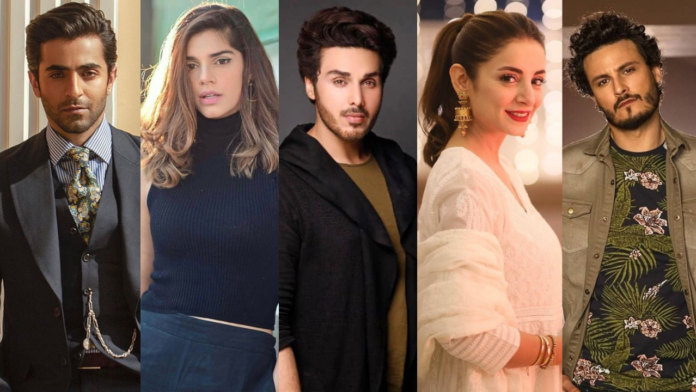
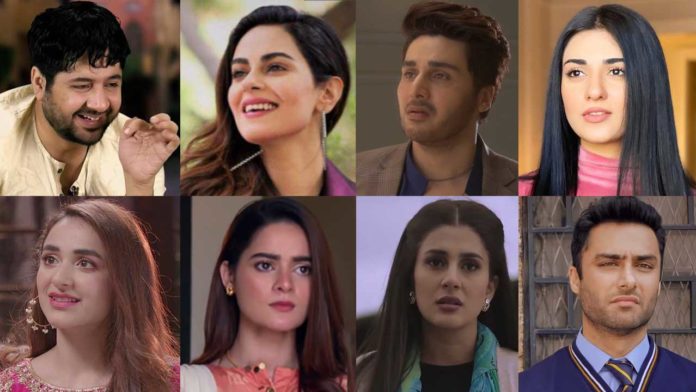
Adding to the slate of big names, another exciting series is in production with a stellar cast, including Sheheryar Munawar, Ahsan Khan, Sanam Saeed, Sarwat Gilani and Osman Khalid Butt. It will be an anthology series, with a new story being narrated in each episode. 

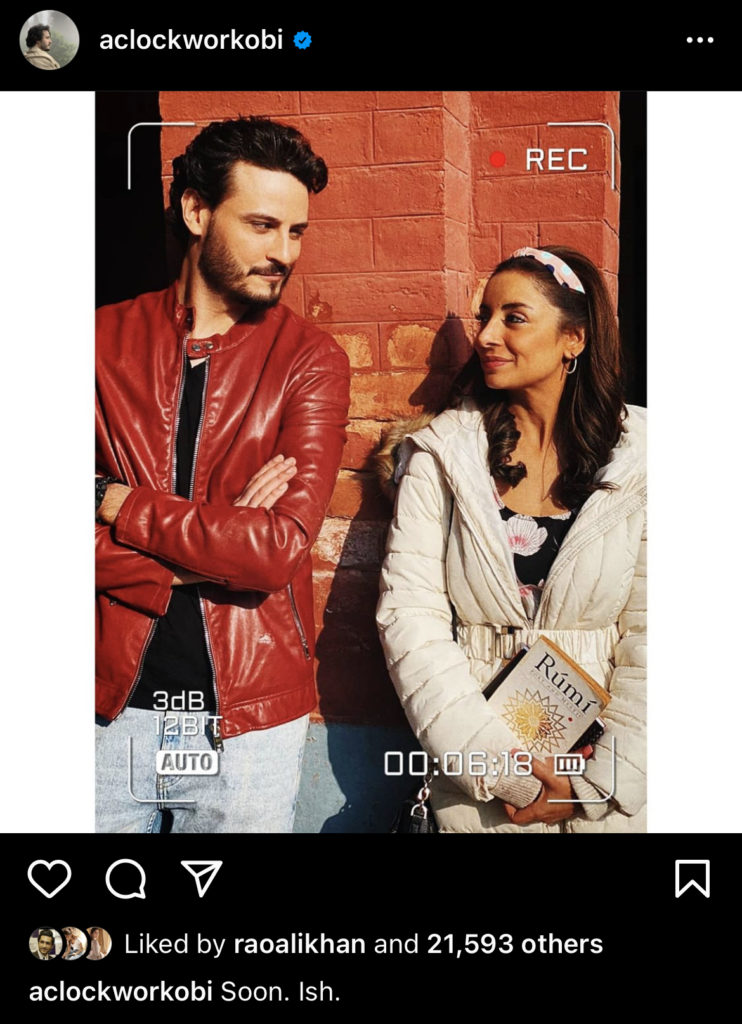
This will be the first time all of them, except Sarwat Gilani, will be seen in a web series. Osman Khalid Butt shared a picture with her from the sets of the series.

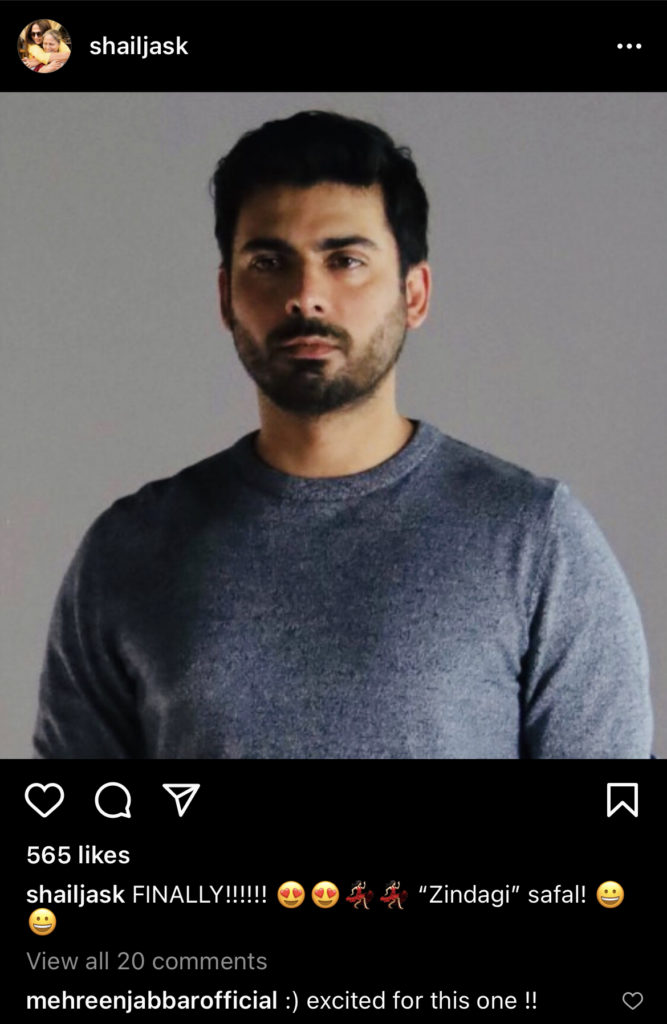
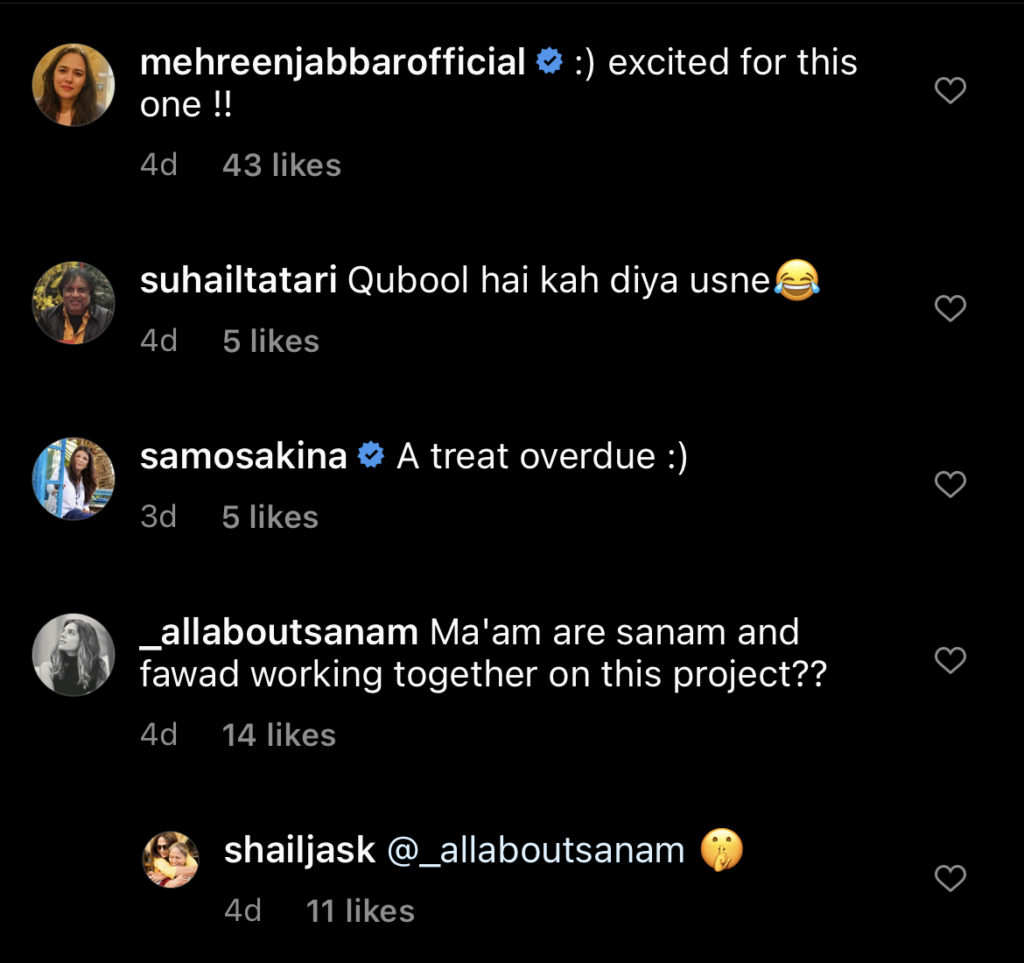
That’s not all, one of Pakistan’s most loved actors, Fawad Khan, will reportedly make a cameo appearance in this series. Indian producer Shailja Kejriwal, who has previously produced other Pakistani web series on ZEE5, shared a picture of Fawad Khan on Instagram with the caption, “FINALLY! ‘Zindagi’ safal!”. 

Pakistani director Mehreen Jabbar commented: “excited for this one,” under the picture, further hinting towards the project being a Zee5 show since Mehreen has created ‘Ek Jhooti Love Story’ for the same platform.

A Reunion?

A fan commented asking the producer: “Ma’am are Sanam and Fawad working together on this project??” To which she responded with an emoji hinting at it being a secret.

This led to fans speculating that Fawad Khan and Sanam Saeed will be reuniting in an upcoming ZEE5 web series. They last appeared together nearly ten years ago in a drama which is remembered even today, ‘Zindagi Gulzar Hai’. If the rumours are to be believed then it will be exciting to witness the pair’s on-screen chemistry again.

There is no confirmation that they’ll all be part of the same web series or Fawad and Sanam will work in a separate show. Other details are still under wraps due to the politics between the countries.

Last year, The State Bank of Pakistan (SBP) directed all banks to stop processing subscription payments for Indian Streaming Video on Demand platforms (SVOD), especially mentioning ZEE5 in the notice. 

The fans are hoping that both the countries will be able to enjoy watching Pakistani shows on Indian platforms without hassle.

Stay tuned to Galaxy Lollywood for all the details.

Portrayal Of Women In Pakistani Dramas

Actresses

Pakistani dramas have been a great source of entertainment as well as spreading awareness in the country and also across the world. Our stories largely revolve around female characters and hence they are called female-centric or women-oriented content. But are the makers really that thoughtful?

Characterization is an important part of storytelling. While creating stories one has to work on the characters the most. The rest of the story is led by the characters themselves. But what happens when the characters become an archetype and get repeated like a formula in every second story? The newness and freshness from the stories get diminished and drama loses its charm. 

Female characters being shown nowadays are hardly different from the typical three types that are constantly repeated on TV for rating purposes. 

Weak, Suppressed, Voiceless

The most tried and tested formula to get viewership on television and now on digital too is to make a woman cry on screens. Our drama producers know the fact very well that a commercial drama is sold by the tears of a woman and they apply this mantra to almost every story they create. Samrah, played by Amar Khan from the drama serial ‘Qayamat’, is one such character who constantly gets beaten up by her ruthless husband and eventually dies of the sufferings caused by him.

Hania, played by Zoya Nasir in the drama ‘Hania’, and Rudaaba, played by Ushna Shah from ‘Bashar Momin’, are some of the most oppressed women that have been shown on TV. And then come serials that show horrible treatment to women and never get called out for it. Popular shows ‘Rishtay’, ‘Meri Baaji’, and currently on-air ‘Wafa Be Mol’ are some of the dramas that depict horrible violence against women without any right messaging. 

Cunning, Vicious, Ruthless

This is another extreme of characterization. A drama that revolves around a suppressed woman, represented as “white”, also portrays an extremely vicious woman, who is the representative of “black”. While we believe that life is all about “greys”, our dramas still choose to show the war between black and white and how senseless this treatment is. 

This cunning vamp could be the real sister of the heroine or a cousin or friend who just has one motive in life and that is to destroy the life of our “bechaari” heroine who has no spine. Mashal, played by Kubra Khan, in ‘Hum Kahan Ke Sachay Thay’, Zoya, played by Sabeena Farooq, in ‘Kashf’ and Nisha, played by Minal Khan from drama serial ‘Jalan’, are just a few of the uncountable similar characters shown in dramas like ‘Jhooti’, ‘Balaa’, ‘Dil Mom Ka Diya’ and ‘Dilruba’.

Strong, Independent, Resilient

Among a lot of producers who prefer not to experiment with strong female characters, there are still a number of makers who dare to show some great female characters that are appreciated, loved, and welcomed by the masses. They are strong women who know how to fight for their rights and also support other women around them. Not only this, but the characters also look human in every possible way who are emotional at times and have their vulnerable moments too. 

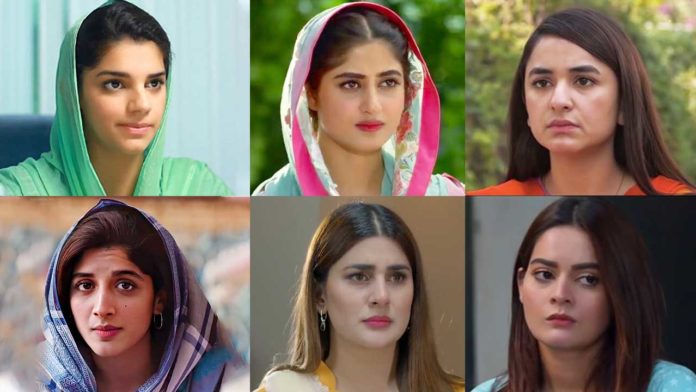
Anaaya and Aaliya, played by Mawra Hocane in ‘Sabaat’ and ‘Aangan’ respectively, and Chhammi, played by Sajal Aly in historic drama ‘Aangan’,  have been some impactful characters of women who are strong and independent. Sanam Saeed as Kashaf in ‘Zindagi Gulzaar Hai‘, Yumna Zaidi as Allah Rakhi in ‘Dil Na Umeed To Nahi’, Sarah Khan as Falak in ‘Laapata’, Faryal Mehmood as Inshaa from ‘Raqeeb Se’, Rabia Butt’s character Nargis in ‘Pehli Si Mohabbat’ and everyone’s favourite Dr Zubia, played by Sajal Aly, in ‘Yaqeen Ka Safar’ are some of the best portrayals of women on television.

Conclusion

It is important for the creators to portray strong and ambitious women, who know of their rights, in the dramas, since it is a medium that is viewed by a large audience, who are easily influenced by those characters. Hence it is a responsibility that can be beneficial for our society if handled well.

8 Actors Who Outshined Their Fellow Co-Stars

Actors

We as Pakistani’s are blessed to have television as the most accessible form of entertainment. And no other industry can satisfy our dramatic cravings as compared to our own. It’s good to see that actors today don’t shy away from portraying roles that require them to go an extra mile. A good TV drama brings out the best from them, however at times; there have been instances when a particular actor outshined their fellow co-stars. Here are 8 actors who garnered more praise than their fellow actors.

Imran Ashraf in ‘Ranjha Ranjha Kadri’

‘Ranjha Ranjha Kardi’ was Imran Ashraf’s big-ticket to fame and success. His character Bhola was someone that made us laugh and opened doors of sympathy for mentally disabled people. Rarely do we see actors making such daring choices and getting so deeply involved the way Imran did. He inhibited Bhola and played out the nuances meticulously. His facial contortions and body language were the highlights of the enterprise. His chemistry with Iqra was staggeringly lovely. His biggest achievement lies in the fact that after a point he made us forget the actor Imran Ashraf.

Amar Khan in ‘Dil-e-Gumshuda’

Though we had seen glimpses of her acting credentials in ‘Ghughi’ and ‘Belapur Ki Dayan’ but ‘Dil-e-Gumshuda’ was her first bona fide hit. The deliciously wicked Alizeh was winningly performed by Amar Khan. The sequences between Aagha Ali and Hina Altaf were plain ordinary but viewers got intrigued whenever Amar entered the frame. Her expressive eyes handle a range of emotions with finesse. Besides looking breathtakingly stunning, Amar expressed, emoted, and acted like a marvel in every scene.

Ahsan Khan in ‘Qayamat’

Ahsan Khan off late has been extremely versatile in terms of selecting his projects. Khan added yet another feather in his cap when ‘Qayamat’ hit the bull’s eye. It wouldn’t be wrong to say that ‘Qayamat’ is Khan’s best performance to date. He delivered a spotless and flawless act by staying extremely true to the narrative. He was in complete sync with his character Rashid like a fish takes to water. He surprised with his brilliant acting prowess, be it his mannerism, gestures, or dialect; Khan aced all the dimensions.

Sarah Khan in ‘Sabaat’

‘Sabaat’ belonged to Sarah Khan. No two opinions on that! With a streak of sugar-coated roles, it was a big gamble for Sarah Khan to shed her previous image. Here, she as Miraal dared to be different and proved herself as a classic performer. She commanded the role like an expert, her attitude, her stubborn nature, and her fear of never losing came across as natural. She simply outshined the other leading lady Mawra Hocane. Not to forget, she also set the bar that a woman can look modern and stylish without unnecessary skin show.

Yumna Zaidi in ‘Pyaar Ke Sadqay’

In today’s day and age where actresses seek to fit in a mould without the fear of getting stereotyped, Yumna Zaidi is one actress who has shattered glass ceilings with her diversified body of work. Mahjabeen from ‘Pyaar Ke Sadqay’ cemented her position in the top league of actors. The transformation with her attire and adapting the silly, naïve and adorable traits to look the character was worthy of lavish praises. Not even once, she went off track, ‘Pyaar Ke Sadqay’ worked big time because Mahjabeen made it come alive.

Minal Khan in ‘Jalan’

Minal Khan took our breath away with the rollercoaster that was ‘Jalan’. After endless variations of the damsel in distress, Minal Khan’s avatar Nisha was compelling. She was an unflinchingly nasty girl on a mission to attract his older sister’s husband; giving us a refreshing twist on the typical bad girl narrative depicted on screen. She was luminous and sure-footed with her part and emerged with flying colours. Her sequences with Emmad Irfani were electrifying.

Kubra Khan in ‘Alif’

Husn-e-Jehan can be easily ranked as a shining star in Kubra Khan’s repertoire. She submitted herself to the role of a popular actress and dancer of the bygone era who gives up her career for love. Many sequences caught our breath. Khan not just looked bewitching but performed convincingly, pushing the envelope yet again. She emoted through her expressive eyes; her love and vulnerability fall upon perfectly. The drama serial also evoked the quest for spirituality in every individual.

Ahmed Ali Akbar in ‘Ehd-e-Wafa’

Ahmed Ali Akbar owned Shehryar and delivered a terrific performance with conviction. Not just the character was the favourite amongst viewers but was also the best written out of the four. He was the surprise package of the play. Right from facing the ups and downs of life and realizing that hard work is the key to success; he left a strong mark. Not to forget, his emotional sequence with Khalifa Sajeer Uddin left viewers moist-eyed.

Plot Twist: Nobody Copied Anyone, It’s A Gujarati Folk Song

Singers

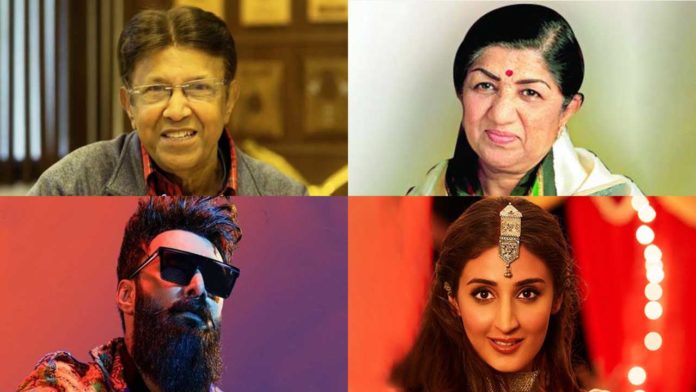
Plagiarism seems to be the new nepotism. It has suddenly become a hot topic. From one country blaming another to creators calling out each other. Recently, there were reports circulating that Indian singer Dhvani Bhanushali with her latest track ‘Mehendi’ has heavily copied the classic Pakistani song ‘Maine Tumhari Gagar Se’ by one of the pioneers of pop music in Pakistan, Alamgir. A remake by Umair Jaswal was also released last year for VELO Sound Station. The issue began when none of the Pakistani artists were given credits in the song and Umair Jaswal even called them out for it on his social media. He tagged all the creatives behind the song, including Alamgir.

Several media platforms began reporting about it. Galaxy Lollywood confirmed the news from our sources in the industry and were told that it is a copy. However, turns out it’s far from being true and people are trampling over each other to get undue credit.

Blame Game

It was then thought that the original was actually Indian legendary singer Lata Mangeshkar’s song ‘Mehndi Te Vavi Malve’ from the movie ‘Mehndi Rang Lagyo’ released in the year 1960. Some people were able to spot the error and stated that Alamgir was the one to copy the Indian musician’s song. 

Even this is technically incorrect because there’s more to the story.

Plot Twist

However, our curious minds were hell-bent on digging up the whole truth. After Galaxy Lollywood’s immense research, we got to know that nobody has copied anyone. This is a traditional folk song ‘Mehndi te Vavi Malve’ from Gujarati, which doesn’t need to be credited. Folk songs are adapted on a frequent basis and are not credited since they are part of the culture. For example ‘Rind Posh Maal’ from the movie ‘Mission Kashmir’ is also a Kashmiri folk song ‘Bhoomro’, hence they have not given credits to anyone.

Lata Mangeshkar adapted a traditional Gujarati song, similarly, Alamgir also used the same folk song and he didn’t have to give credits to anyone, but only had to mention that it’s a folk song. According to some people on social media, Alamgir must have been aware of it being a folk song since the composer of the song was a Gujarati as well. However, this has not been officially confirmed.

Whereas, Umair Jaswal gave a tribute to Alamgir’s song hence he gave him credits. Dhvani Bhanushali does not need to give anyone credits because she has also used a folk song.

We reached out to a source from Gujarat to confirm that this song has had several renditions over the years, as it is part of their culture. It is technically copied by none of the artists, and it’s important for people to realise that it’s not as simple as calling out plagiarism.

Indian Singers Adapt Nusrat Fateh Ali Khan’s Qawwalis

Indian songs

Sufi qawwal, Nusrat Fateh Ali Khan, was a gifted musician. There is absolutely no denying this fact. Nor does anyone forgo the fact that Nusrat Fateh Ali Khan created some of the most sensational melodies while he was alive. Be it a romantic song or his usual qawwali’s, he was absolutely magical when it came to music, so much so that, even today, 24 years after his death, his songs and his qawwali are still remembered, sung, re-sung and adapted.

Recently Adapted NFAK’s Songs Across The Border

Two NFAK songs were recently adapted in India. One for upcoming movie ‘Shiddat’, named ‘Akhiyan Udeek Diyan’ was given its due credits by the composers. The song was recreated by singer Master Saleem and composer Manan Bhardwaj, who tweaked the lyrics to suit his composition and the setting of the film. However, the ethical practice was followed and NFAK was given credits for being the original composer of the mesmerizing track that even today hits differently to all those who adore Nusrat Fateh Ali Khan’s qawwalis.

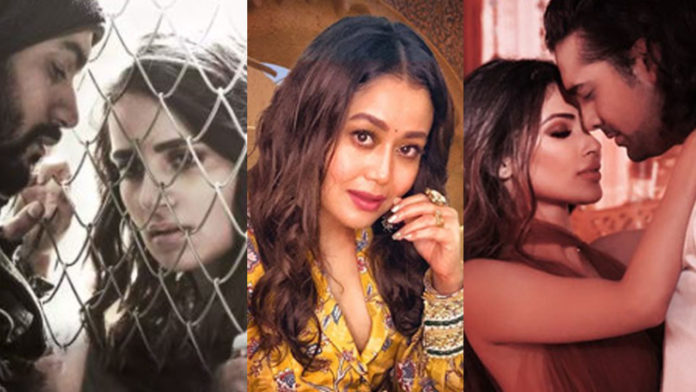
Another song by Neha Kakkar and Farhan Sabri adapted Nusrat Fateh Ali Khan’s ‘Dulhe Ka Sehra’ and the song ‘Bol Kaffara’ for a recent collaboration, ‘Bol Kaffara Kya Hoga’ but gave necessary credits where due. The song gave proper credits to Asim Raza for ‘Bol Kaffara’ and Soch The Band for the lyrics of the song and its original composition.

Over the years, we have seen Bollywood adapting and copying NFAK’s qawwalis and songs a few of which include the film ‘Yaarana’s’ famous song, ‘Mera Piya Ghar Aya’, Raja Hindustani’s song ‘Kitna Pyara Tujhay Rab Ne Banaya’ which happened to be a rip-off NFAK’s song ‘Kina Sona Tenu Rab Ne Banaya’ and another ‘Mujhe Ek Pal Chain Na Awe’ from the film Judaai that happened to be a copy of ‘Sanu Ek Pal Chain Na Awe’ by the maestro himself.

It is always great to see industries appreciating other industry’s artists and creating a wider audience for their work as long as they’re given due credits.

Review: ‘Fitoor’ Reaches Predictable Conclusion Sticking To Problematic Narrative

Fitoor

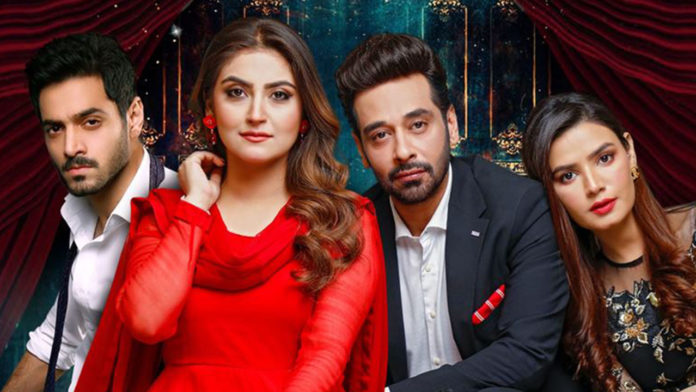
Geo Entertainment’s drama ‘Fitoor’ was a big hit due to its high-budget production and talented star cast. But other than that, it also gathered huge criticism for its portrayal of toxic relationships, glorifying men who have questionable characteristics and ridiculing women just because they have a past relationship before marriage. ‘Fitoor’ also trivialised important issues like parenting and sensationalised extra-marital affairs and infidelity.

Directed by Sirajul Haq of ‘Raaz-e-Ulfat’ and ‘Noor-e-Zindagi’ and written by Zanjabeel Asim Shah of ‘Balaa‘ and ‘Bashar Momin‘. The last episode of the drama aired recently and many people are still not satisfied by the misogynistic narrative that it provides.

The Problematic Story

‘Fitoor’ revolves around Dilnasheen played by Hiba Bukhari, a young school-going girl, who has an emotional affection for her friend’s brother Hamza, played by Wahaj Ali. He is rich, good-looking, and has the guts to stand by his love for Dilnasheen. Dilnasheen’s relationship gets exposed to her conservative brother and mother who treat her badly and gets her forcefully married to Haider, who is in his early 40s or late 30s.

Haider, played by Faysal Quraishi, is a successful business tycoon, who is still in love with his childhood love Mehmal, who dumped him years back due to his poor financial condition and got married to a rich man. Due to his mother’s wish, he marries Dilnasheen, who is way younger than him, and brings the broken Mehmal, who is dealing with her marital issues, to stay at his home.

Mehmal tries to rekindle her “bachpan ka pyaar” and while giving all his attention to Mehmal, Haider warns Dilnasheen that he will not tolerate it if he gets to know that his wife also has a past affair. Well, we know how hypocritical it is.

When poor Hamza returns to the picture, Haider does exactly what a typical man from a Pakistani drama would do. He questions Dilnasheen’s character, tortures her and even slaps her.

While portraying such a noxious narrative, the makers tried their best to demonise Dilnasheen and Hamza for having an “extra-marital affair” and glorified Haider to a level that people started sympathising with him. And after mocking two sane individuals till they actually turned into negative characters, ‘Fitoor’ came to a problematic end.

The End

An unnecessary stretch of 45 episodes concluded while maintaining its consistency. Dilnasheen is shown guilty and deeply embarrassed of having an extra-marital affair and showing disloyalty towards her husband and brother. In the current era, when society is aware of certain problematic behaviour, the female lead of a show who has not been a vamp is shown begging in front of her husband to keep her in his house otherwise she will die, such an unpleasant sight for the Pakistani television viewers who demand a powerful plotline over high-budget production.

Another big low for ‘Fitoor’ is trivialising bad parenting and not concluding it in an impactful manner. From Dilnasheen’s mother beating her up for not showing loyalty to her characterless husband, to Hamza’s mother taking over all his business and not supporting her son to seek therapy or rehabilitation for his mental and physical health. This made them self-destructive and the only thing their mothers actually cared for is their respective marriages. Isn’t that nuisance at extremes for a viewer?

Conclusion

Finally, a drama that provided an odd and paradoxical story has concluded and we hope that the makers work more thoughtfully on their stories and narratives before bringing them to television.

HUM TV Drops Exciting Teasers For Bilal Abbas And Hadiqa Kiani Starrer ‘Dobara’

Dobara

HUM TV has always impressed its audience with its line of exciting dramas on topics that focus on all wakes of life. And like always, HUM TV hasn’t disappointed audiences seeking to watch something exciting and new on television. Here, we’re talking about the upcoming drama serial ‘Dobara’ that stars talented Bilal Abbas alongside the singer turned actress Hadiqa Kiani, who massively impressed her audience in her last drama, ‘Raqeeb Se’.

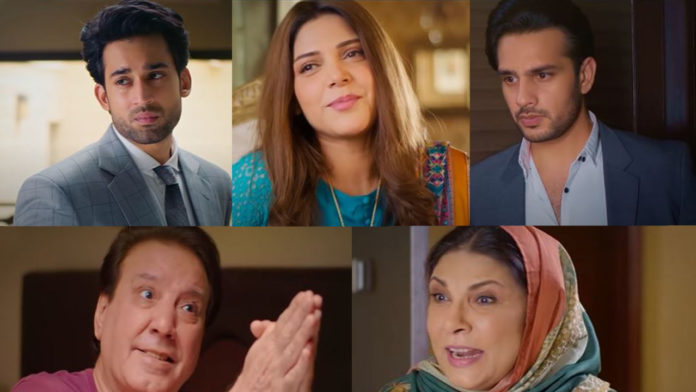
Directed by Danish Nawaz of ‘Ishq Tamasha’ and ‘Sun Yaara’ fame, ‘Dobara’ has been written by Sarwat Nazir. It is a Momina Duraid production and features Bilal Abbas, Hadiqa Kiani, Javed Sheikh, Usama Khan, Nabeel Zuberi, Sabeena Syed, and Sakina Samo in pivotal roles.

HUM TV has already rolled out teasers of ‘Dobara’ and from the looks of it, this is going to be a love story between an aged woman and her young husband.

Teaser No. 1

The first teaser shows Hadiqa Kiani in a debate between choosing what she wants and what society expects of her. Giving in to what her heart desires, this lady is then seen battling between her family and her newly wedded husband, who is rather young than her but claims to love her wholeheartedly. What impresses and intrigues the viewers about this teaser is how Hadiqa Kiani gives in to what her heart desires and how she stands strong to battle society against what she believes in.

Teaser No. 2

We see the teaser focusing around Hadiqa Kiani’s character who says that two people have knocked on her heart and when life is giving her a chance at deceit, she wants one that at least looks good. Which translates to her marrying Bilal Abbas in question.

Teaser No. 3

Teaser 3 is by far the most interesting and also offers comic relief in the otherwise intense setting of the serial. The teaser shows Javed Sheikh trying to woo Hadiqa Kiani’s character, wanting to bag her as his trophy wife. Javed Sheikh’s comic timing is impeccable and the setting seems fun. All in all, we’re eager to watch how Javed Sheikh’s character will navigate and react to losing Hadiqa’s character i.e. Mehru to Bilal Abbas Khan and when and if it turns negative.

Teaser No. 4

Another Teaser shows Usama Khan and Bilal Abbas in a tussle, where the former asks the latter to leave his mother alone and go away from her life or else there will be circumstances. Bilal Abbas is then seen being hit by a car and a debate being ensued about what will happen if he dies. It will be interesting to watch how Bilal Abbas as the stepfather and Usama Khan as the stepson, navigate their tussle in this battle of will and power.

The teasers of ‘Dobara’ have certainly intrigued us and left us wanting more. Over the years, Danish Nawaz has always impressed with his directorial projects and if ‘Dobara’ is an inch close to what Danish Nawaz has brought for his audience before, this one will be a massive entertainer for sure.